Overview
Week 6 centered on peer critique, a critical milestone for validating the Research Proposal Outline before the faculty showcase. This structured feedback session revealed both the project's conceptual strengths and critical areas requiring clarification and evidence.
The feedback was categorized into four key areas: what resonated strongly, what worked well structurally, what needed further elaboration, and what additional considerations should be addressed. In parallel, I continued experimental development and began analyzing graduate works to understand deliverable standards.
Peer Review Session
Collaborative peer review session: Analyzing research proposals
Critical feedback discussion and documentation
01. Strengths & Potential
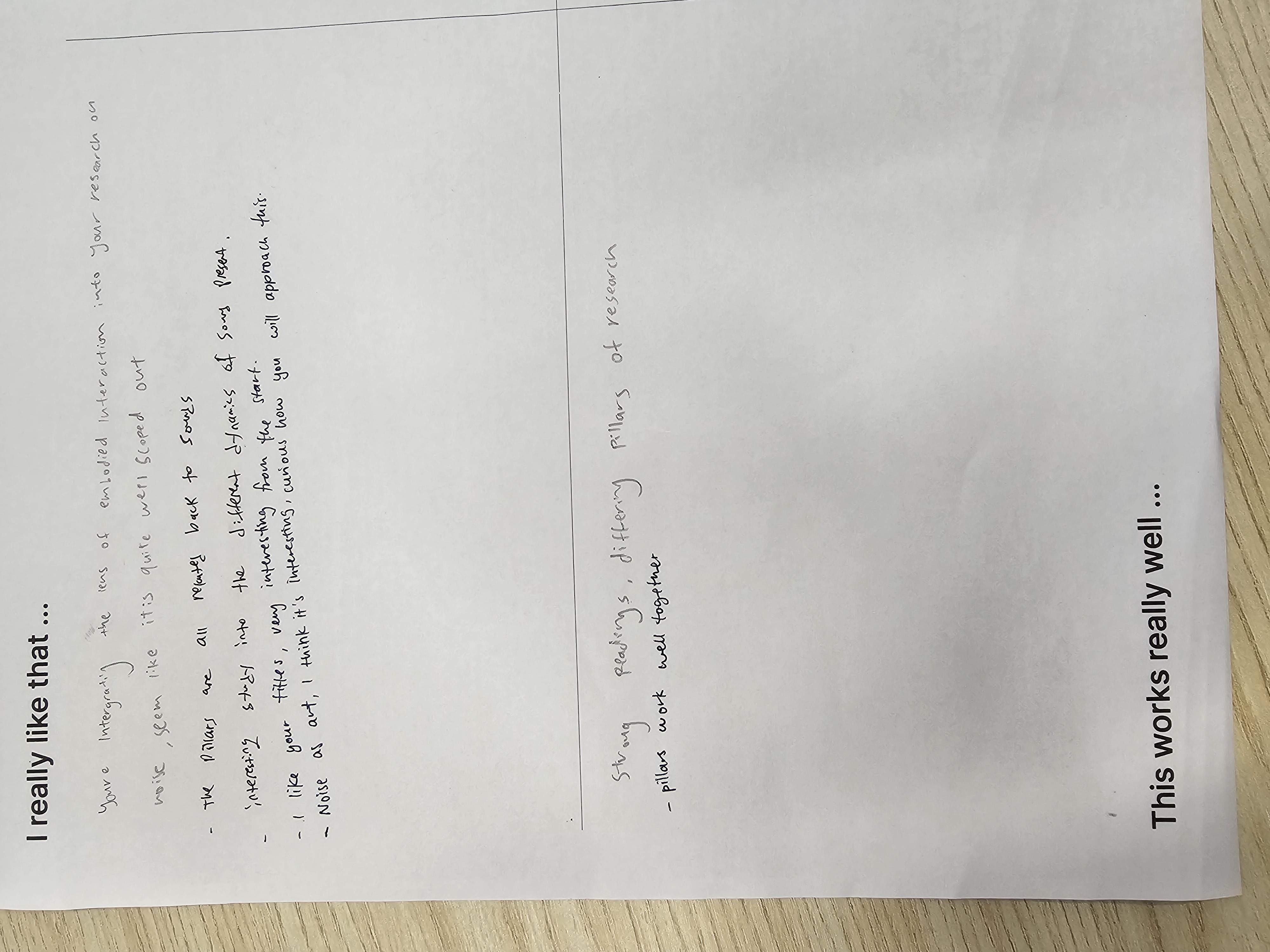
"What to maintain and strengthen"
Scope Definition
The approach of viewing noise through the lens of Embodied Interaction is exceptionally well-defined. This conceptual framing provides clear boundaries while maintaining intellectual rigor, avoiding the pitfall of being too broad or too narrow.
Structural Cohesion
The three core pillars (Embodied Interaction, Sculpting Sound, Turning Noise into Art) are not isolated concepts but form a coherent, interconnected framework unified by the central theme of Sound. This cohesion demonstrates mature research design.
Engagement & Interest
The project titles and framing immediately capture attention. The perspective of "Noise as Art" is inherently provocative and intellectually stimulating, challenging conventional assumptions about urban soundscapes.
Literature Selection
The chosen readings and theoretical references are robust and persuasive, demonstrating comprehensive understanding of relevant fields from HCI theory to sound studies to data sculpture.
The Three-Pillar Framework
Through the peer review process, the three pillars emerged as the project's conceptual backbone. Each image represents a different aspect of how these pillars were communicated and refined through feedback.
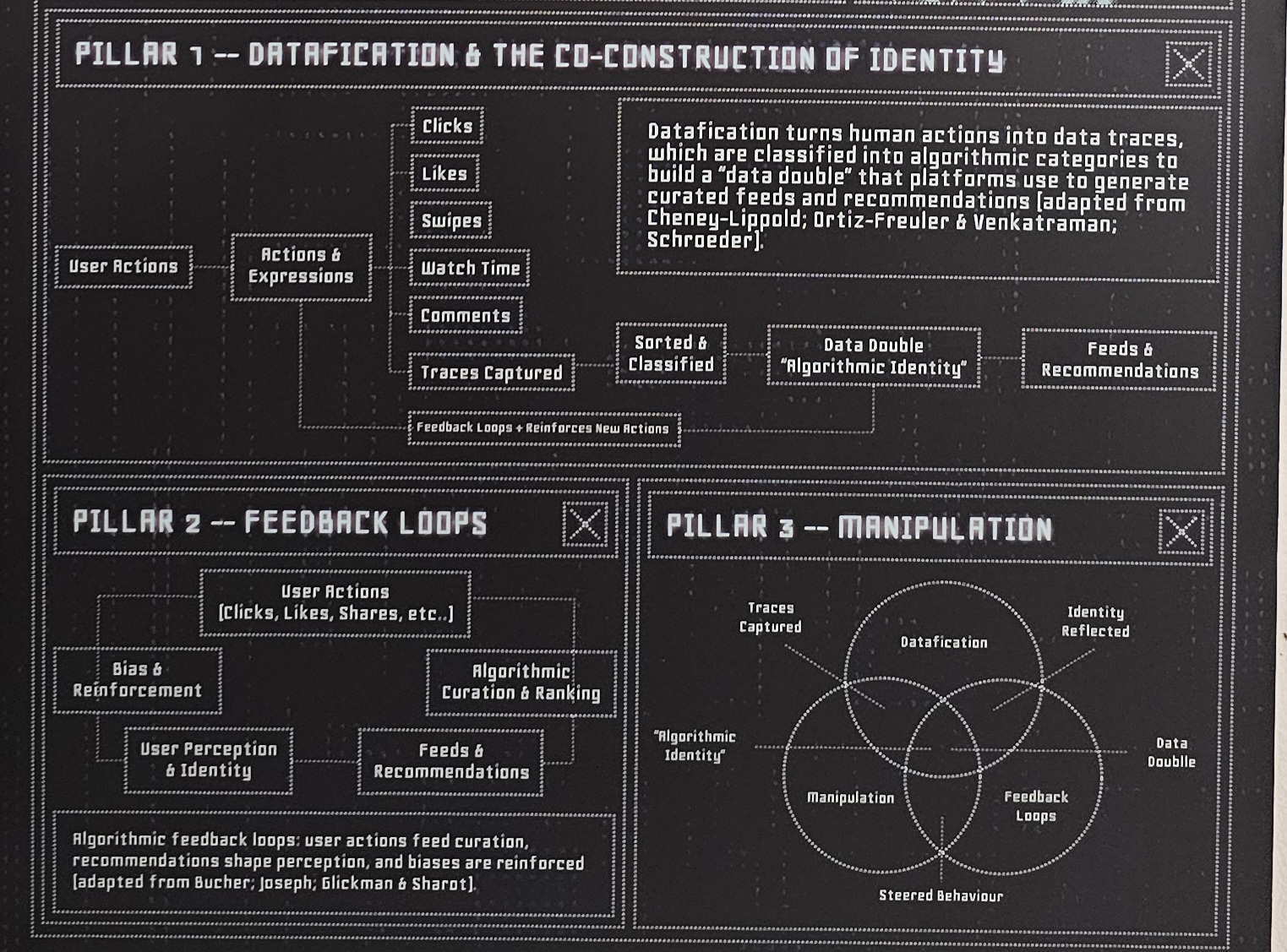
Pillar framework: Interconnected theoretical foundations
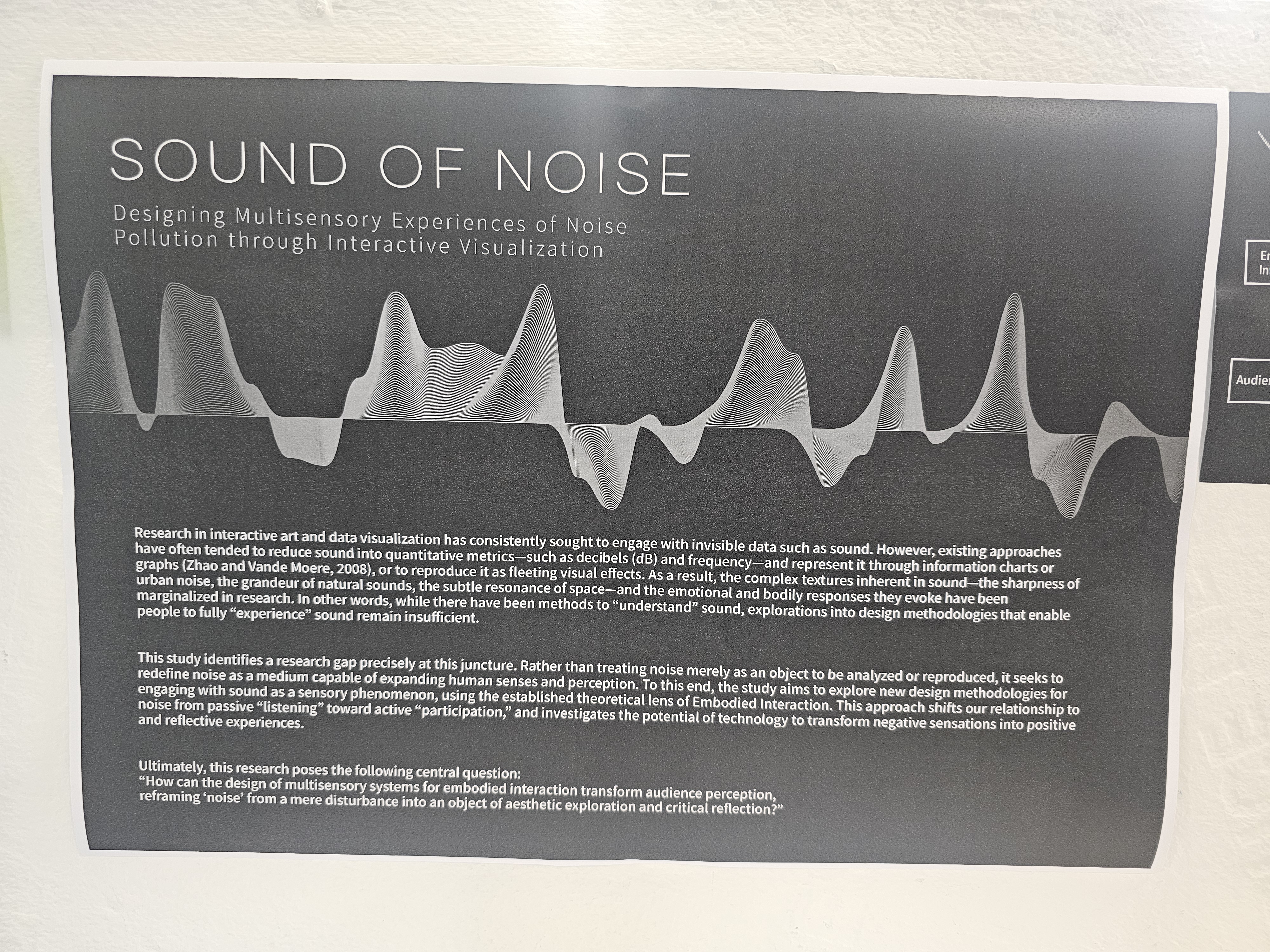
Detailed analysis of each pillar's theoretical grounding
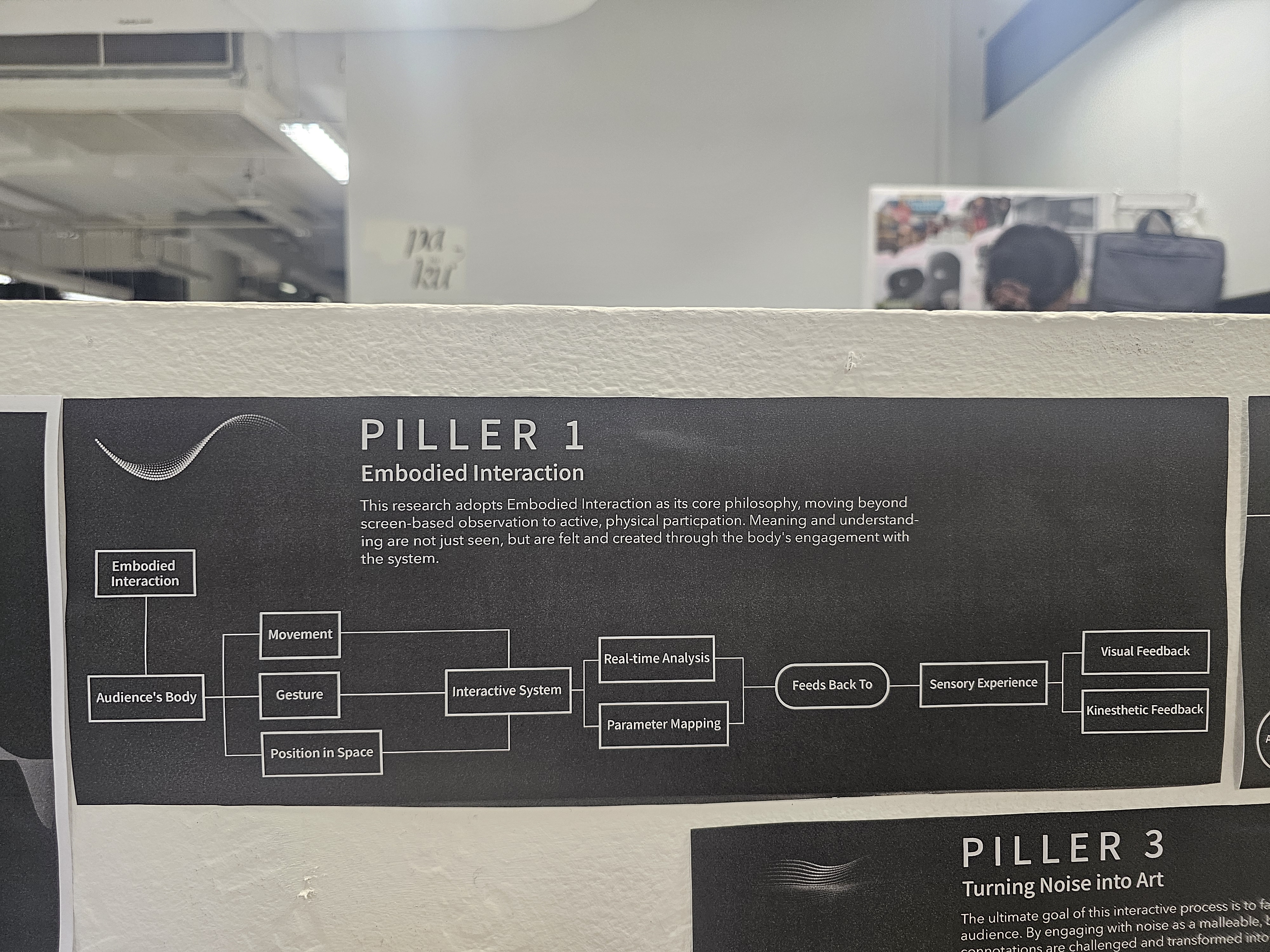
How the three pillars connect and reinforce each other
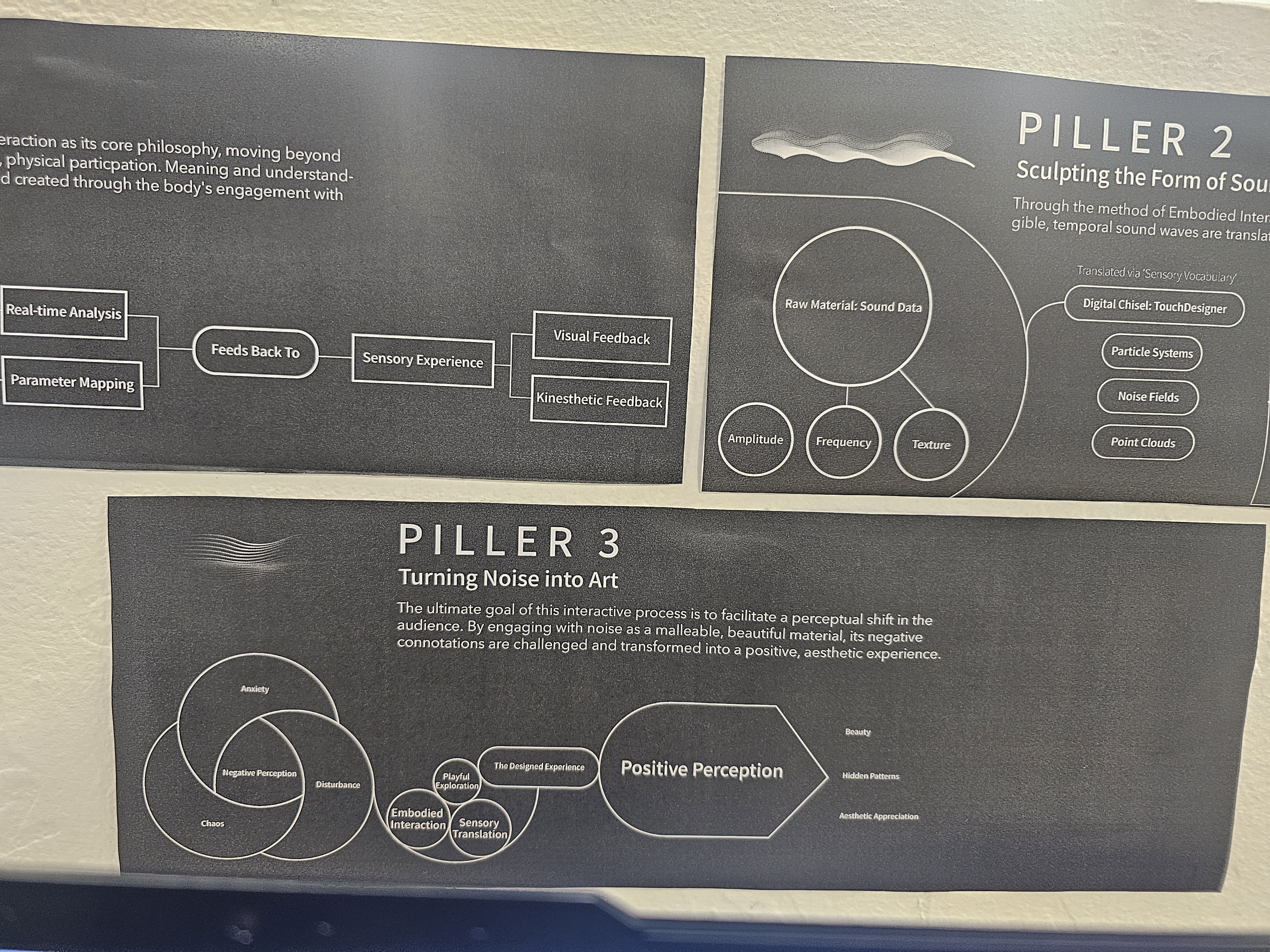
Translating theoretical pillars into practical methodology
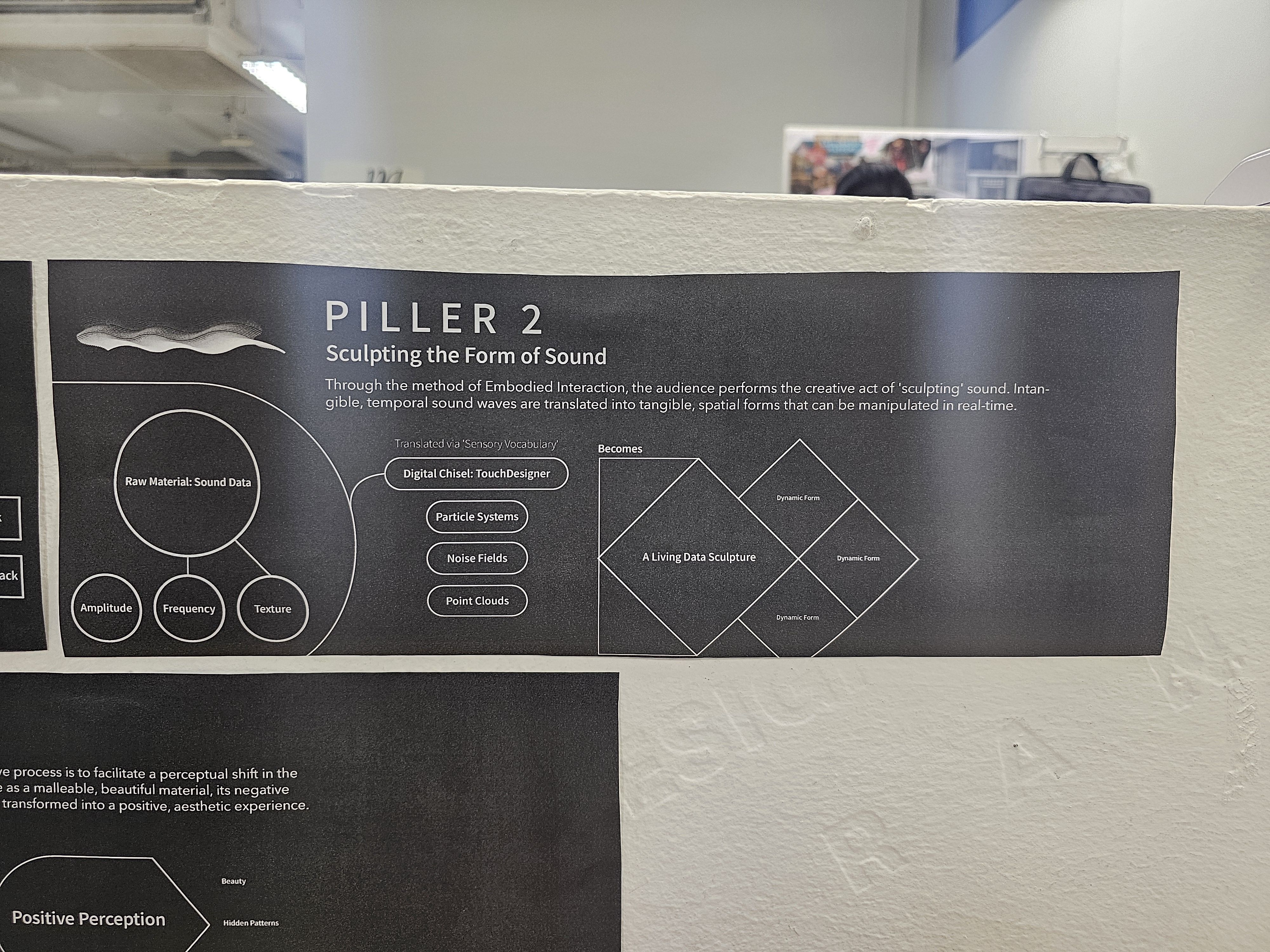
Synthesis: From concept to implementation strategy
02. Areas for Clarification
"Most urgent aspects requiring specificity"
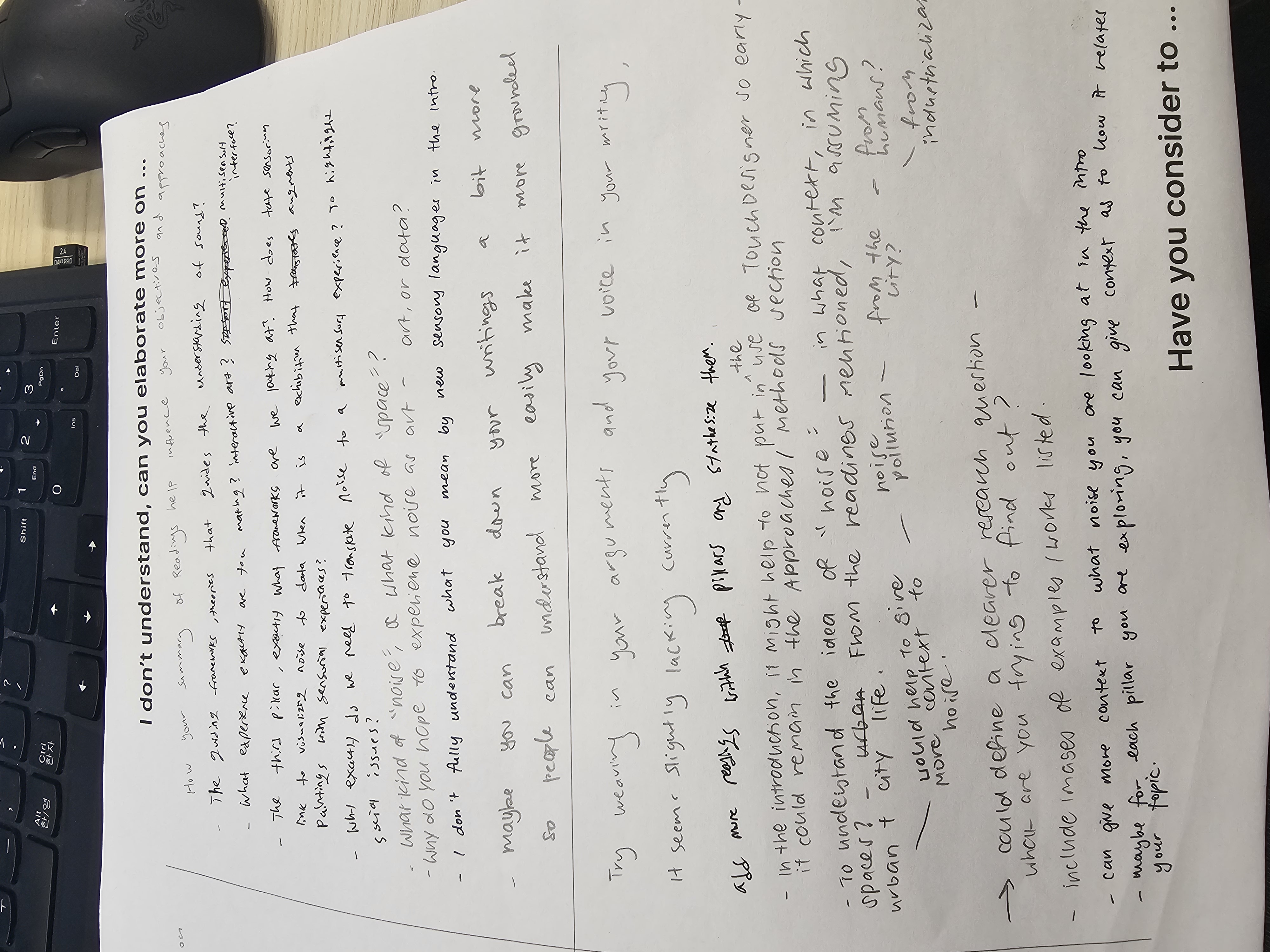
A. Definition of 'Noise' and 'Space' Remains Ambiguous
Question: "What kind of noise exactly? What kind of space?"
Critique: Simply saying "urban noise" is too broad. Is it noise pollution as mentioned in the literature? Human-generated noise? Industrial noise? A specific contextual example is needed for readers to visualize a concrete scenario.
Analysis: The audience needs to be able to imagine a specific scene in their mind. The scope must be narrowed to create tangible understanding.
Example Improvement: Instead of "urban noise," specify something like "the sharp mechanical sounds and crowd murmur from construction sites in Singapore's Bugis district."
B. Purpose and Justification (The 'Why')
Question: "Why must noise be transformed into a multisensory experience? Is it to emphasize a social problem?"
Question: "Are you trying to make people experience noise as 'Art' or as 'Data'?"
Analysis: It's unclear what message or transformation you want the audience to experience. The justification cannot simply be "because it's cool" but must articulate what change or insight you want to provoke.
C. Questionable Relevance of Reference (Tate Sensorium)
Question: "Tate Sensorium augmented paintings with sensory elements, but how does this connect to your project of visualizing invisible noise as data?"
Analysis: The logical connection to Tate Sensorium feels weak. The reference needs stronger justification beyond simply being "multisensory." Clarify exactly what methodology is being borrowed.
Suggested Refinement: The reason for citing Tate Sensorium should not be "to supplement artworks" but rather "the methodology of transforming negative or neutral experiences into positive, memorable ones through sensory translation."
D. Identity of the Output (The 'What')
Question: "What exactly is the experience you're creating? Is it interactive art? A multisensory interface?"
Analysis: Reading the RPO alone doesn't provide a clear sense of what the final deliverable will look like. The output needs explicit definition.
Recommendation: State clearly in the introduction: "This is not mere data visualization but an interactive installation where audiences sculpt noise data through bodily movement."
Guidelines for Improvement
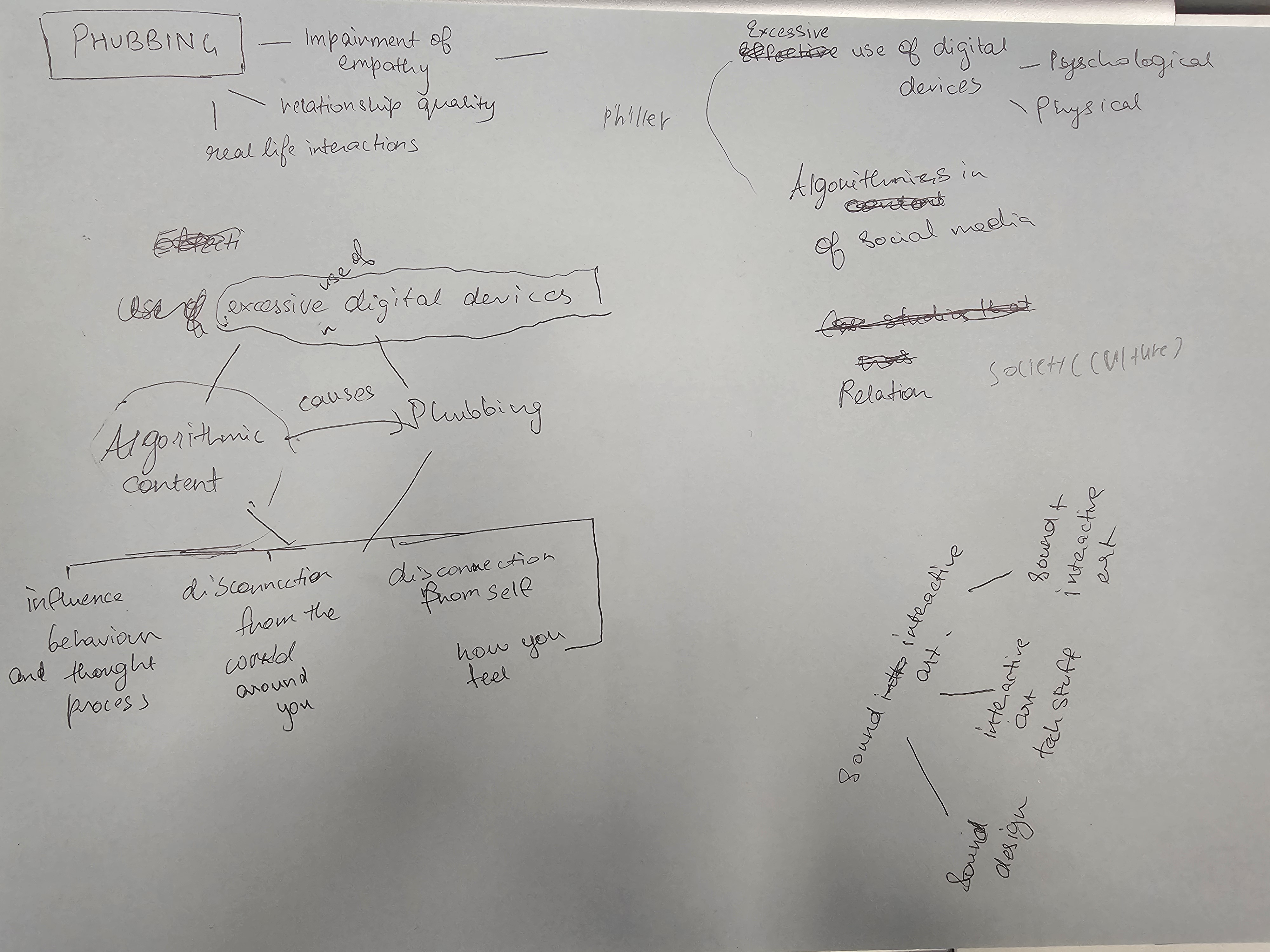
Structural and writing guidelines from peer feedback
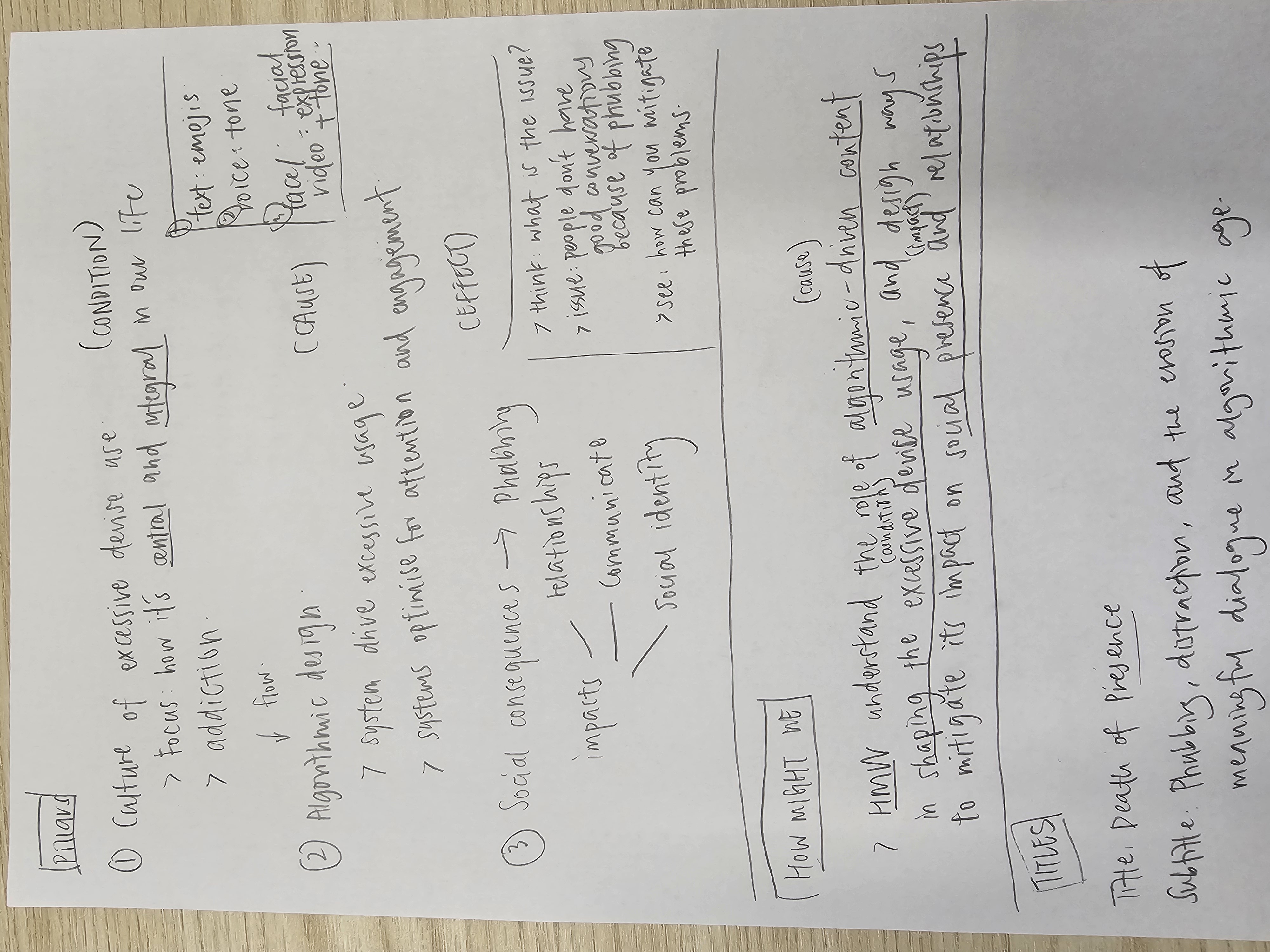
Additional refinement suggestions and considerations
03. Writing & Structure Advice
"Details to incorporate when revising the RPO"
Tool Mention Timing
Advice: "Don't mention 'TouchDesigner' too early in the Introduction. Tool discussion should be deferred to the Methodology section."
This is critical advice. The introduction should focus on philosophy and problem, not technical implementation.
Authorial Voice
Feedback: "The current writing lacks your voice and argument. Don't just list citationsweave in your own thinking and perspective."
Literature review should not be mere summary but synthesis that builds toward your original contribution.
Terminology Clarity
Example: "The phrase 'new sensory languages' in the introduction is not fully understood."
Replace abstract jargon with concrete, accessible language that grounds concepts in tangible experience.
Readability
Suggestion: "Break down the text more so people can easily understand and feel it's grounded in reality."
Dense academic prose can obscure rather than illuminate. Clarity serves both rigor and accessibility.
Reflection: Growth Through Critique
Week 6 taught me that strong theory needs strong evidence. The peer review revealed that while my three-pillar framework provides conceptual clarity, it must be anchored in tangible demonstrations, specific contexts, and clear definitions. Abstract concepts must trace back to concrete experience; theoretical claims must be demonstrable through practice.
Most importantly, I learned that academic rigor is not about complexity but about precision. The strongest research doesn't hide behind jargonit speaks plainly about profound ideas. Moving forward, I will prioritize specificity over abstraction, evidence over assertion, and clarity over sophistication.
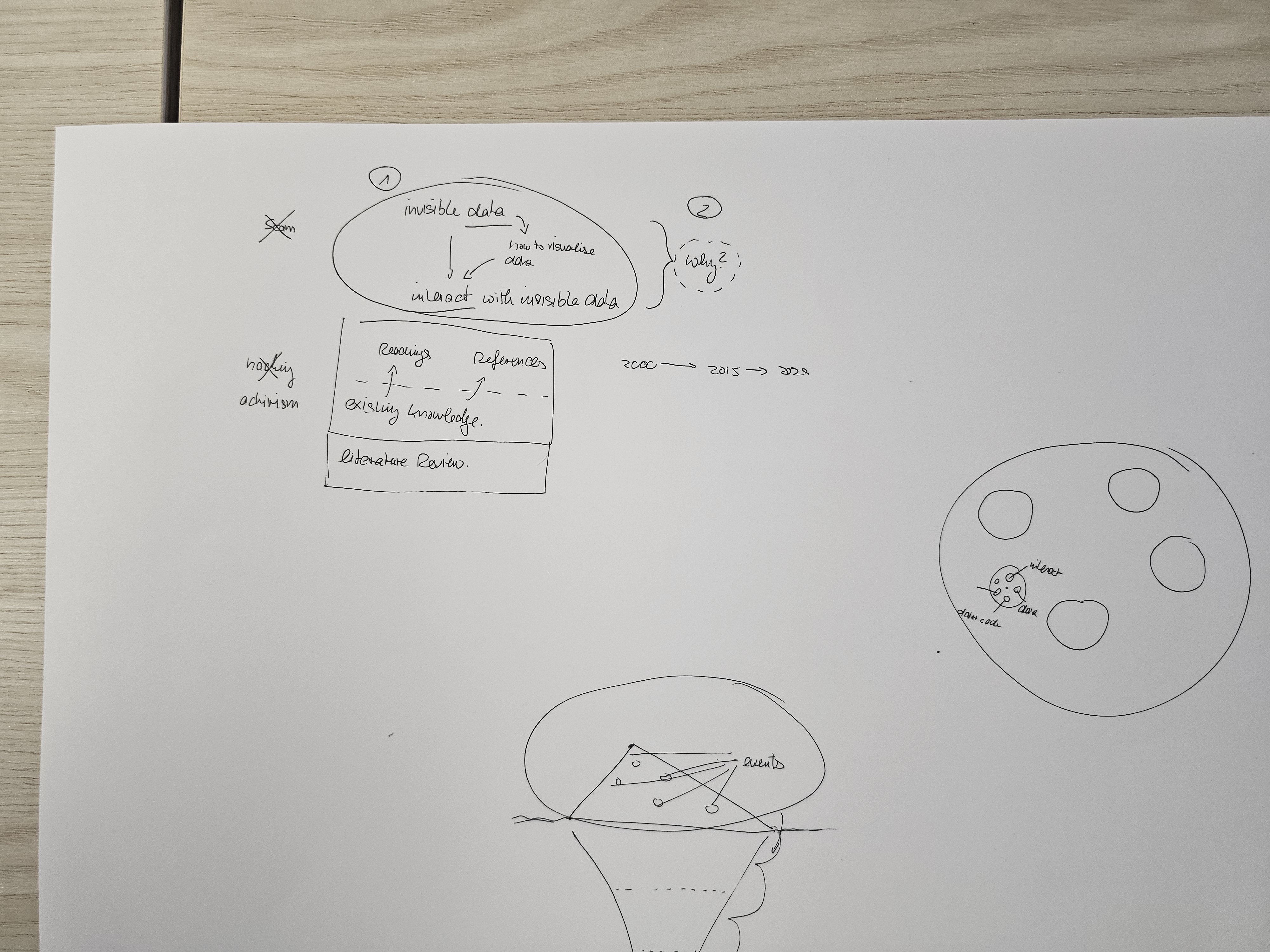
Comprehensive action plan: Translating peer feedback into concrete implementation steps
Outcome & Moving Forward
Successfully synthesized peer feedback into a structured action plan for RPO revision. The three-pillar framework was validated as a strong conceptual foundation while identifying critical gaps in definition, justification, and evidence.
Key outcomes:
- Categorized feedback into four clear areas with actionable responses
- Identified three priority actions: define noise specifically, clarify output format, strengthen Tate Sensorium rationale
- Developed comprehensive guidelines for RPO revision incorporating peer insights
- Created structured approach to balancing theoretical depth with concrete grounding
- Prepared strategic roadmap for Week 7 faculty presentation
Preparing for Week 7 Interim Presentation
With peer feedback synthesized into actionable improvements, Week 7 will focus on the interim faculty presentation:
- Present refined RPO incorporating peer feedback on specificity and clarity
- Articulate the three-pillar framework with stronger theoretical justifications
- Demonstrate theory-practice integration through experimental prototypes
- Show systematic development process and research methodology
- Receive faculty feedback to guide semester trajectory and final deliverables