Overview
Week 7 marked a significant milestone: the interim presentation to the professor. This session provided an opportunity to demonstrate cumulative progress from conceptualization through technical prototyping to theoretical grounding, while receiving critical faculty feedback before Project Week.
Additionally, this week involved analyzing past graduates' works to understand the standard of graduation deliverables and calibrate expectations for the final exhibition.
Goal & Approach
Goal
To demonstrate progress to the professor and understand the standard of graduation deliverables. The presentation needed to showcase not only what had been accomplished, but also articulate the rationale behind key decisions and the roadmap for completion.
Process
Presented the current status and rationale to the professor, covering the conceptual framework, technical prototypes, and theoretical foundation. Reviewed past graduates' works to understand 'Why' they made their design choices, analyzing narrative structure, visual presentation, and technical execution.
Presentation Structure
The interim presentation was organized around the project's evolutionary journey, demonstrating how each phase built upon the previous:
- Week 3: Conceptual Framework – Mind mapping and strategic roadmap
- Week 4: Technical Validation – TouchDesigner prototype and tool selection
- Week 5: Theoretical Foundation – Research Proposal Outline and core inquiry
- Week 6: Critical Refinement – Peer feedback and three pillars framework
This narrative arc demonstrated systematic progress from abstract concept to concrete implementation, addressing the peer feedback about lack of visual evidence by showcasing prototypes and technical documentation.
Experimental Prototypes Showcase
During the weeks leading to the interim presentation, continuous experimental development produced several new prototypes exploring different visualization approaches and interaction paradigms.
Featured Prototype: Particle Flow Dynamics
This prototype demonstrated advanced particle systems responding to audio amplitude and frequency bands, showcased during the interim presentation as evidence of technical progress.
Experiment 1: Advanced particle flow dynamics with real-time audio reactivity
Supporting Experimental Work
Additional prototypes demonstrated the range of technical exploration and design iteration leading up to the presentation.
Experiment 2: Geometric form modulation
Experiment 3: Volumetric rendering techniques
Experiment 4: Multi-layered frequency visualization
Experiment 5: Reactive mesh deformation
Experiment 6: Abstract sculptural forms
Technical Infrastructure
Behind-the-scenes look at the TouchDesigner node networks powering these experimental prototypes.
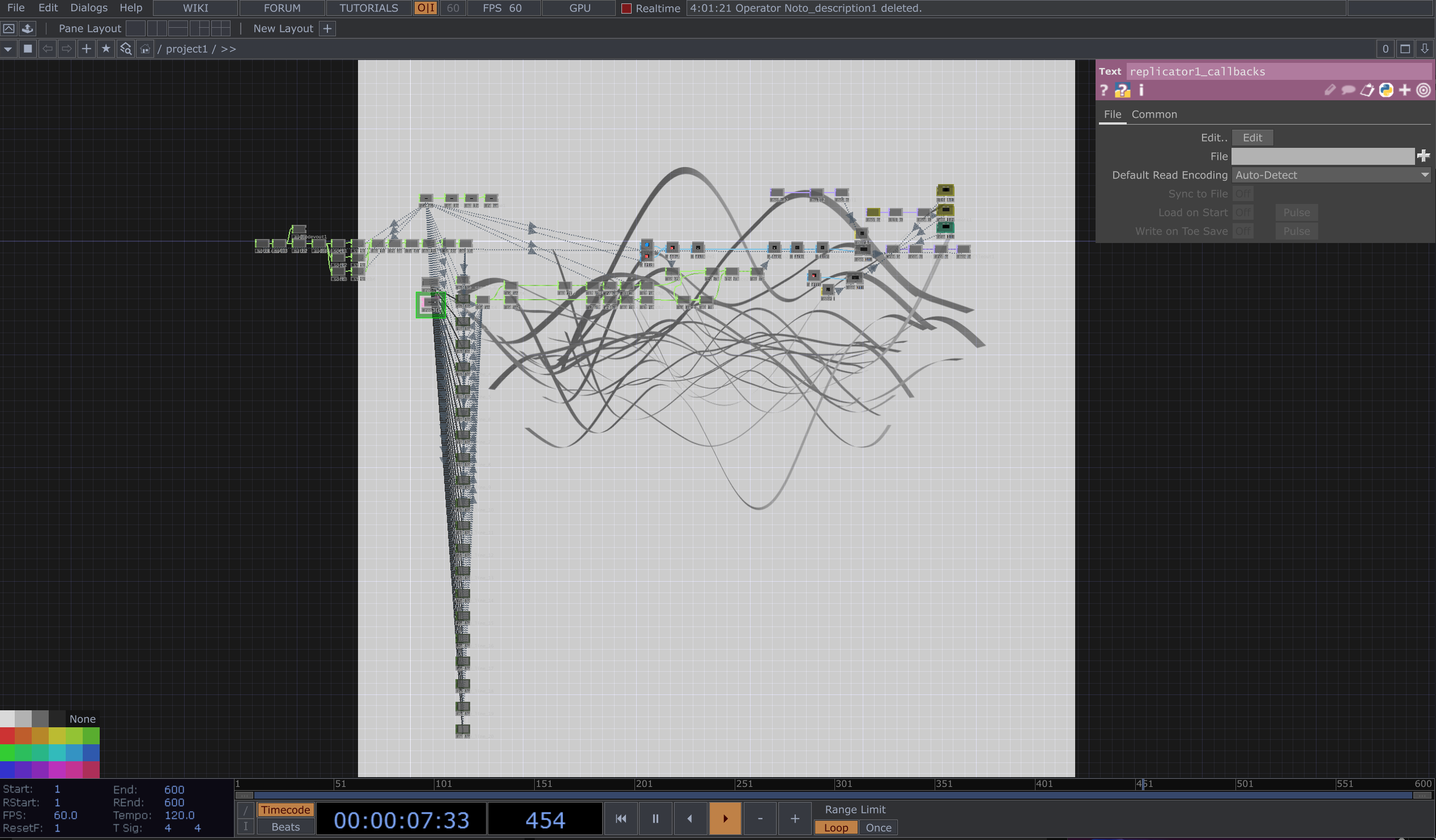
Complex TouchDesigner node network for audio-reactive systems
Presentation Materials
The presentation materials were carefully prepared to demonstrate the systematic progression from conceptual framework to technical implementation, showcasing both theoretical depth and practical execution.
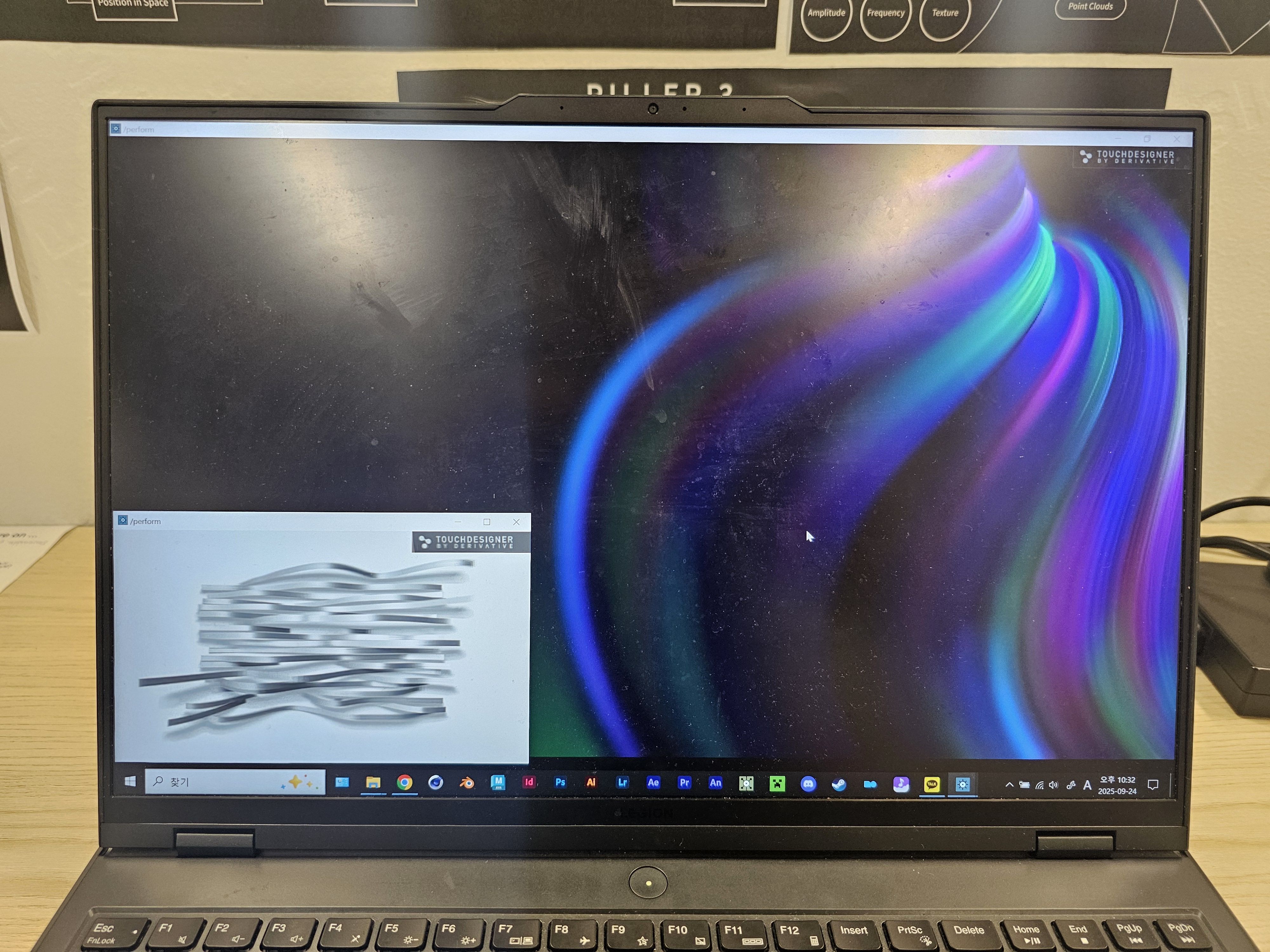
Opening: Project overview and research question
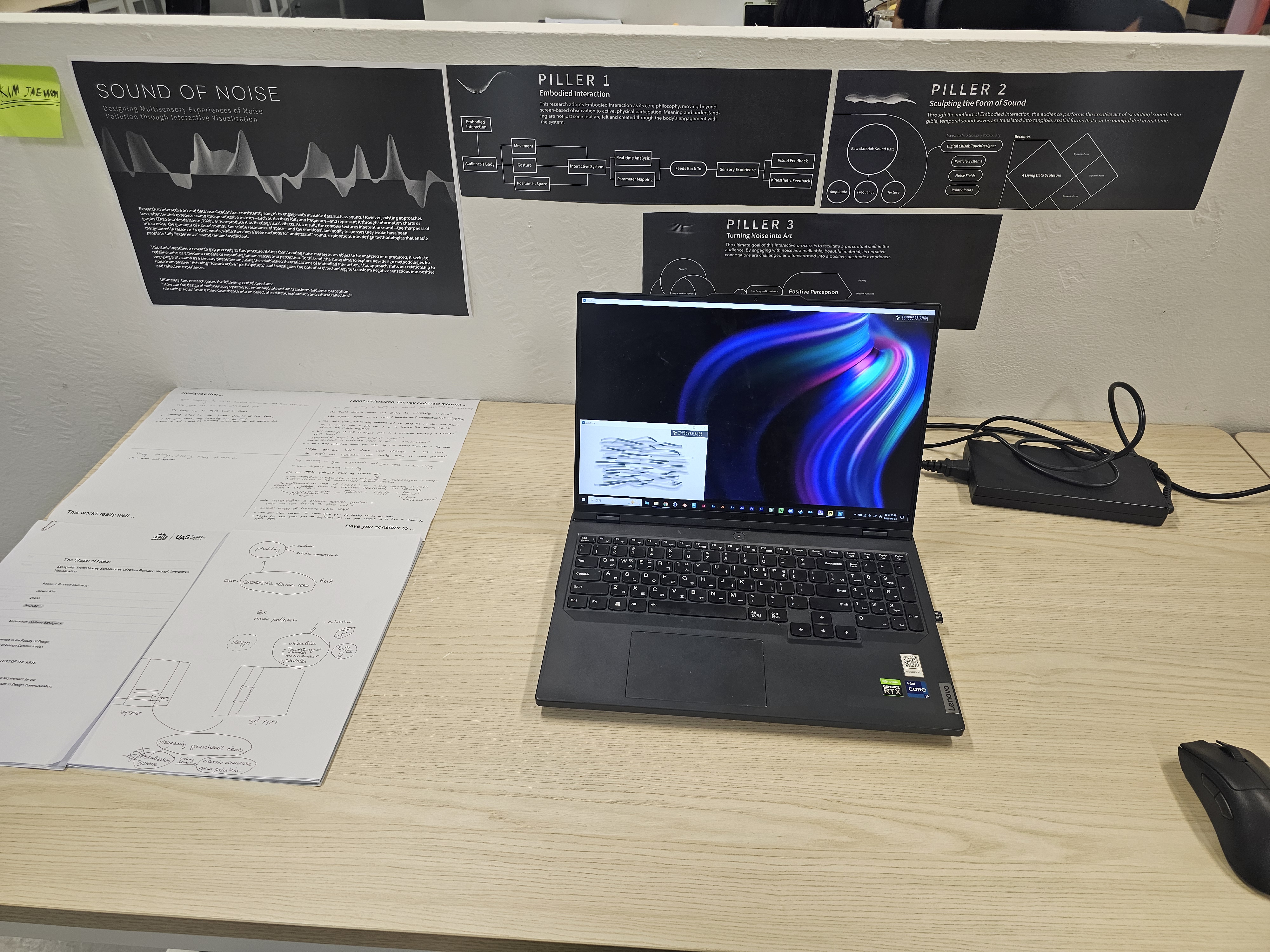
Week 3-4: Conceptual framework development
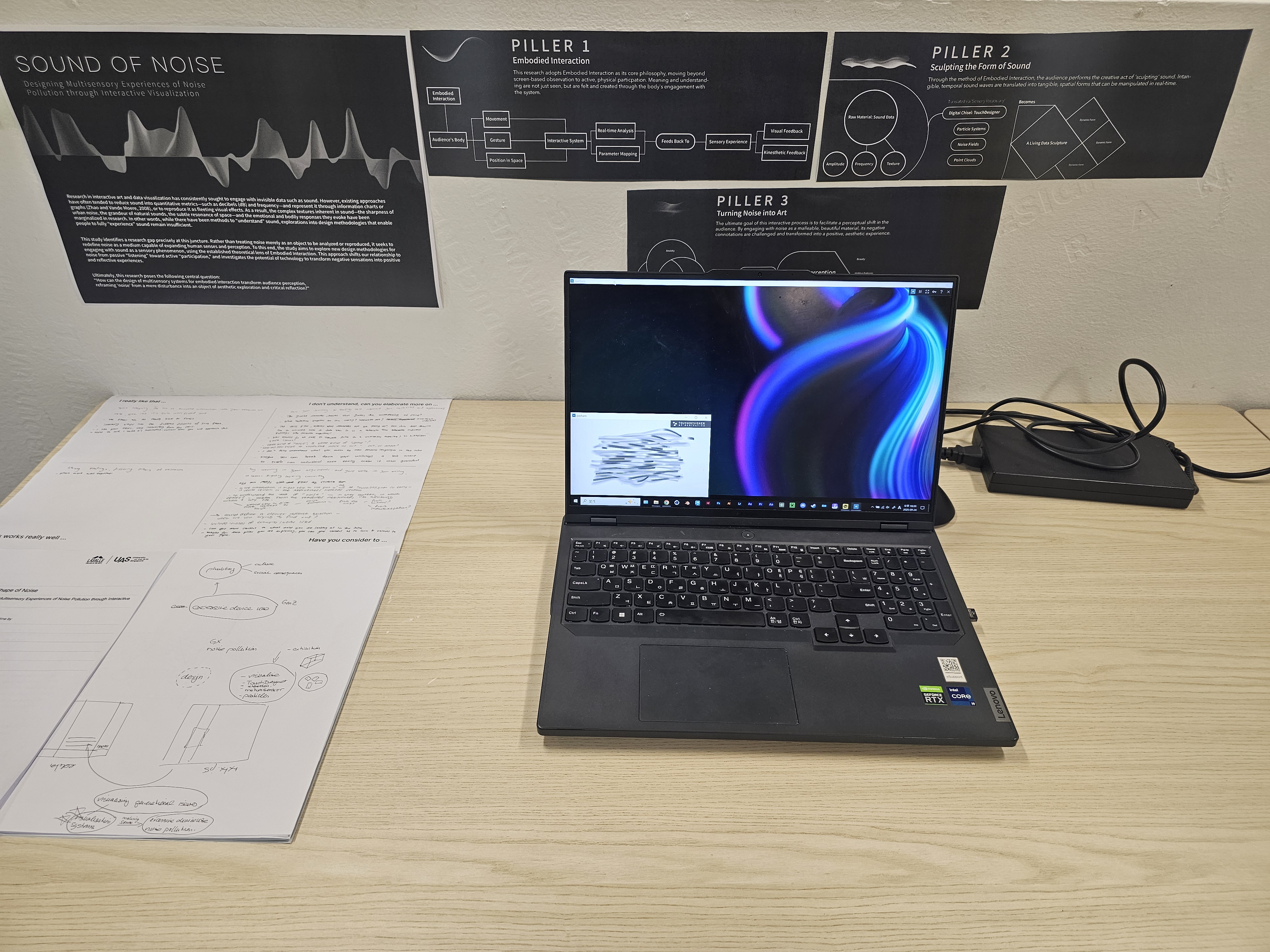
Week 5: Research Proposal and three pillars
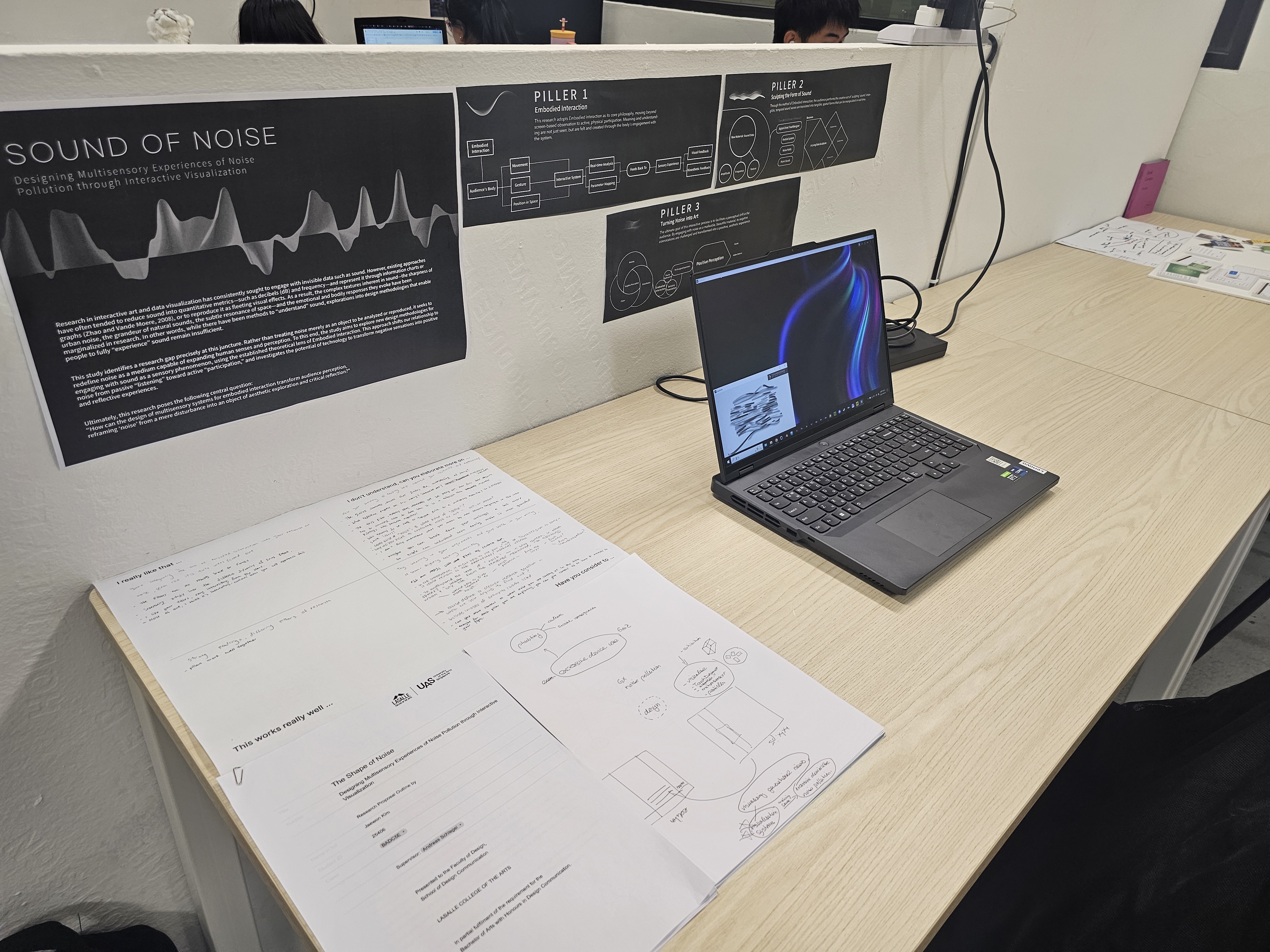
Week 6: Peer feedback and refinement
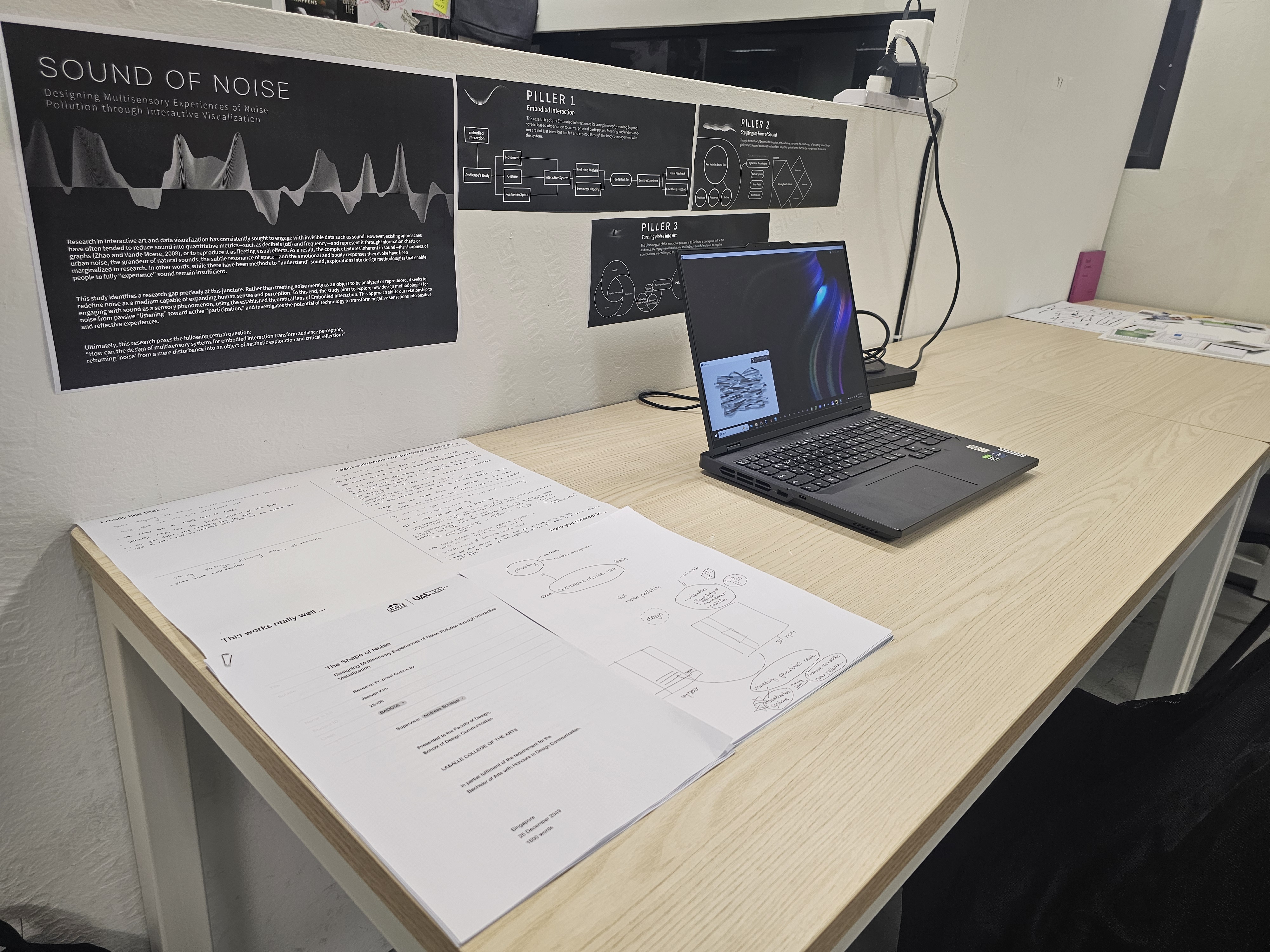
Technical prototypes and experimentation
Faculty Feedback
Strengths Acknowledged
The professor acknowledged the strong conceptual foundation and the clarity of the three-pillar framework. The integration of embodied interaction, aesthetic transformation, and technical innovation was recognized as ambitious yet coherent. The TouchDesigner prototype demonstrated technical competency and validated the feasibility of the approach.
Areas for Development
However, feedback highlighted several critical areas requiring attention before the final exhibition:
- Interaction Design: Need clearer demonstration of how participants will engage with the system
- Evaluation Criteria: How will success be measured? What constitutes "perceptual shift"?
- Exhibition Context: Consideration of physical space, duration of engagement, and audience flow
- Narrative Coherence: Ensure the final artifact tells the story without extensive explanation
Case Study: Graduate Work Analysis
Learning from Precedents
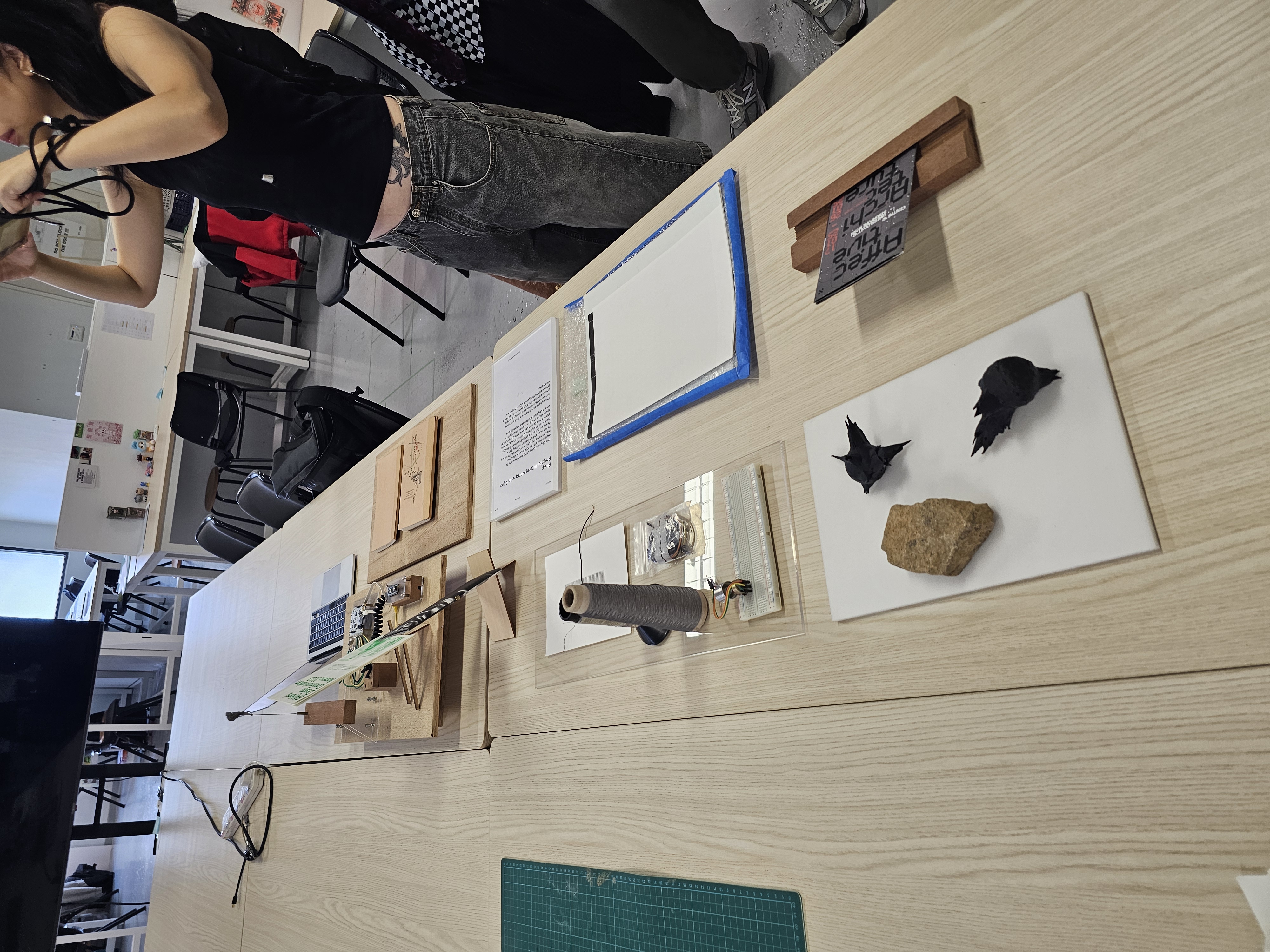
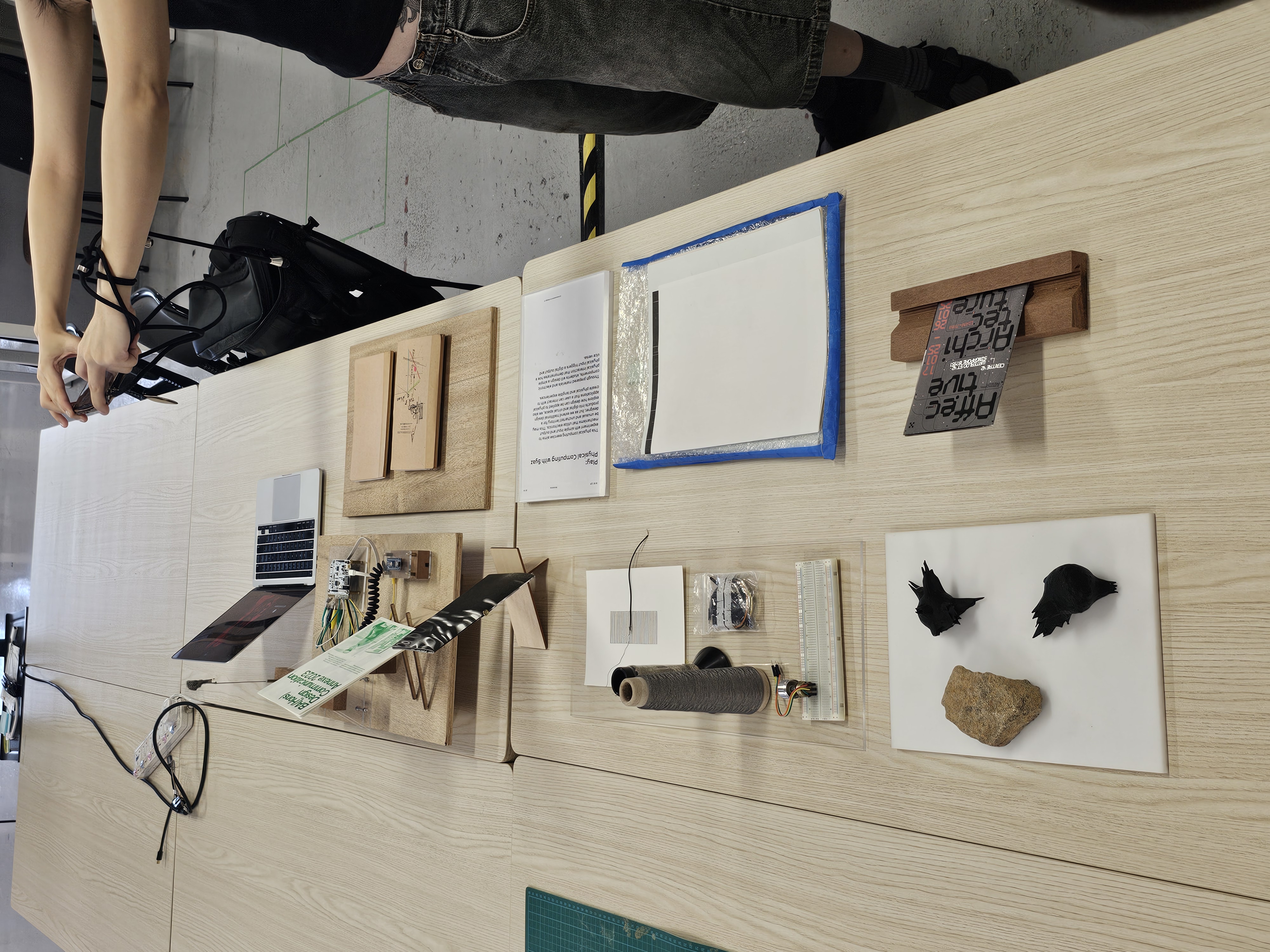
Reviewing past graduates' works revealed important insights about successful graduation projects. Rather than simply cataloging what they did, the analysis focused on understanding why they made specific choices:
- Scope Management: Successful projects balanced ambition with feasibility, focusing on depth rather than breadth
- Documentation Quality: High-quality visual and video documentation was essential for communicating complex interactive work
- User Testing: Projects that incorporated iterative testing and refinement based on feedback were stronger
- Narrative Structure: The best projects told clear stories that connected personal motivation to broader cultural significance
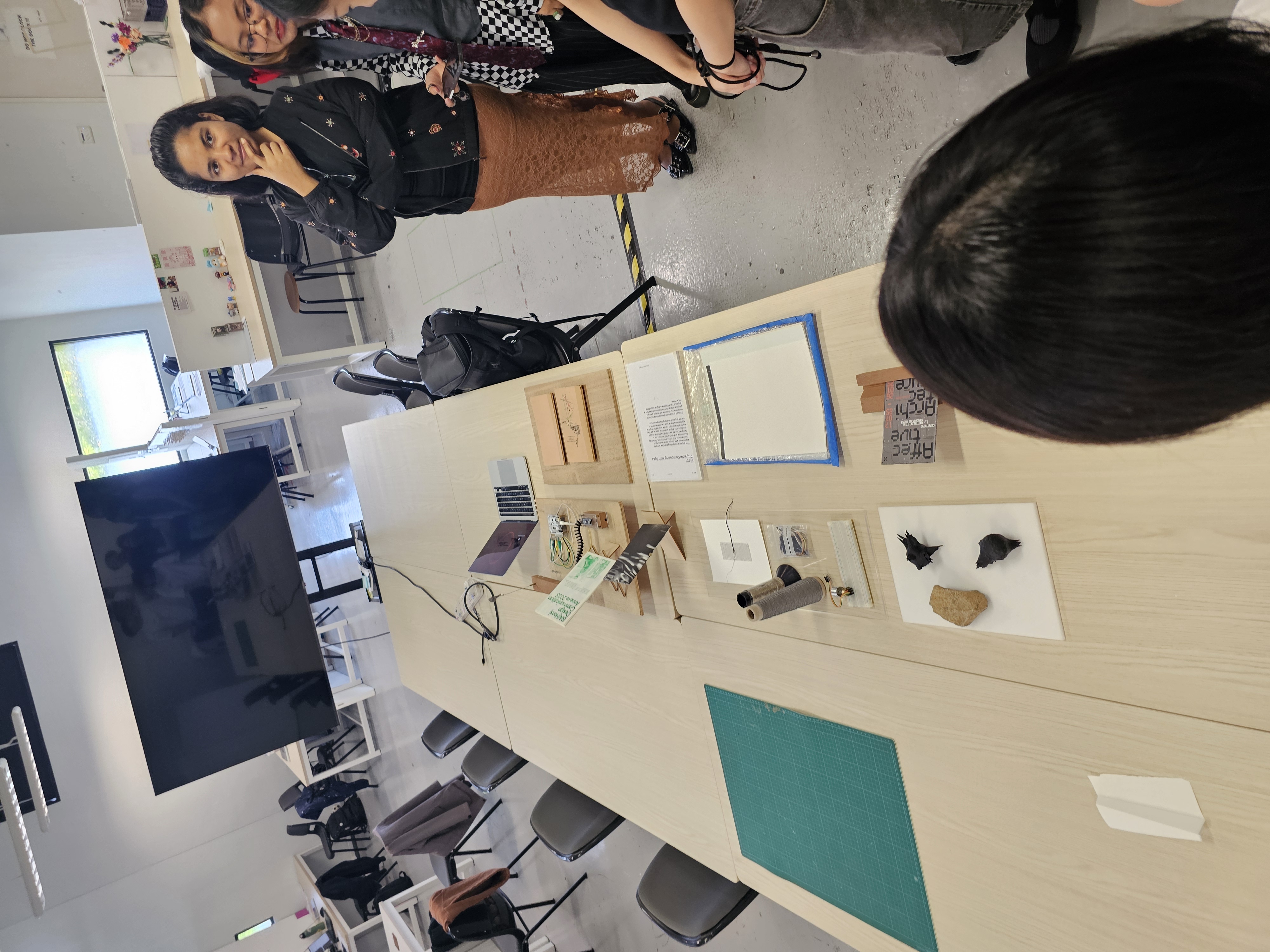
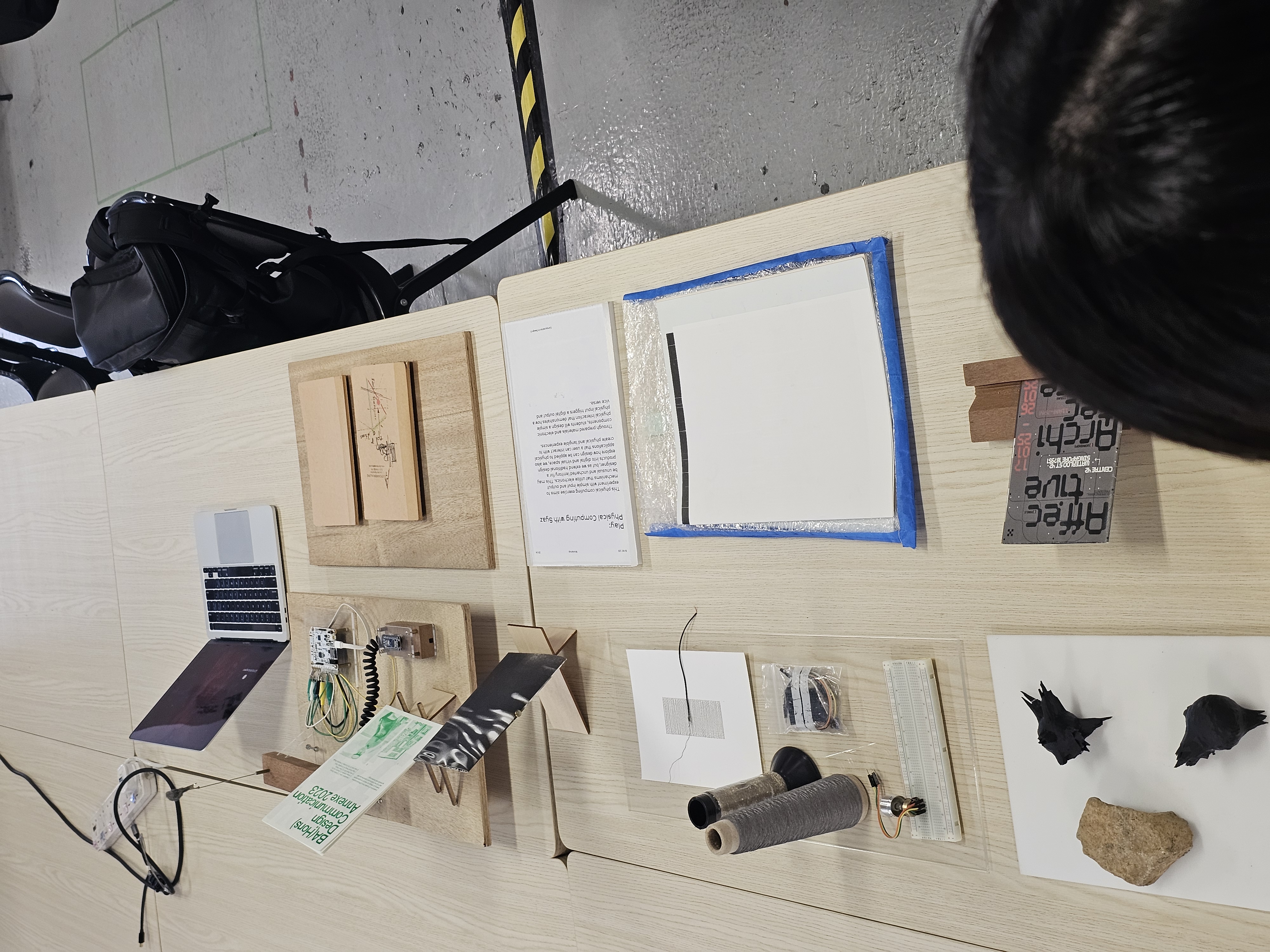
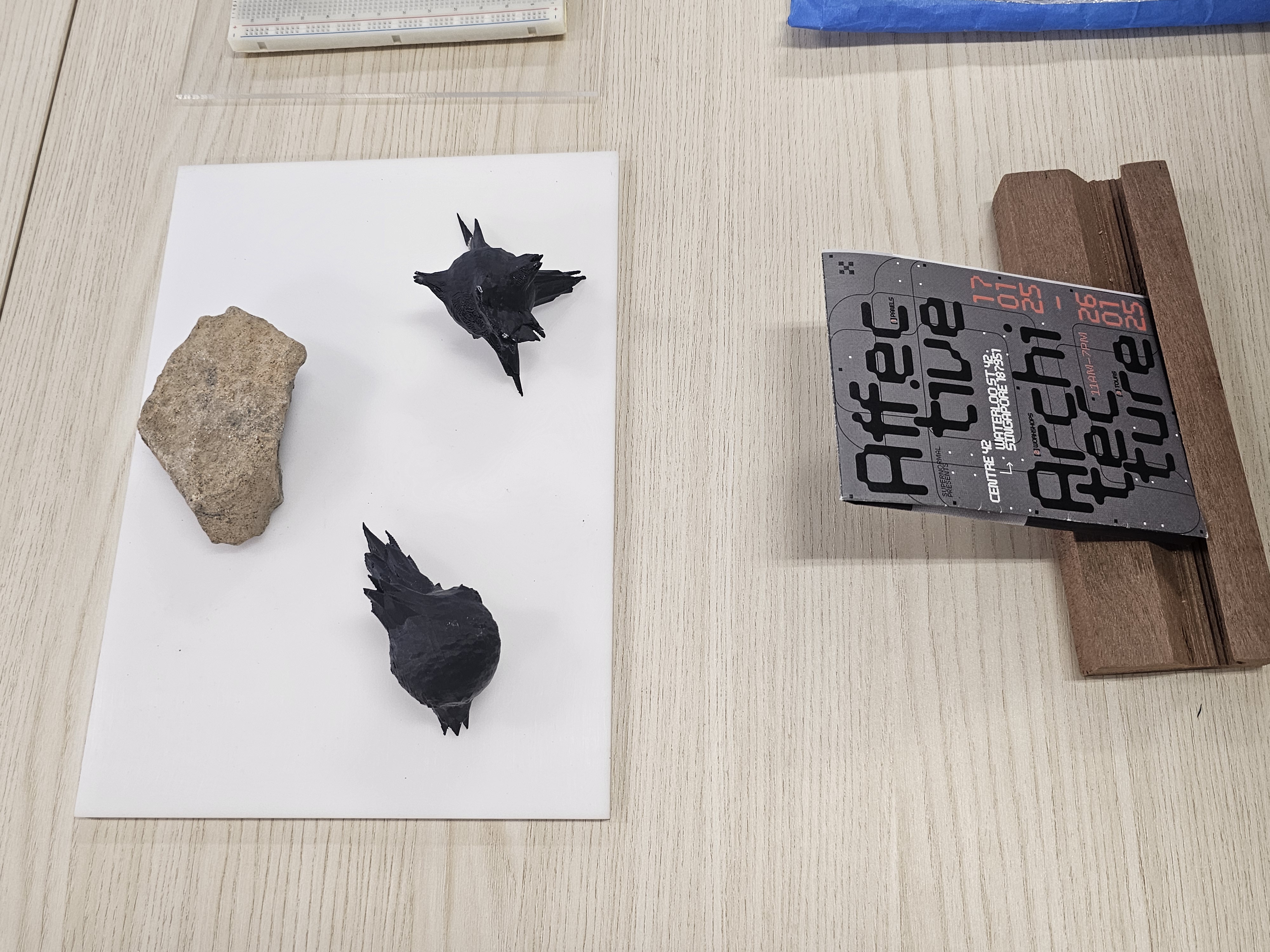
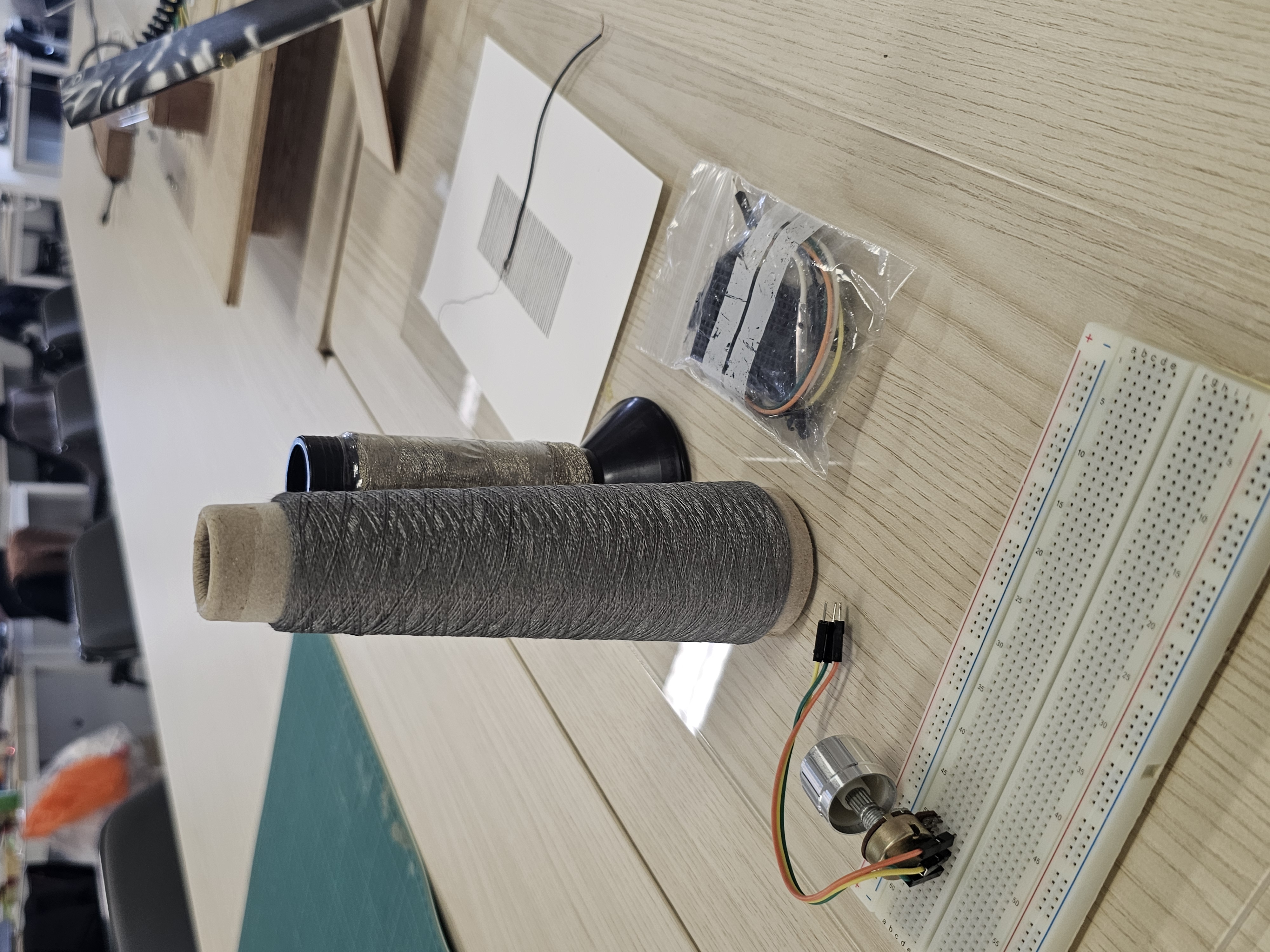
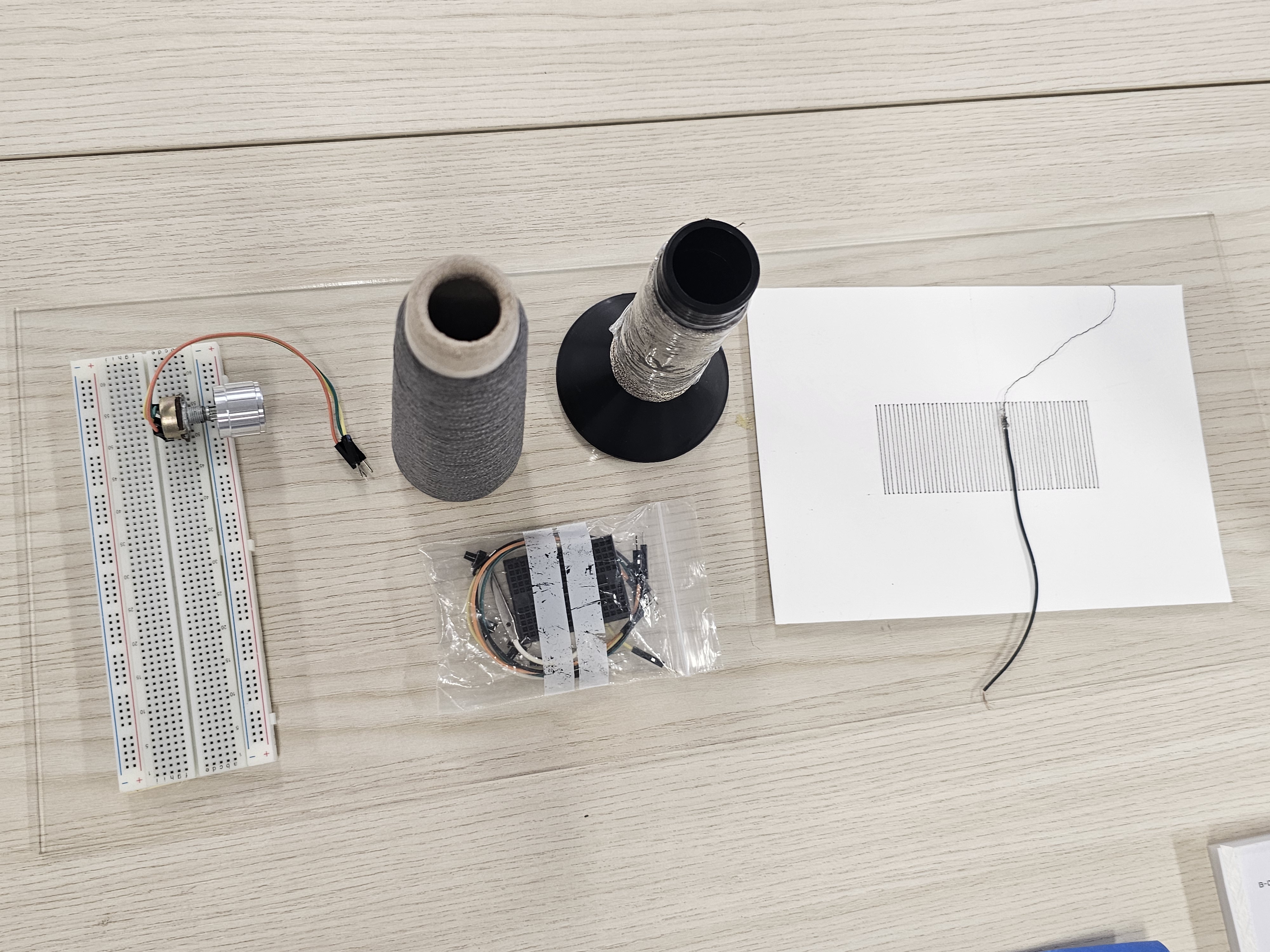
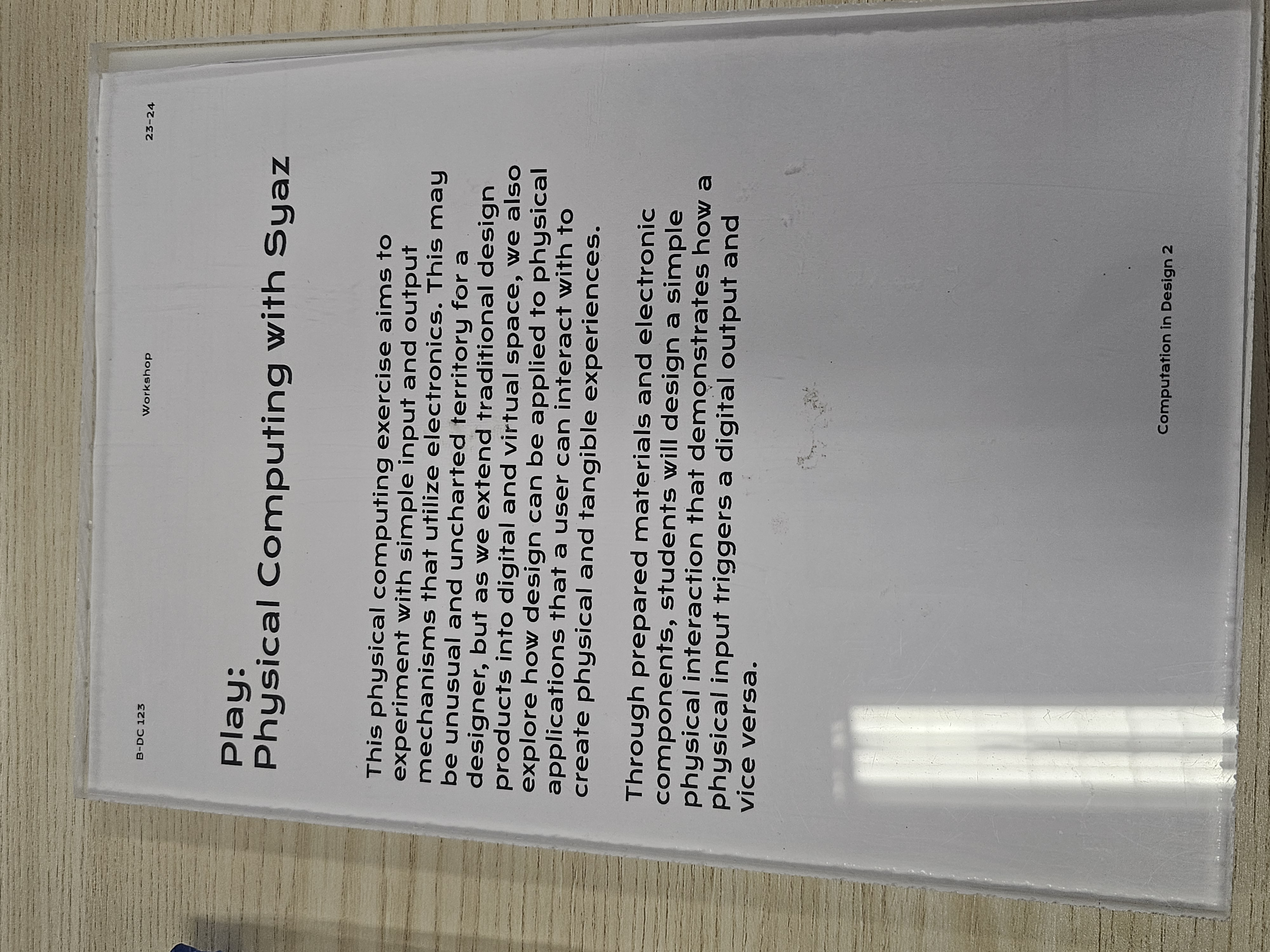
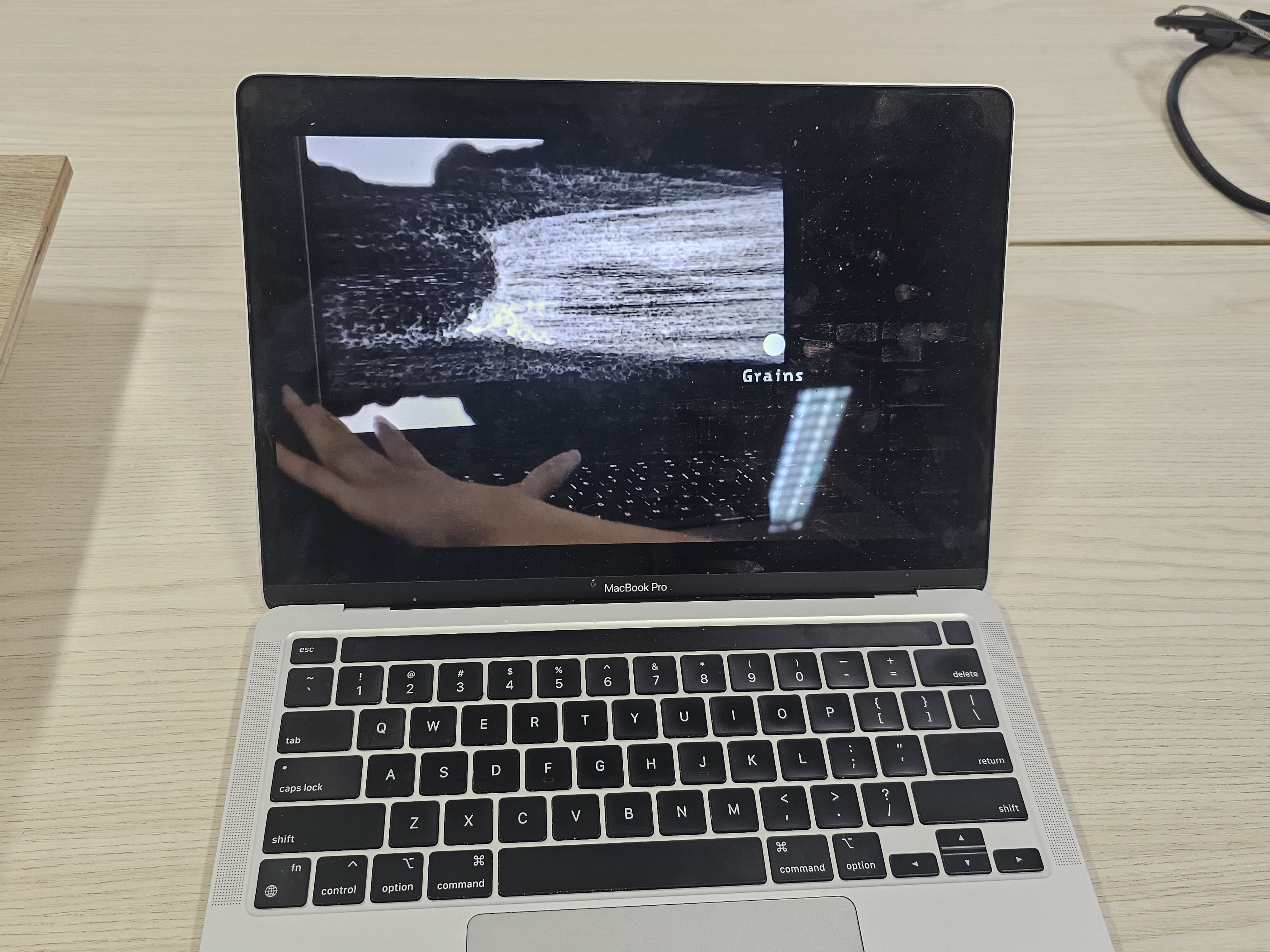
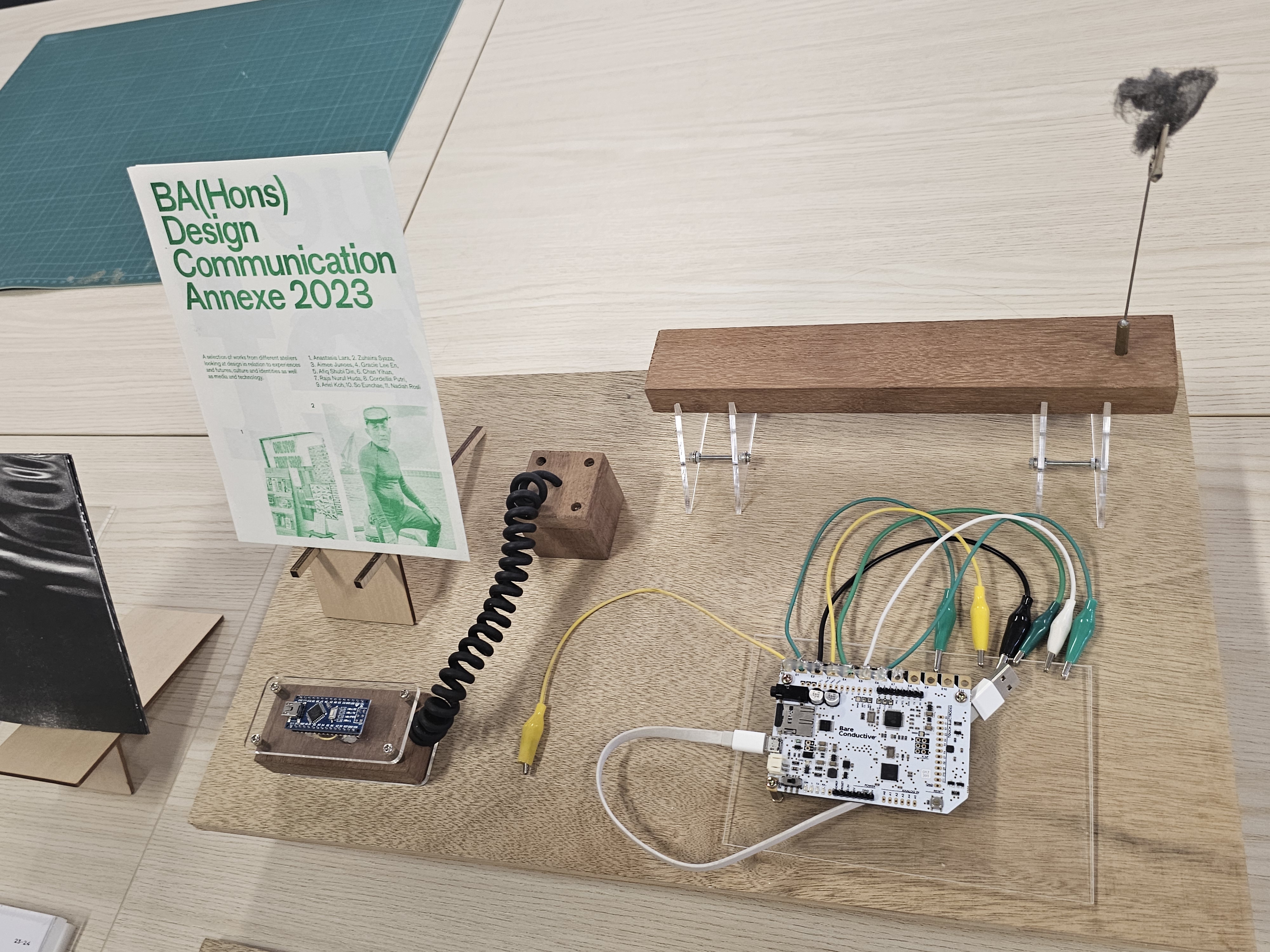
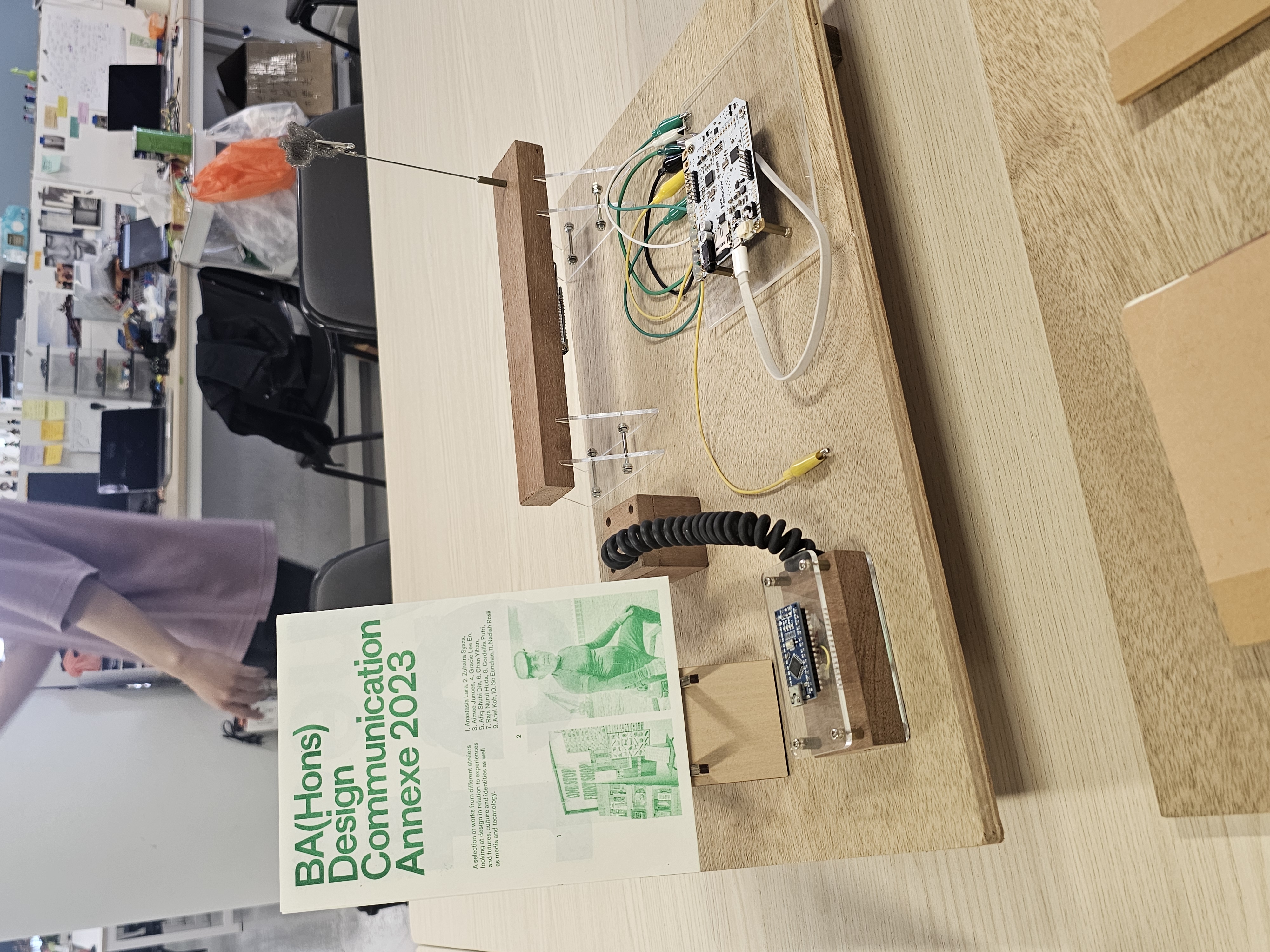
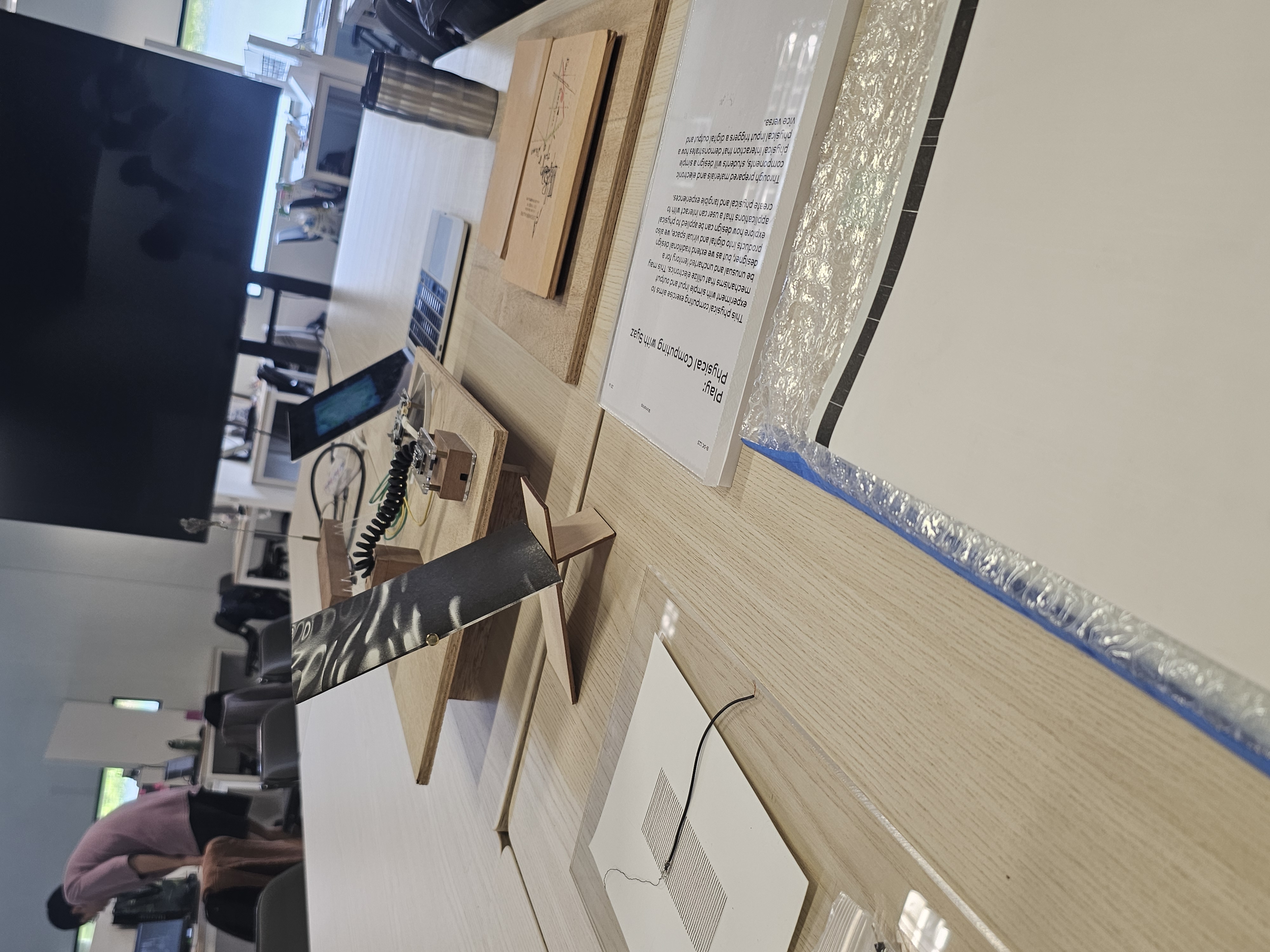
Analyzing Previous Graduate Projects
Detailed analysis of exemplary graduate works from previous cohorts, examining their documentation strategies, narrative structures, and exhibition designs to inform my own project development.
Challenge: Aligning Experimental Approach with Academic Requirements
One persistent challenge has been aligning my experimental, art-driven approach with the structured requirements of academic research. The project sits at the boundary between artistic practice and design research, requiring both creative expression and systematic documentation.
The graduate work analysis provided clarity on how to navigate this tension: treat the artifact as the primary research output, with documentation and reflection serving as context rather than justification. The work should speak for itself while the written component explicates its methodology and contribution.
Outcome
Successfully completed the interim presentation, receiving constructive faculty feedback that will guide the next phase of development. Gained clarity on the expected output level and narrative structure for the final exhibition, particularly regarding:
- Technical robustness and reliability for installation context
- User experience design and interaction flow
- Documentation standards for portfolio and thesis
- Integration of theory and practice in the final deliverable
The graduate work analysis provided valuable benchmarks and revealed patterns in successful projects, informing strategic decisions about scope, documentation, and presentation.
Reflection & Next Steps
Key Takeaways
The first seven weeks established a solid foundation: conceptual clarity, technical feasibility, and theoretical grounding. The three pillarsembodied interaction, noise as art, and sculpting soundprovide a coherent framework that guides all subsequent decisions.
Moving Forward
Project Week and beyond will focus on:
- Refining the interaction paradigm through user testing
- Developing multiple prototype iterations
- Creating comprehensive documentation for exhibition
- Finalizing the installation design and technical infrastructure
- Writing the thesis that contextualizes the work
The journey from mind map to interim presentation has been one of continuous refinementfrom abstract concept to tangible prototype, from vague ambition to clear research question. The next phase will transform this foundation into a compelling, fully-realized installation.