About Project
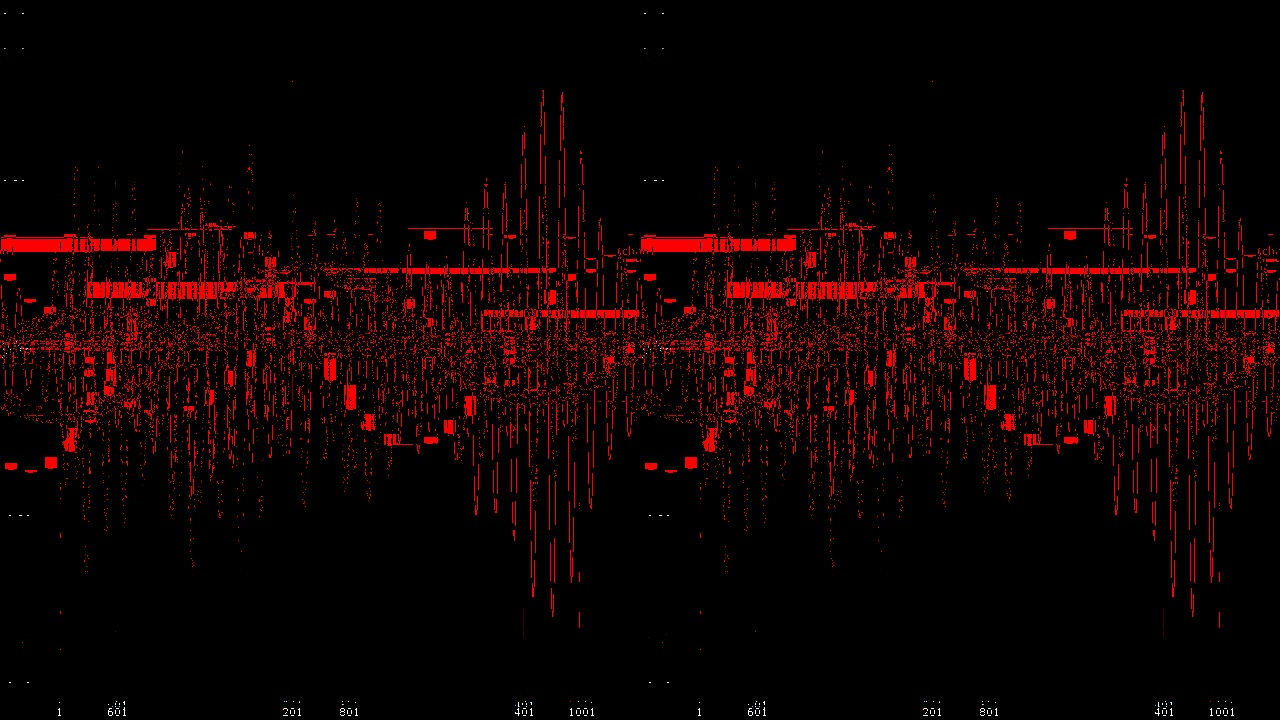
In the second week, we focused on individual presentations where everyone introduced their own projects. Since Atelier is centered on Computation in Design, each student began presenting projects that combined design and technology while reflecting their own unique personality.
I was drawn to exploring the potential of technology to shift the relationship between noise and participants from passive listening to active engagement, and to transform negative sensory experiences into positive and reflective ones. After creating several mind maps and continuously reflecting on the ideas, I finally established a core research question to guide my study: How can a multisensory system design for embodied interaction transform audience perception of noise from a mere disturbance into a subject for aesthetic exploration and critical reflection?
Additionally, the professor strongly encouraged us to create three pillars to firmly support and strengthen the topic, making it more solid, multidimensional, and persuasive. These pillars are as follows.
Shaping the Form of Sound
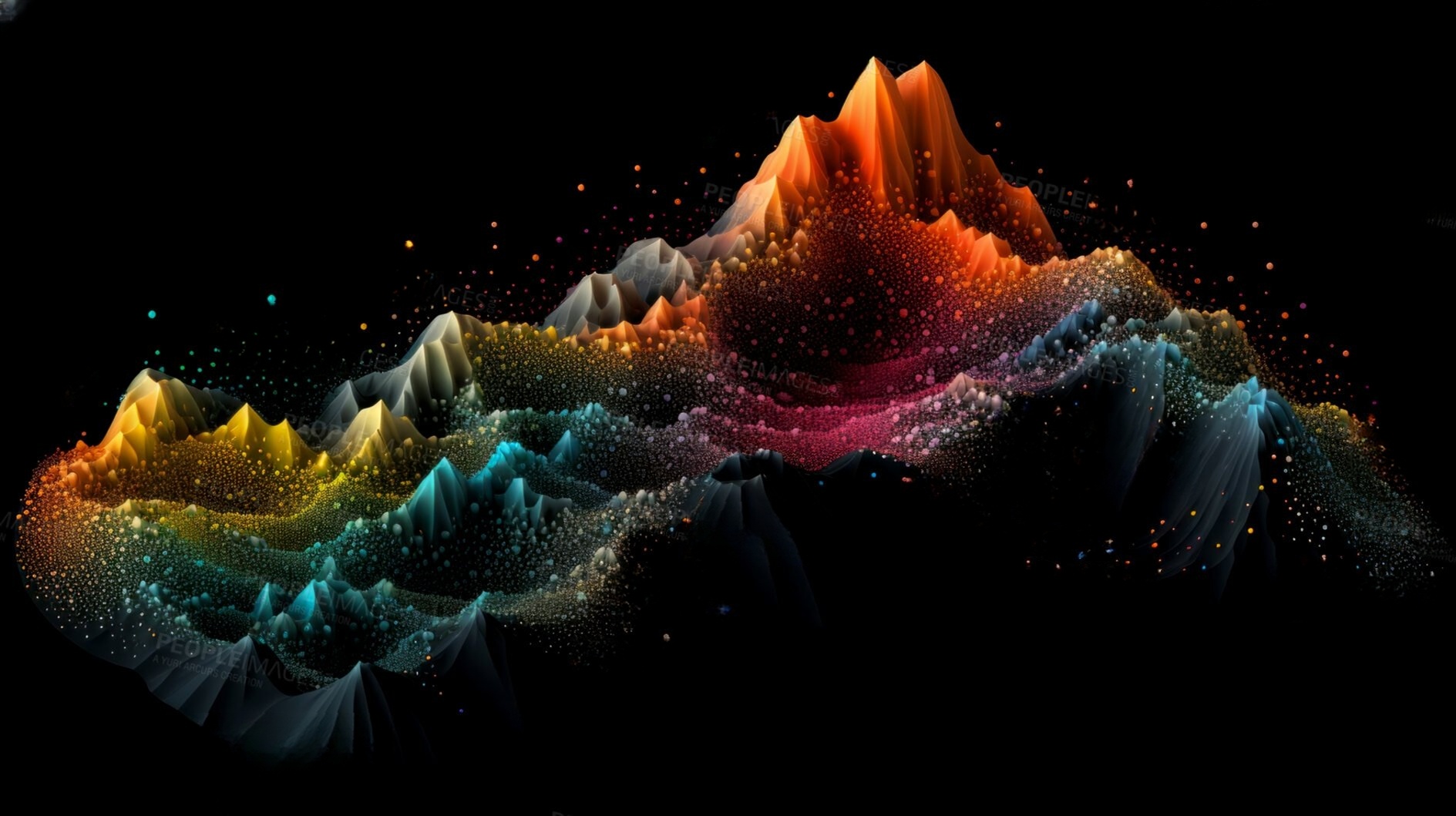
This concept focuses on the creative act of participants shaping sound into visual forms. The idea is based on research on data sculpture. That research showed that information can be understood more intuitively when it has a physical form, but most of the work remained in static forms. My project adds audience participation and real-time changes to this idea. Data sculptures are created and transformed instantly based on the viewer’s movements, providing a living visual experience. In this process, the audience becomes a digital sculptor, and tools like TouchDesigner act as a digital chisel to shape the sculpture.
In the work of artists like Ryoji Ikeda or Carsten Nicolai, data is transformed into intense visual and auditory experiences, but the audience mostly remains an observer. In contrast, my project emphasizes participation itself, aiming to let people experience the creative process rather than just the finished result. In this process, sensory translation is important. For example, acoustic qualities such as the sharpness of a sound are explored in terms of how they can be transformed into visual elements like shape, color, and movement. This allows the audience not just to hear the sound, but to see, shape, and experience it directly.
Embodied Interaction
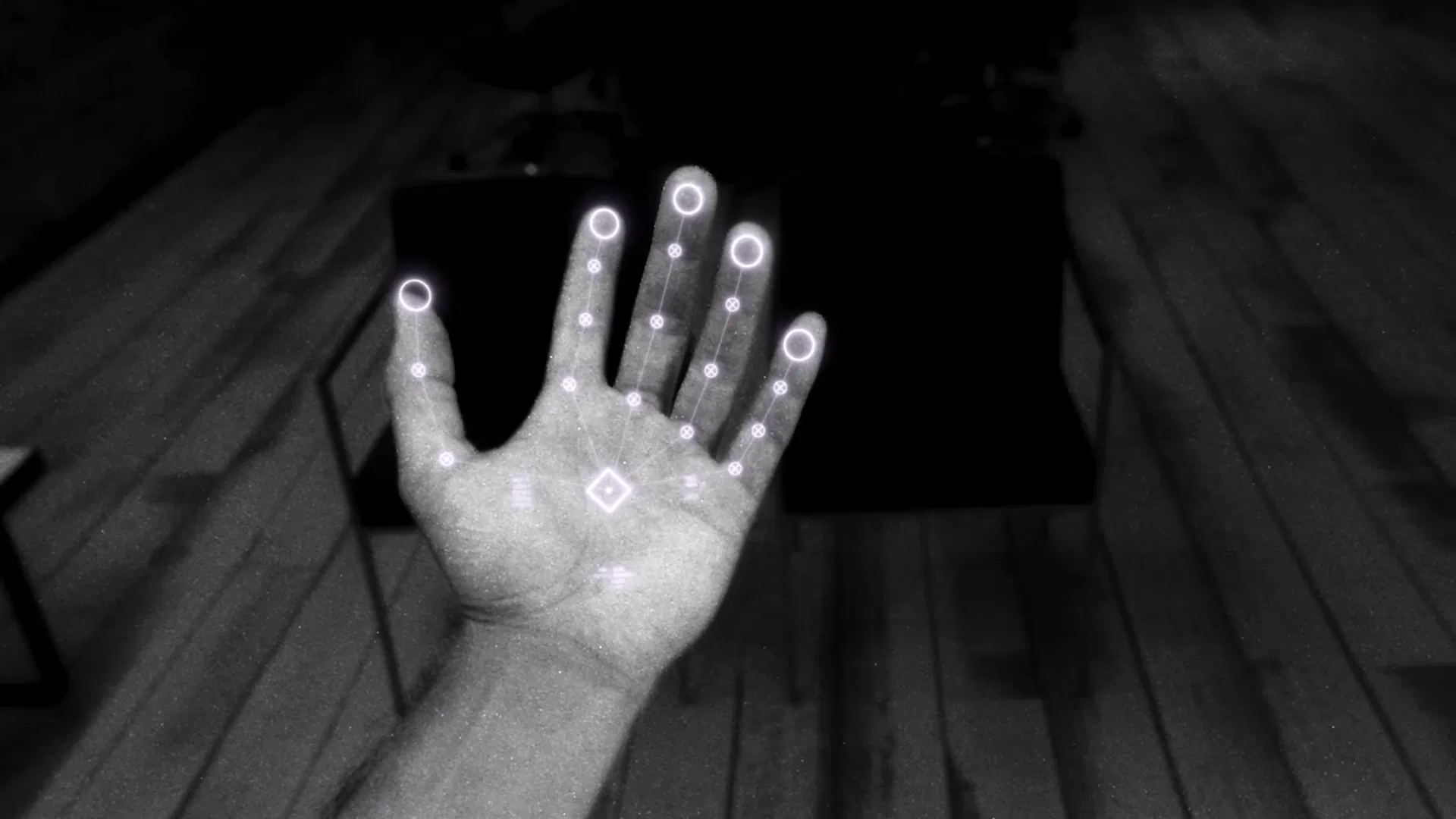
The second concept, or pillar, focuses on Embodied Interaction, which aims to expand the way people experience sound from merely hearing it with their ears to feeling and understanding it through their bodies. As several artists have noted, our thoughts and meanings are not formed only in our minds, but emerge through the interaction between the body and the surrounding world.
Therefore, this study seeks to transform the audience from passive observers, who simply watch the screen, into active participants who shape and visualize sound through their own gestures and movements. Moreover, based on studies by artists who explore noise and sound in art, this research extends the idea that physical movement enhances cognitive ability into an artistic context exploring how embodied interaction can deepen our understanding of complex sensory experiences such as noise.
Turning Noise into Art
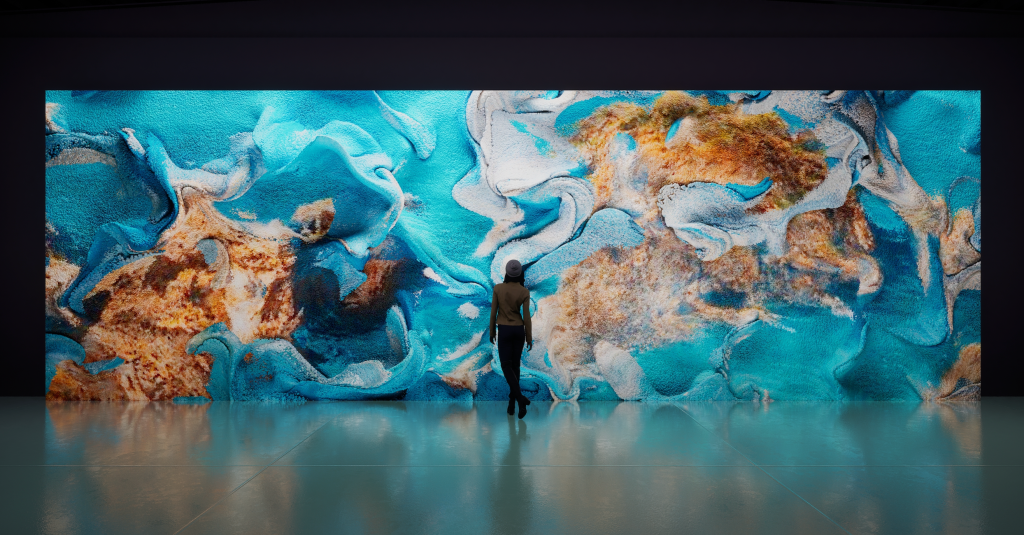
The third concept or pillar is the ultimate goal: transforming noise into art. This idea is inspired by multisensory experiments that create experiences involving sight, smell, taste, and touch. My research uses a similar approach of multisensory layering, but with a key difference. Instead of applying it to existing artworks, I apply the idea to noise, which is a non-artistic, everyday material.
The concept of using noise as an artistic material has a rich history, from approaches that aim to explore all aspects of sound to installations that reconstruct public spaces. My work is closely connected to this history. It also relates to soundscape research and serves as a critical intervention into urban sound environments. Through this, the study seeks ways to transform what is usually considered unpleasant chaos and stress into hidden visual beauty.
While multisensory experiments aim to enrich existing art, this research focuses on making noise itself into art. These three pillars together form a coherent argument: shaping sound through embodied interaction, transforming noise into art, and enabling audiences to experience it in new ways. This approach contributes a unique and original perspective to the field.
Feedback
The professor said that while the project concept is very interesting and has great potential, there are still many areas that need improvement. The three concepts I introduced earlier, or the three pillars, are quite persuasive, but the professor’s main concern was whether the physical work I create based on this research will be convincing on its own.
The professor emphasized that it is not enough for only me, as the researcher, to understand the meaning and purpose of the project; the audience and participants must also be able to intuitively grasp and be convinced of its significance and rationale through the work itself. This, the professor noted, would be the most important challenge in carrying out this project, and I completely agree with that assessment.
Reference Artist: Refik Anadol
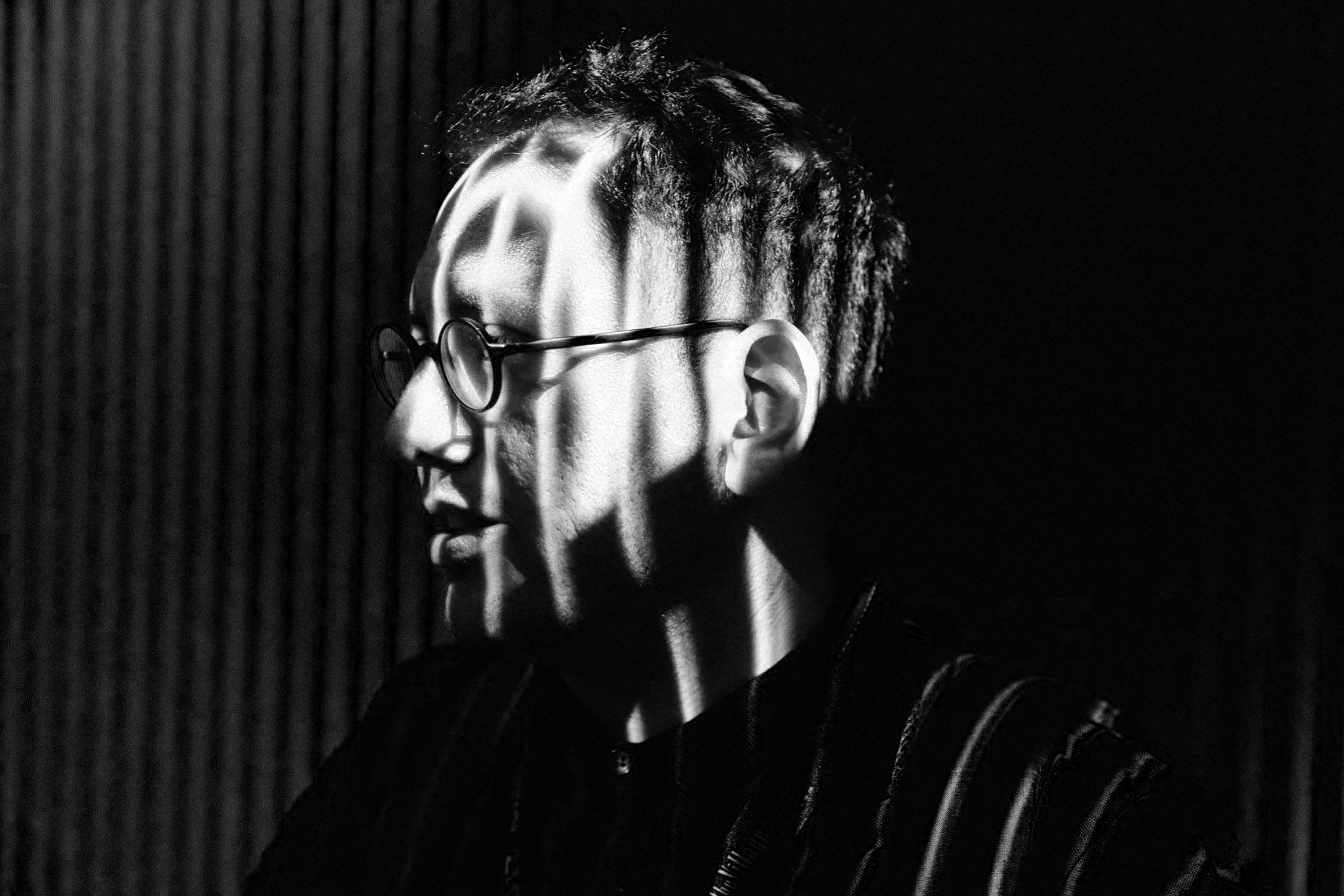
Refik Anadol
A world-renowned new media artist from Turkey who uses data as paint and AI as brush. His art transforms vast amounts of invisible data into massive, beautiful, visible artworks.
He collects data from cityscapes, NASA space observations, human brainwaves (EEG), environmental conditions like wind and temperature transforming them into living, breathing visual experiences.
Data as Material
Uses every imaginable type of data as artistic raw material from photographs to environmental sensors, treating information itself as the canvas.
AI & Machine Learning
Employs GANs (Generative Adversarial Networks) to train AI on millions of data points, creating generative systems that evolve in real-time.
Machine Hallucination
AI generates new, ever-changing images as if 'dreaming' based on learned data a process Anadol calls "Machine Hallucination."
Immersive Installations
Displayed on massive LED screens, building facades, and immersive rooms audiences are overwhelmed by fluid, abstract flows of 'living data.'
Selected Works
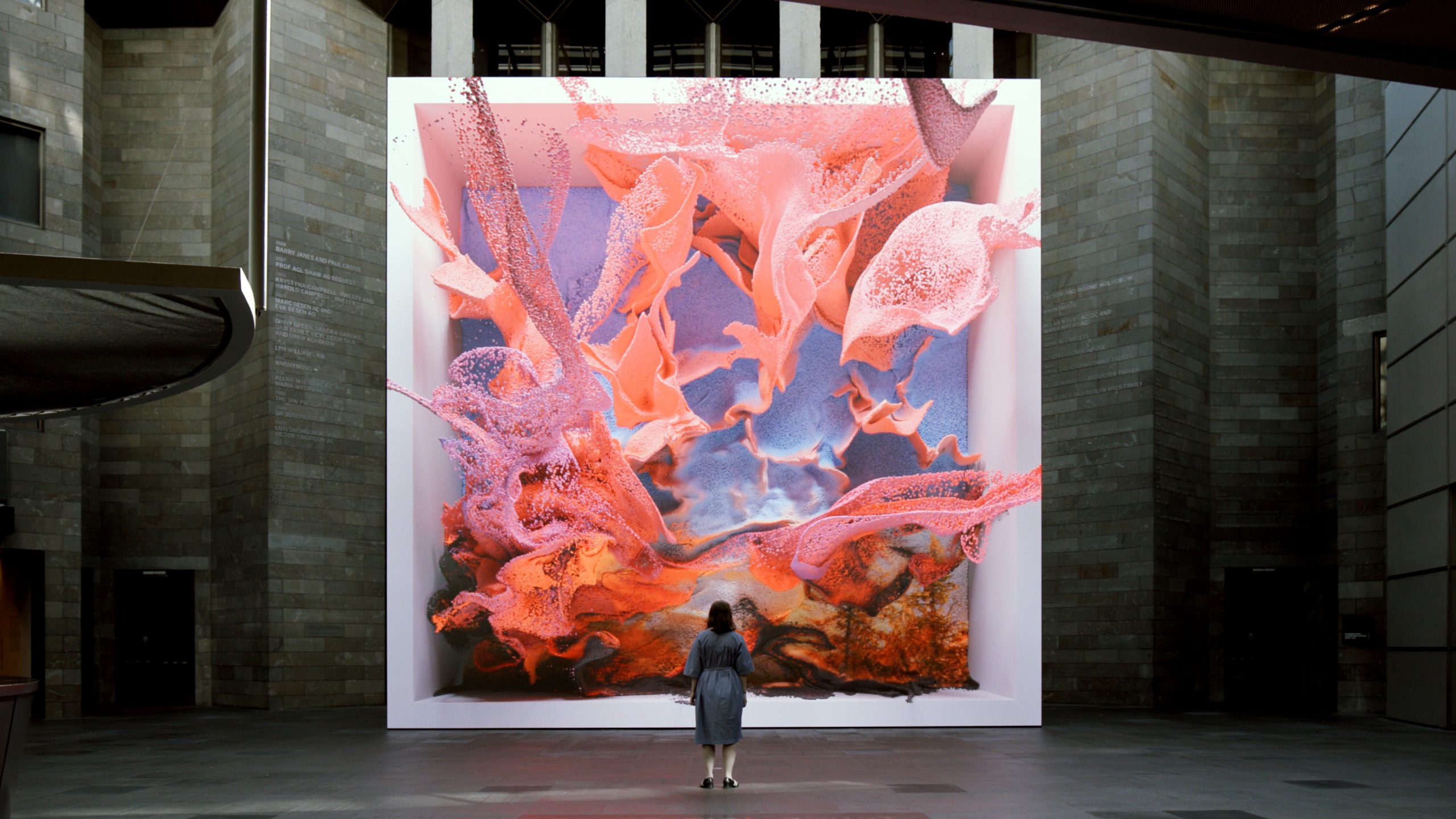
Quantum Memories
Quantum Memories by Refik Anadol is an immersive installation created for the National Gallery of Victoria in Melbourne. It uses over 200 million images of nature and landscapes, processed with machine learning and quantum computing data, to create dynamic, generative visuals accompanied by immersive sound. The work explores the intersection of AI, quantum physics, and aesthetics, imagining alternate versions of natural landscapes.
The installation is interactive, responding to audience movement so that viewers become part of the artwork. It treats data as a creative material, transforming images and quantum noise into visual forms, and encourages a shared experience of memory and perception. Quantum Memories demonstrates how technology and interactivity can turn data into art, offering inspiration for projects that combine sound, visualisation, and audience participation.
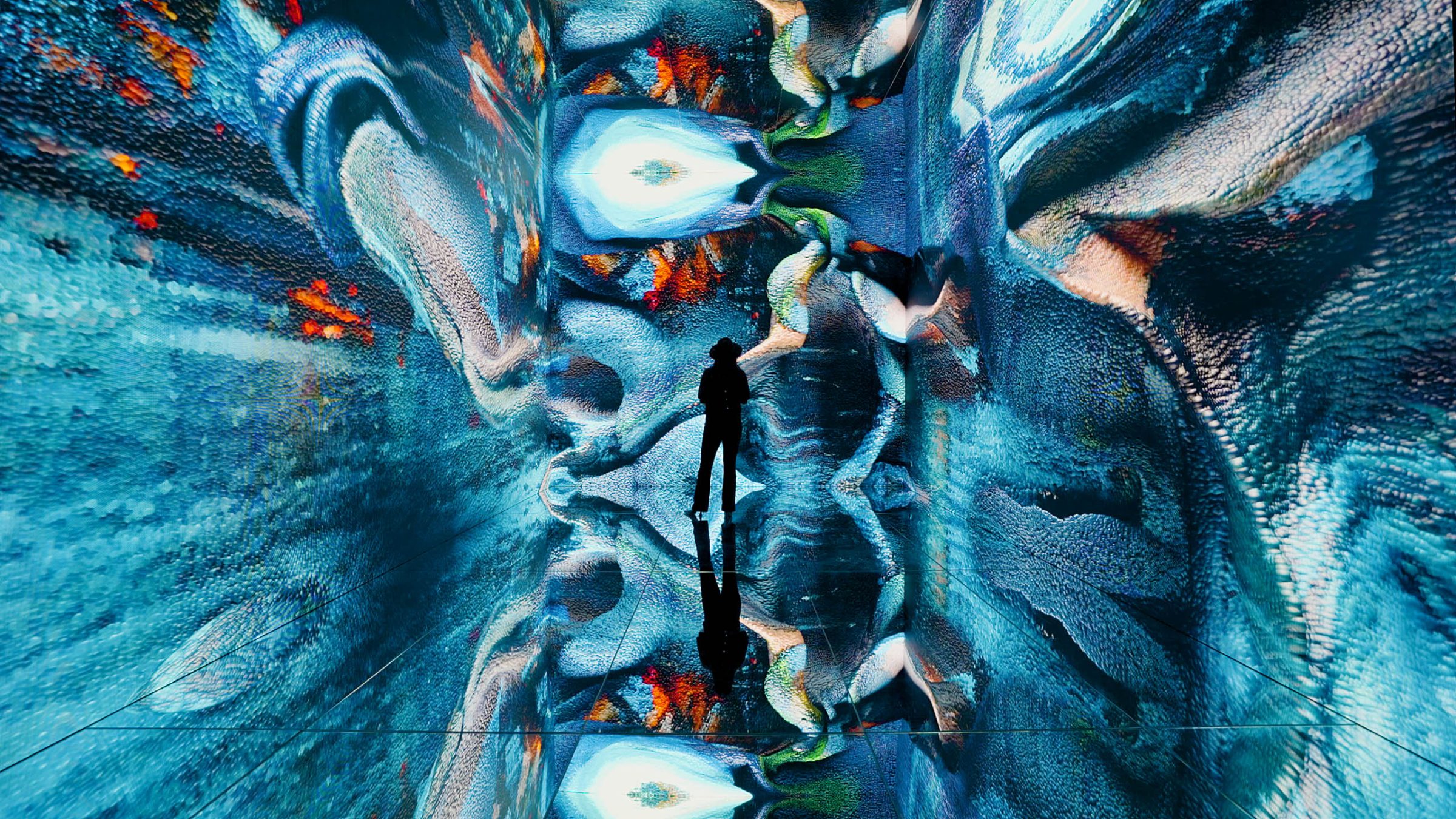
Inner Portrait
This multidisciplinary installation was developed in collaboration with Turkish Airlines and uses biosensing data collected from first time travellers heart rate, skin conductance, EEG signalsto create dynamic “AI Data Paintings” reflecting the emotional and neural responses of individuals encountering new cultural and geographic environments.
Refik Anadol The work merges art, culture, and technology by turning the physical and emotional journeys of participants into visual and immersive experiences. It places the audience’s personal physiological data at the core, transforming travel, memory, and emotion into a generative visual form. This offers relevance to your project in that it treats non traditional data (emotions, physiology) as raw material, and uses AI and real time processing to convert them into aesthetic experiences. Such a framework parallels your aim of transforming noise into visual interactive art both explore the transformation of intangible sensory or experiential data into an aesthetic form.
Connection to My Project
Refik Anadol doesn't just record and display information he uses information itself as the material to create new art. His AI model "Nature" collects and refines vast amounts of data from the internet and reality, then visualizes it. Each fluidly moving particle in his works is either a low-resolution captured image or a form generated by AI based on information.
This is highly relevant to my research on noise visualization. Like Anadol, I use an invisible medium (noise) as the main material for my project. I focus on understanding the properties of noise and visualizing it based on that information. Anadol's approach to creating work through data archiving and real-time transformation provides a significant milestone for my future artifact production showing how intangible sensory data can become immersive, participatory art.
Past Work
Reference your own past work or a case study that relates to your current project. Show the evolution of your thinking or demonstrate skills you're building upon.
This is an audio-reactive visualizer I created previously while practicing TouchDesigner. I analyzed the audio spectrum and divided it into detailed components, then applied these values to different areas of the materials. By doing so, I built nodes to visually control aspects such as light intensity, flow speed, and strength, ultimately producing the final visual output.
This work projects a point cloud onto a camera using depth data to transform the shape of the person captured by the camera into particles. These particles also interact with the analyzed spectrum of a recorded audio, creating effects that sometimes move fluidly and at other times fill the space strongly and dramatically, based on the audio spectrum.
Next Question for Week 3
Based on the research conducted so far, how can I move to the next stage of the study?
What aspects are technically feasible at this point? What would be the most suitable tools for creating an optimal prototype for my project?
What would be the most suitable tools for creating an optimal prototype for my project?