Overview
Week 10 centered on a prototype sharing session where students presented their work-in-progress to the class and professor. Inspired by the previous week's museum visit, I developed tangible prototypes exploring how noise could be mapped, visualized, and transformed into aesthetic experience.
The feedback session proved invaluable, revealing both the conceptual strength of the approach and critical gaps in design coherence that would need addressing in subsequent iterations.
Research & Development Process
The prototype development drew on insights from the museum visit, particularly the tension between intuitive understanding and abstract messaging. I focused on creating work that balanced sensory immediacy with conceptual depth.
After extensive contemplation about how artworks communicate messages and achieve dimensional depth, I concluded that the key lies in balancing intuition with abstractionmaking work accessible enough to engage viewers immediately while containing sufficient complexity to reward sustained attention.
Prototype Components
The prototype consisted of three interconnected components, each exploring different aspects of noise transformation:
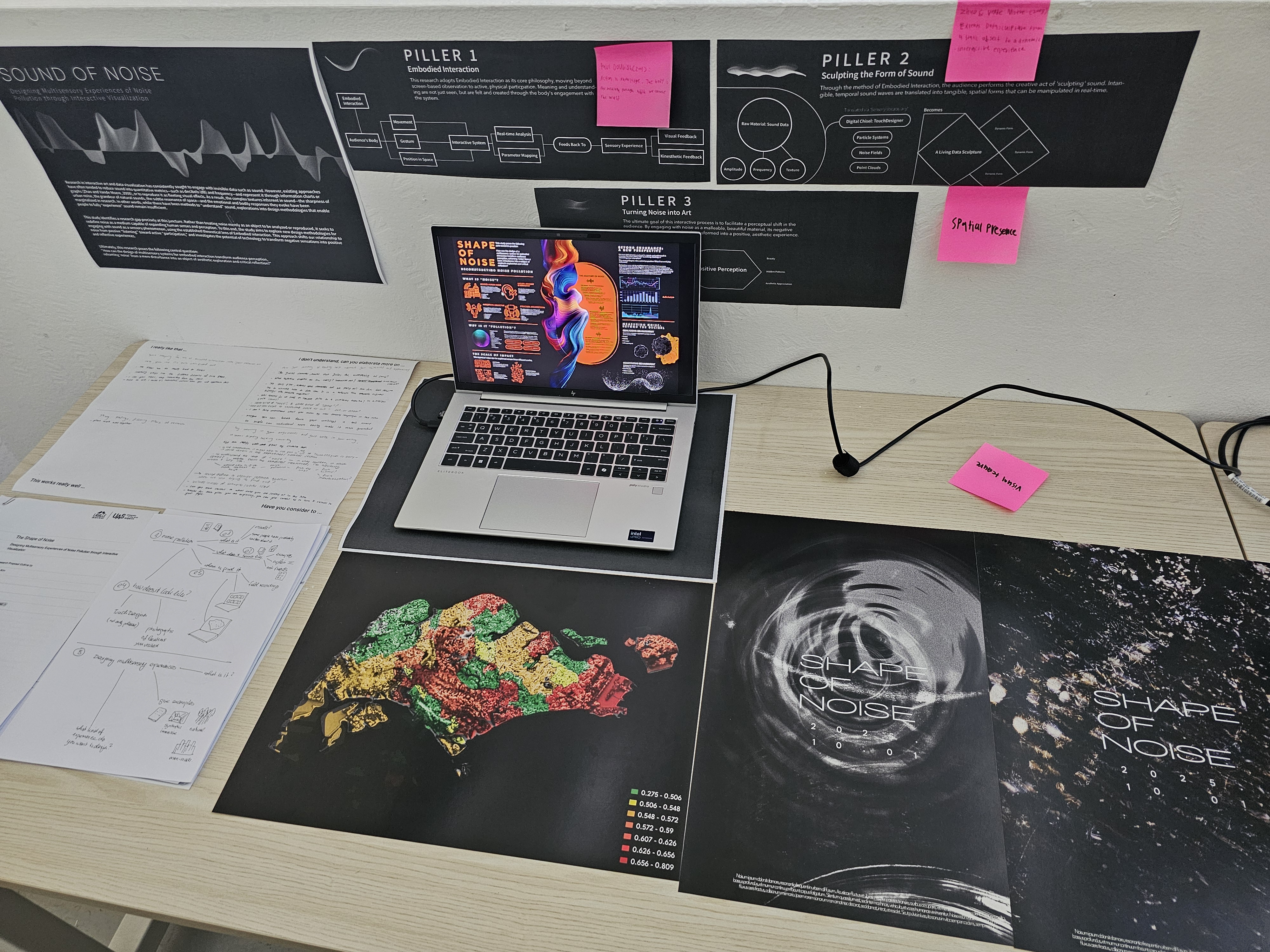
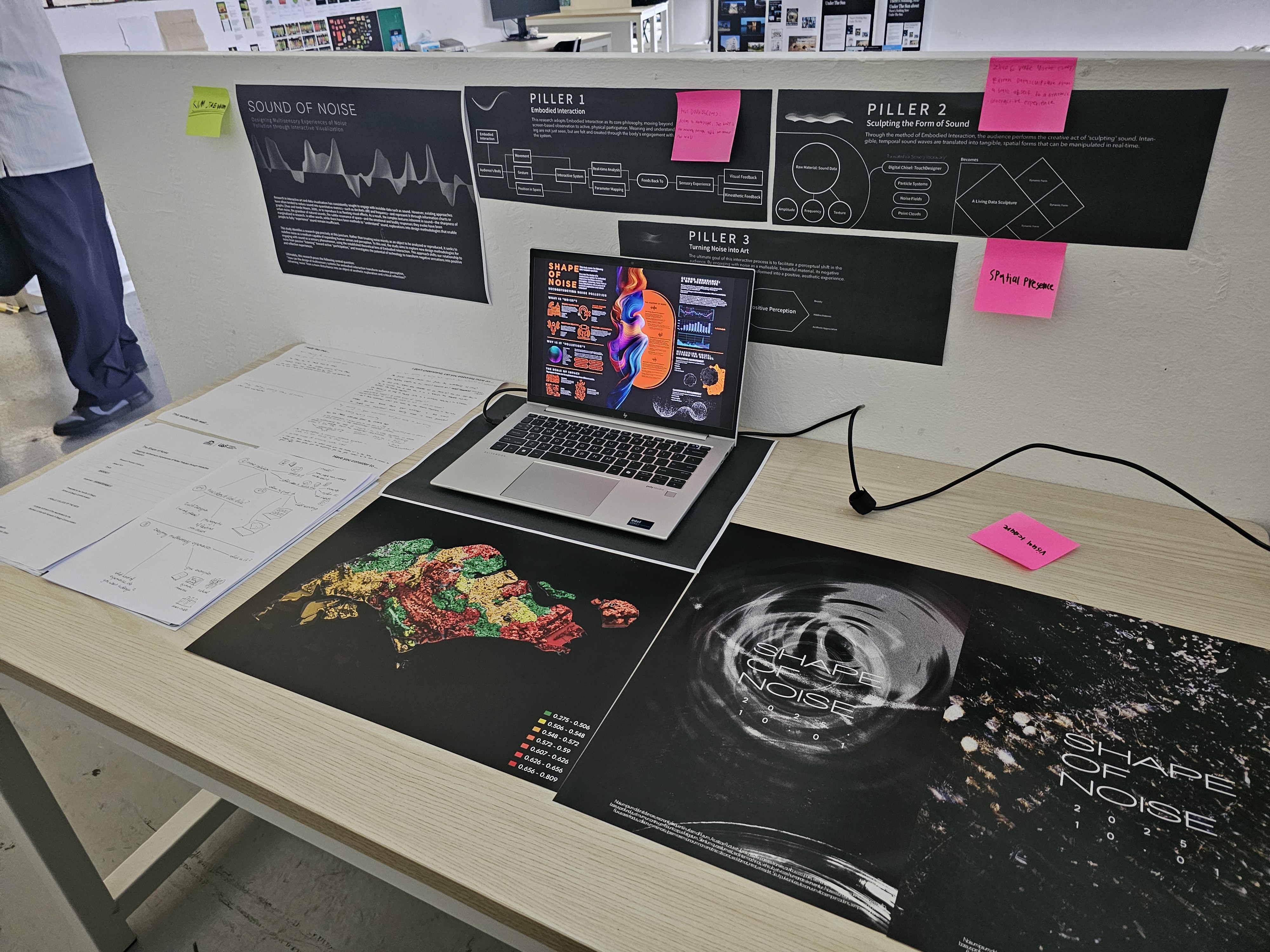
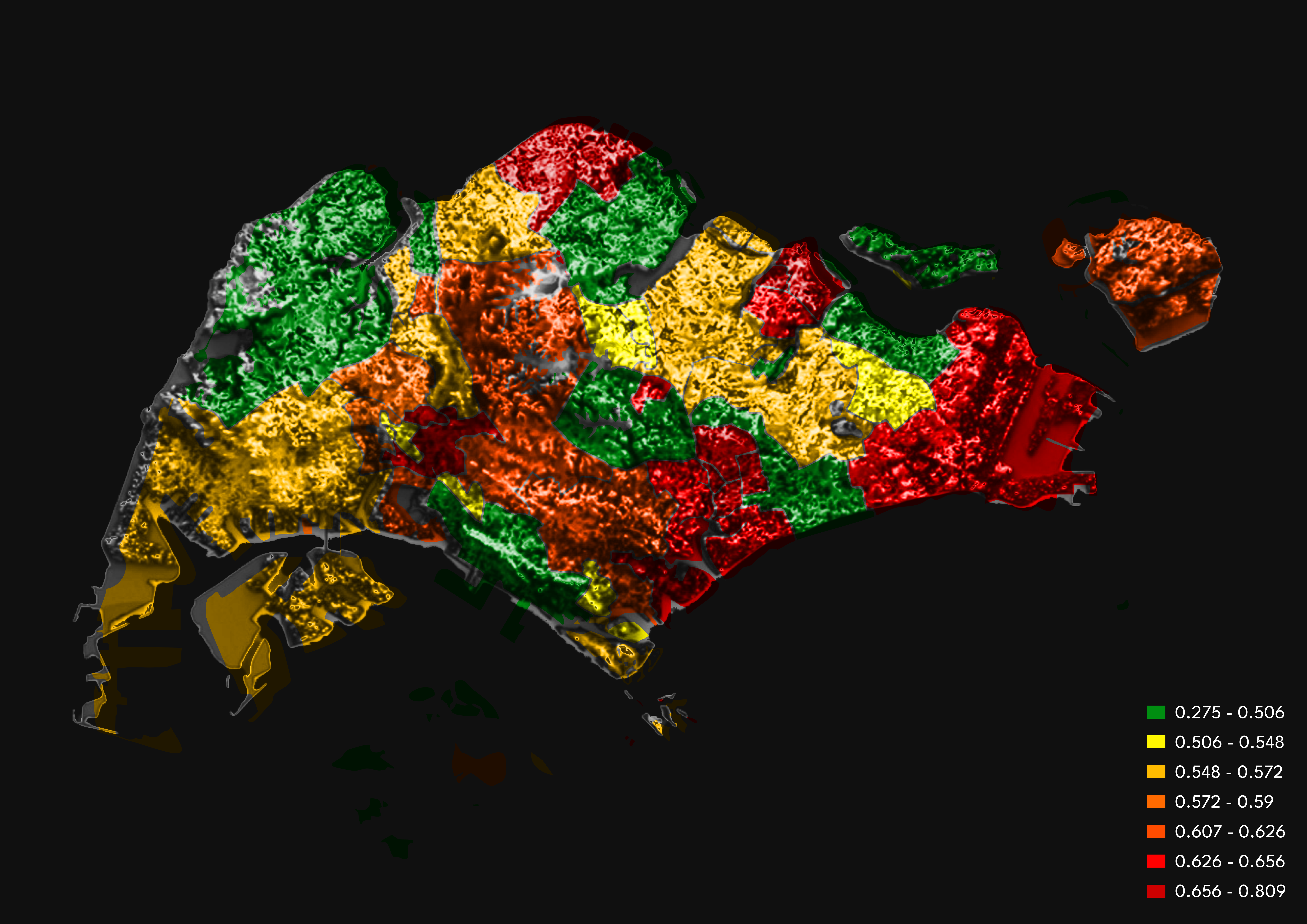
1. Noise Mapping: Measuring Regional Sound Intensity
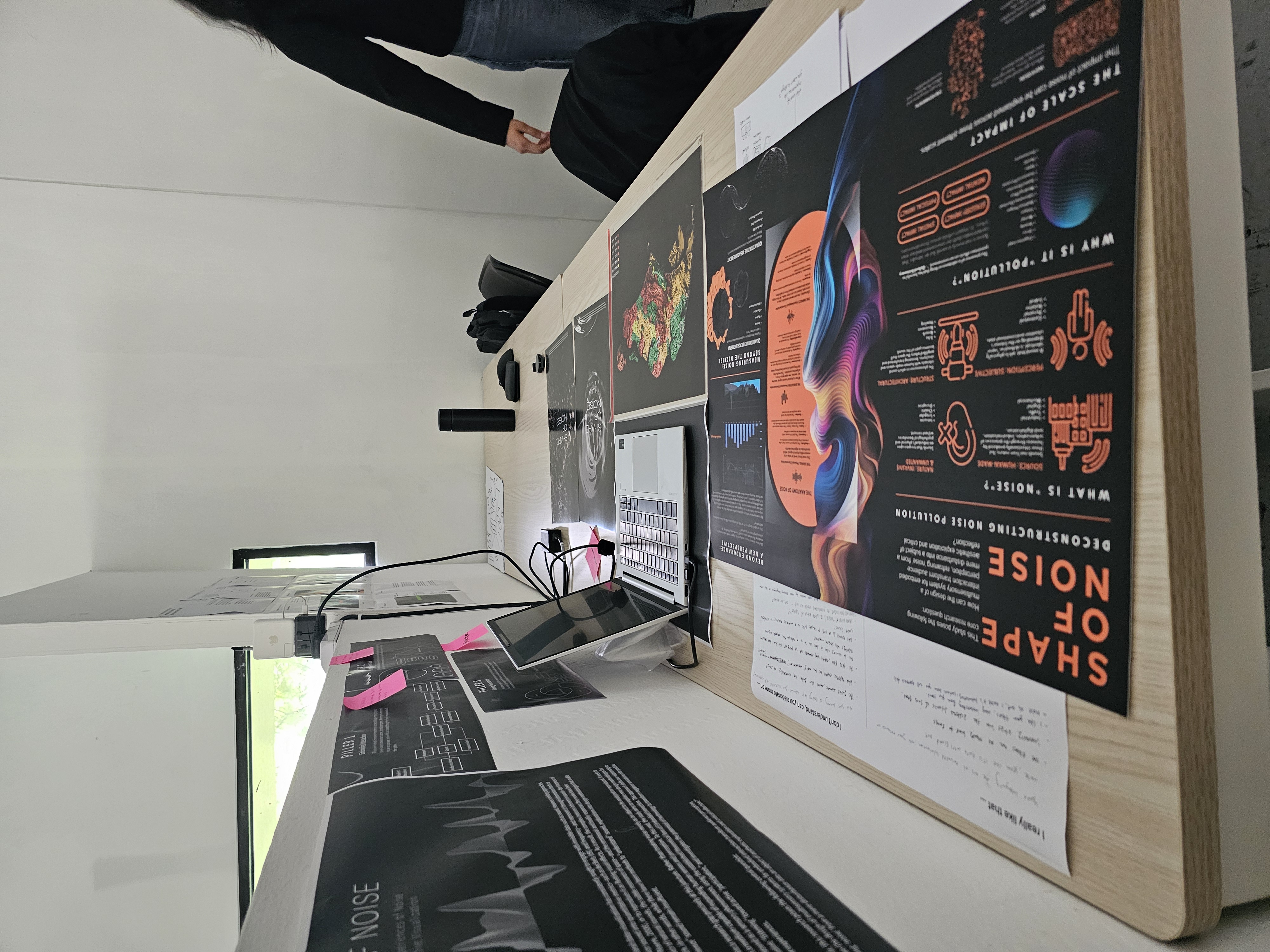
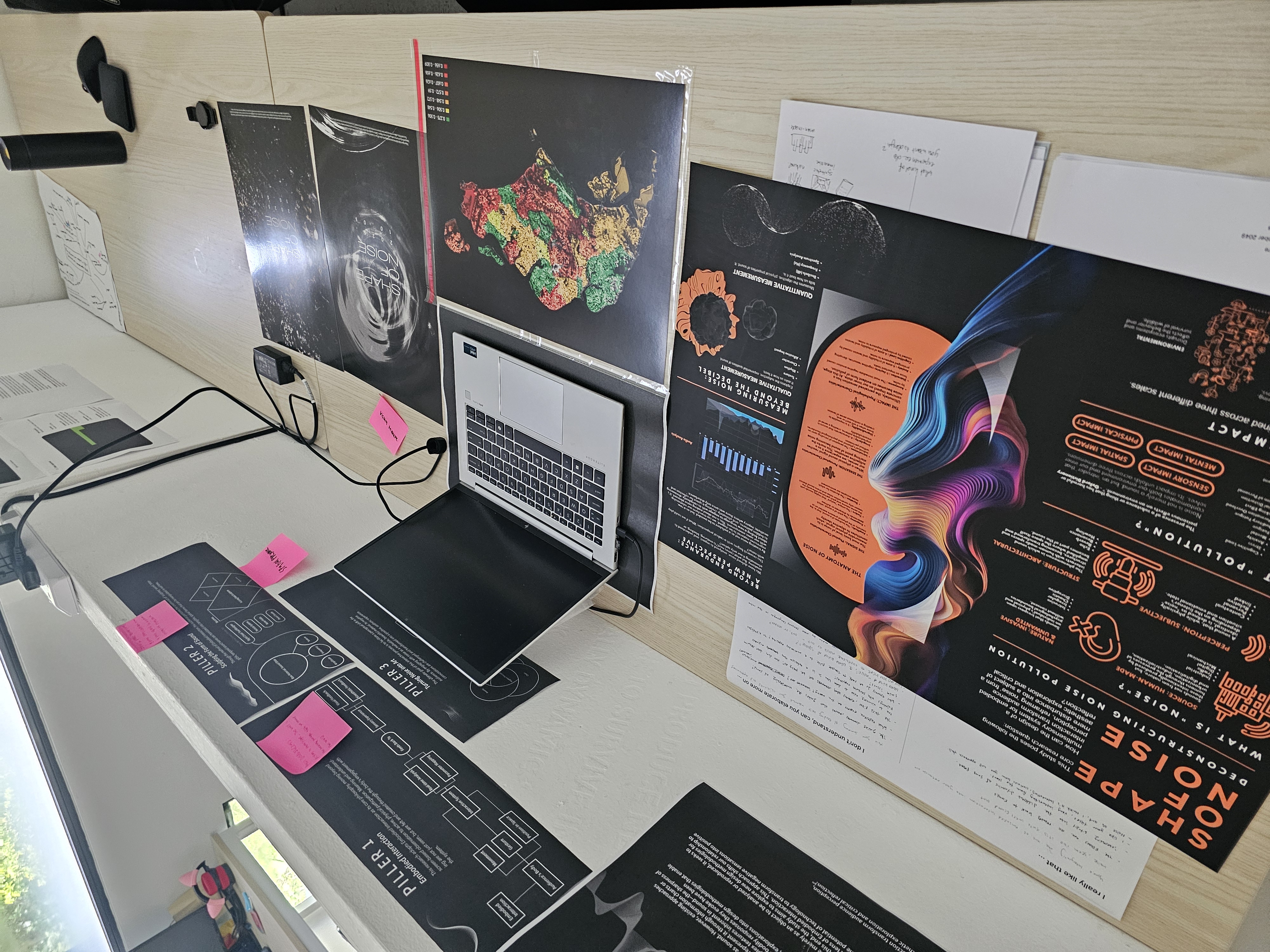
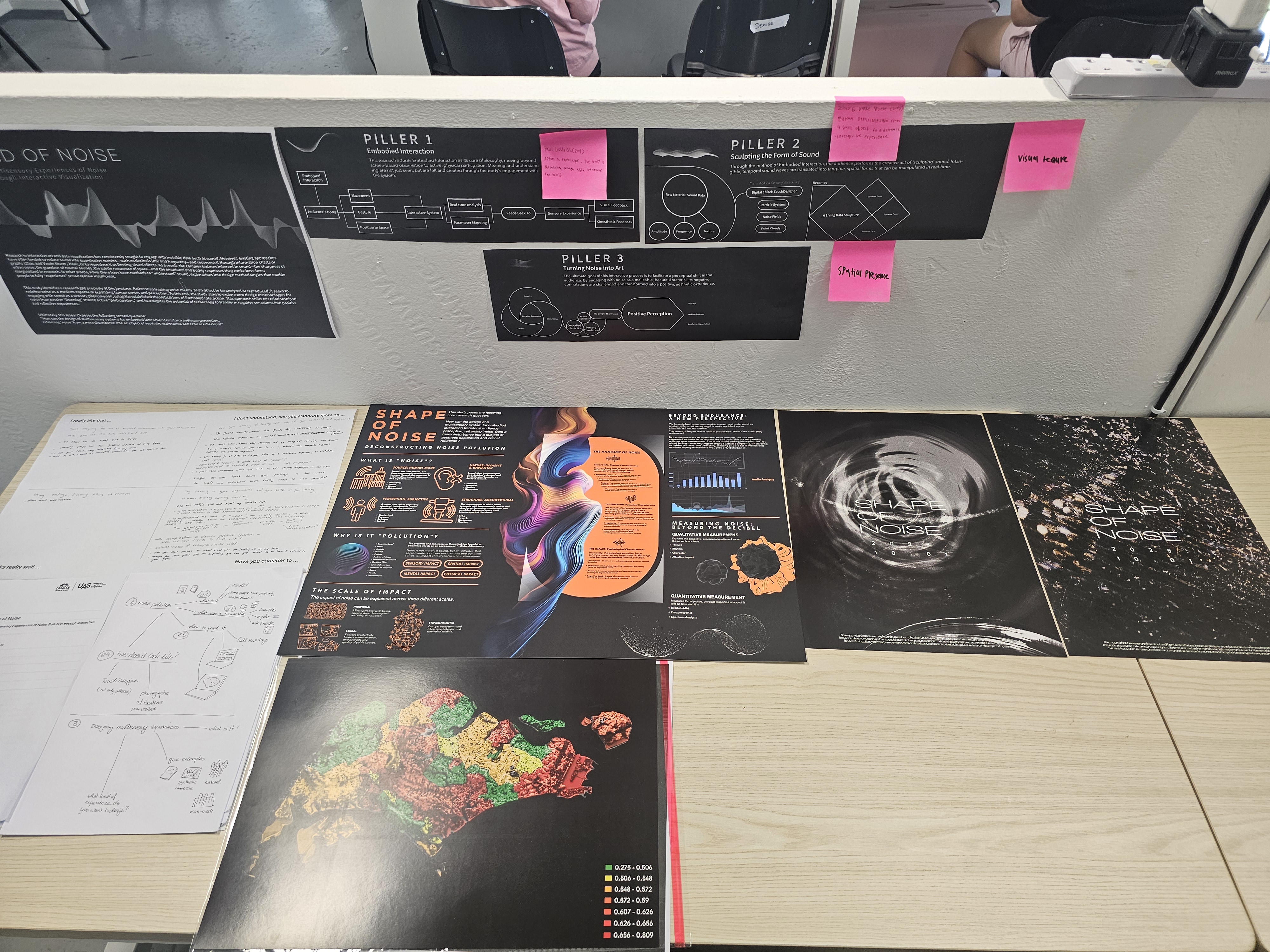
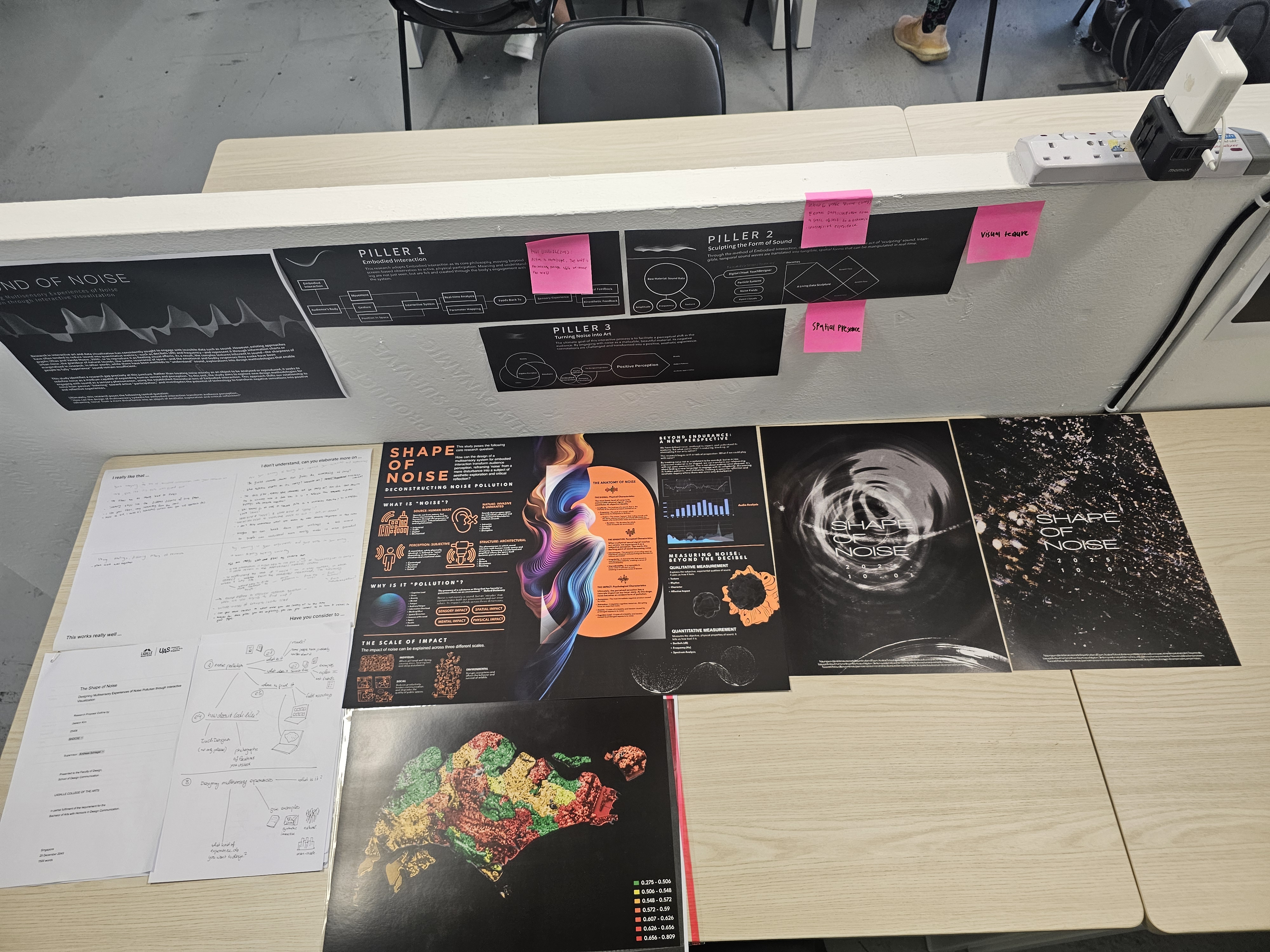
Through systematic research, I measured average noise intensity across different urban zones in Singapore, creating a noise map that visualizes the acoustic landscape of the city. This data collection phase involved:
- Identifying diverse urban zones (construction areas, commercial districts, residential neighborhoods, parks)
- Recording sound levels at consistent times across multiple days
- Documenting contextual factors (traffic density, human activity, environmental conditions)
- Creating visual representations of the noise data through mapping techniques
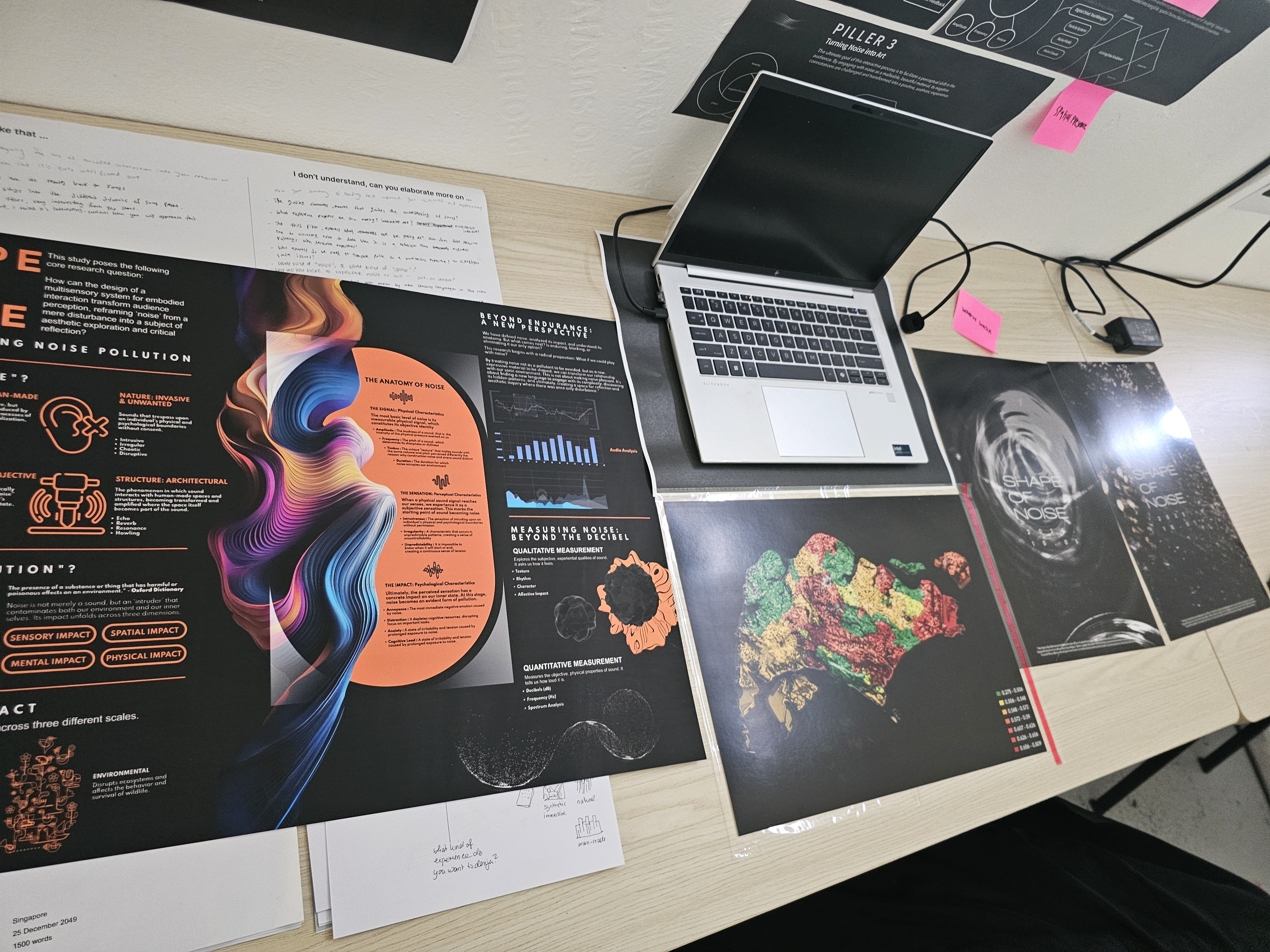
The noise map served as both research artifact and visual component, grounding the abstract concept of "urban noise" in specific, measurable realities.
2. Photographic Documentation: Sources of Urban Sound
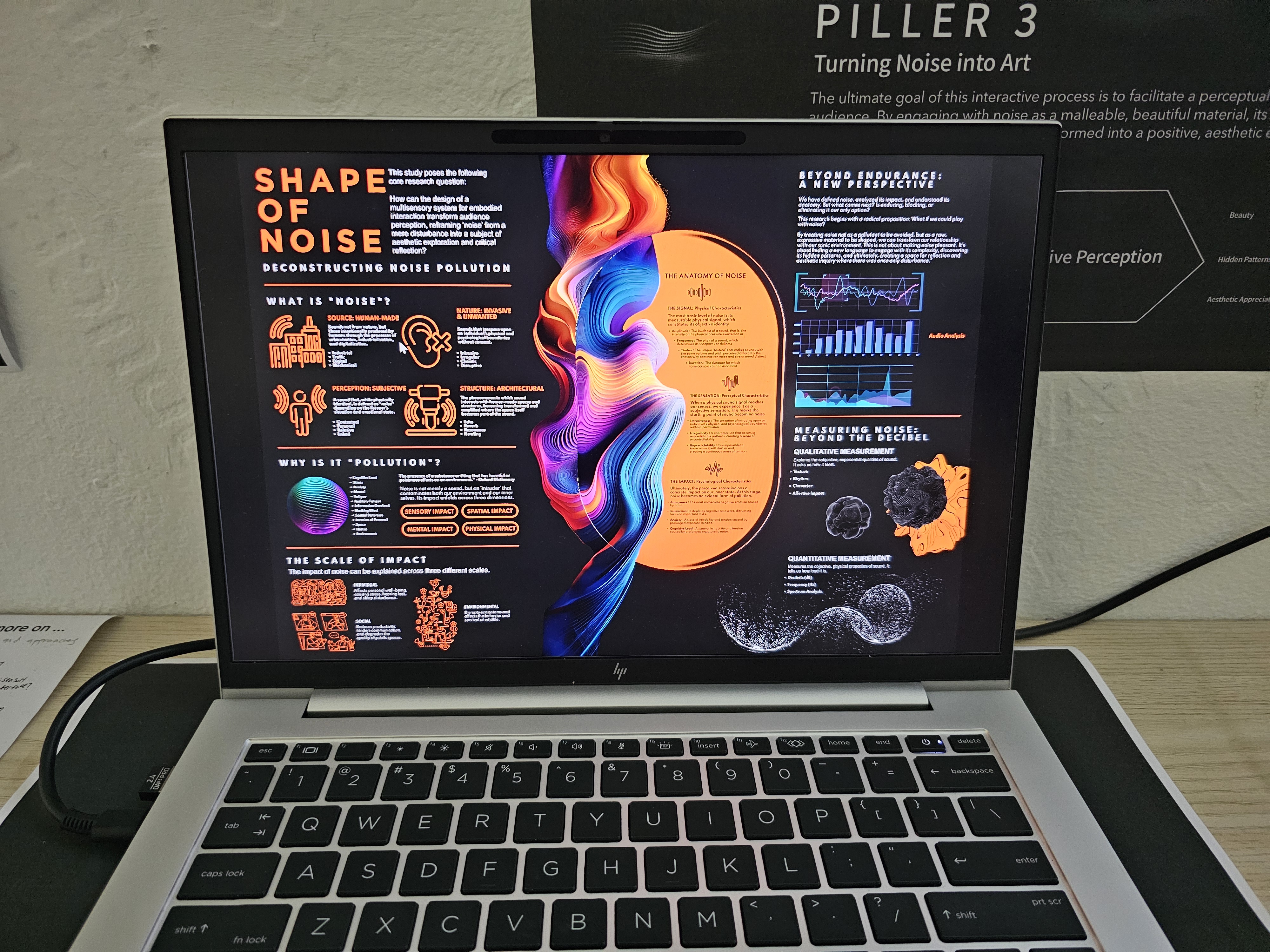
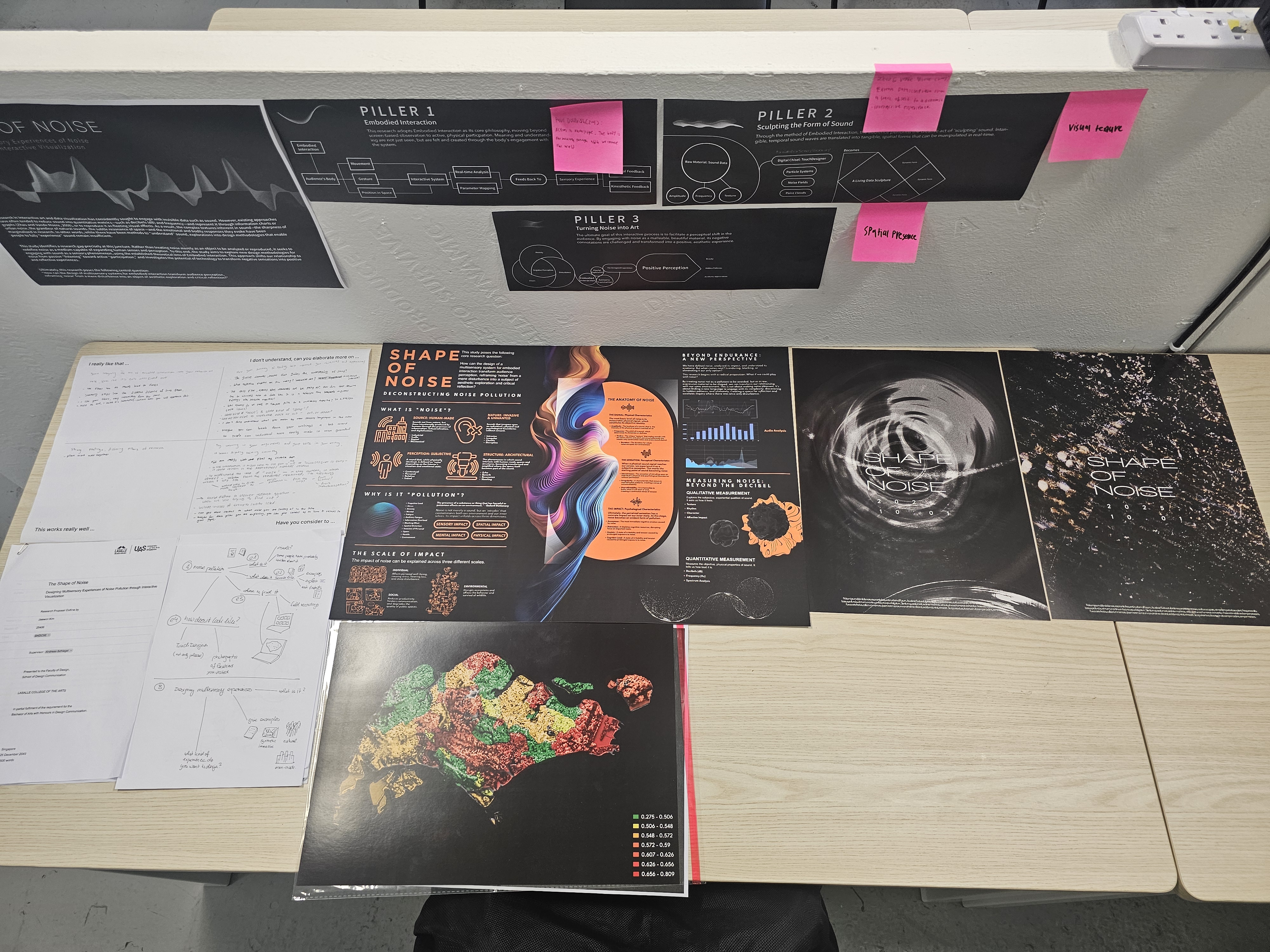
Moving through the city, I photographed the specific sources generating noiseconstruction equipment, vehicular traffic, crowd gatherings, air conditioning units, and other mechanical systems. These images were then composited with the noise map data to create hybrid visualizations.
The composite images aimed to make noise visible by layering quantitative data (decibel measurements) with qualitative documentation (photographs of sound sources). This approach sought to preserve both the scientific rigor of measurement and the experiential reality of sonic environments.
3. Audio Synthesis: Creating Abstract Sonic Compositions
The recorded noise samples from different locations were gathered and synthesized into new abstract sound compositions. Rather than simply presenting documentation of existing noise, this component transformed raw sonic material into deliberately composed audio experiences.
The synthesis process involved layering, filtering, and reorganizing the recorded sounds to reveal hidden patterns and aesthetic qualities. The goal was to demonstrate that noise, when approached as compositional material rather than pollution, contains intrinsic musical and textural richness.
Prototype Visual Documentation
The following images document the three-component prototype system presented during the Week 10 sharing session. These visuals demonstrate the initial exploration of noise mapping, photographic compositing, and the technical development process.
Additional Prototype Experiments
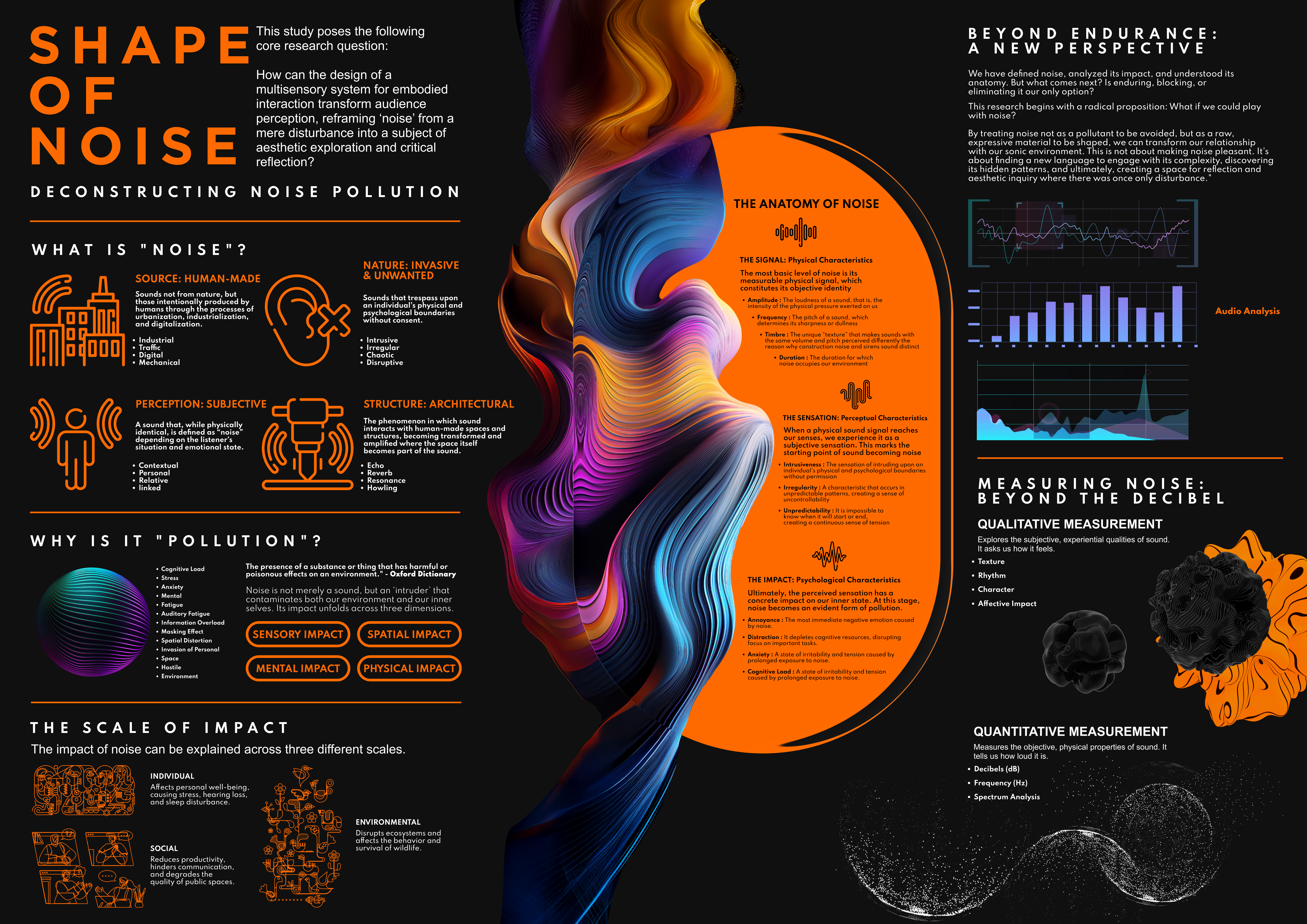
Beyond the initial prototype components, I developed additional experiments exploring different approaches to noise visualization, mapping, and data representation. These experiments helped refine the visual language and identify the most effective methods for communicating noise data.
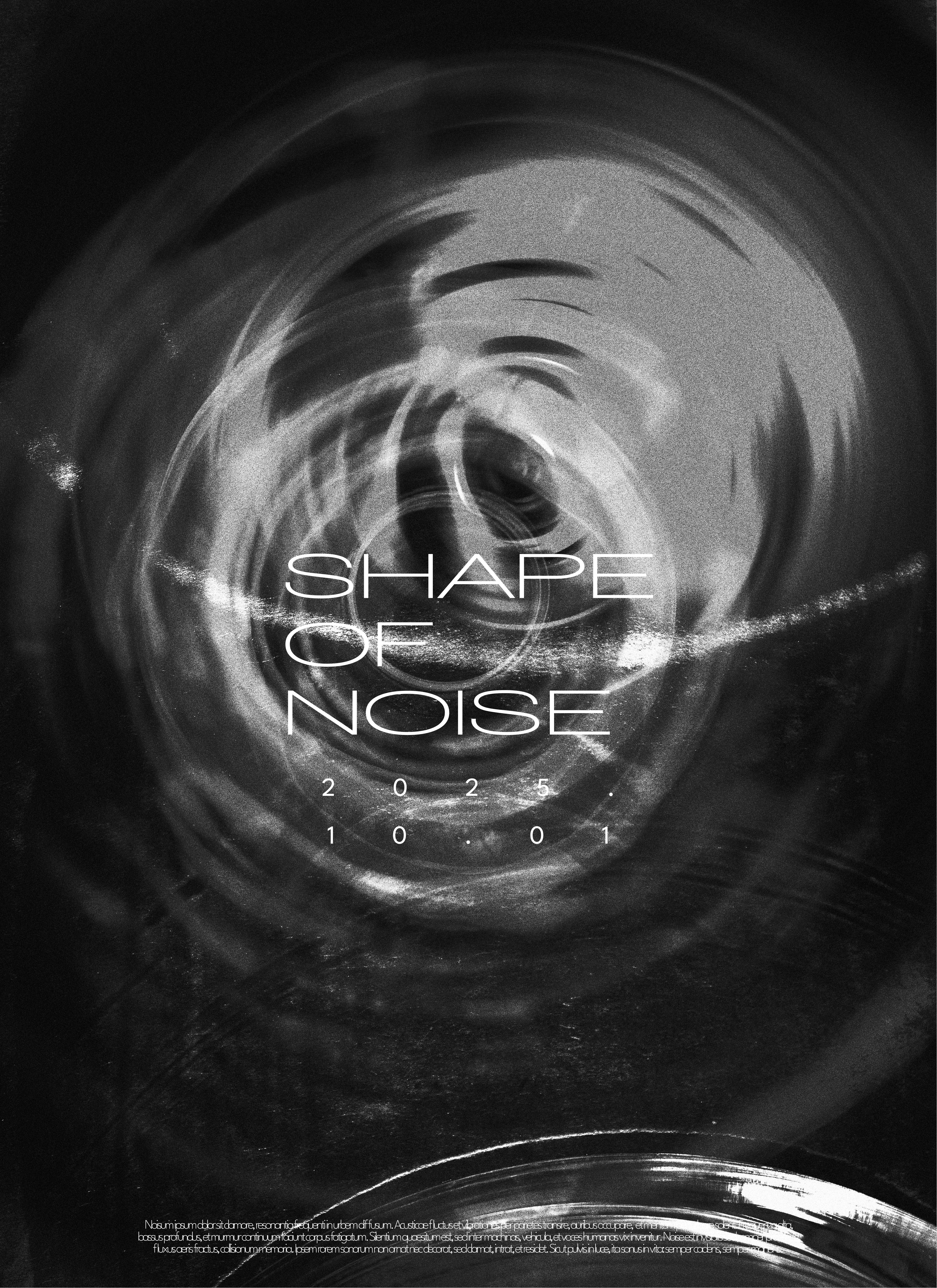
Faculty Feedback: Design Coherence
The Core Critique
The professor's primary feedback centered on lack of design unity. While acknowledging the conceptual strength and ambition of the project, they pointed out that the three components felt visually and stylistically disconnectedappearing mixed together haphazardly rather than forming a cohesive whole.
This critique resonated deeply with my own assessment. The prototype demonstrated conceptual direction but lacked the aesthetic coherence necessary for effective communication. The noise map, photographic composites, and audio synthesis each employed different visual languages without clear integration.
Areas Requiring Development
- Visual Language Consistency: Establish unified aesthetic approach across all components
- Hierarchy and Emphasis: Clarify which elements should dominate versus support
- Sensory-Visual Correlation: Strengthen the intuitive connection between sound and visual representation
- Interaction Design: Define how audiences will engage with the multi-component system
- Narrative Flow: Create clear progression from data to experience to understanding
Reflection: Prototyping as Discovery
I completely agree with the professor's assessment. The prototype's fragmented aesthetic reflects the exploratory nature of the workI was testing multiple approaches simultaneously to understand what resonates. This is exactly what prototypes should do: reveal problems rather than hide them.
The feedback clarified that while the conceptual framework (noise as aesthetic material) remains strong, the execution needs significant refinement. The challenge isn't generating more components but integrating existing elements into a unified design system.
This aligns with insights from the museum visit: successful installations achieve coherence not through simplicity but through intentional design decisions that create unity across complexity. Every element must justify its presence and contribute to the overall experience.
Moving Forward: Unifying the Design Language
The feedback session provided clear direction for subsequent development. Rather than abandoning the multi-component approach, the task is to unify these elements through consistent visual and sensory design language.
Balancing Visual and Sensory Messages
The museum visit taught me that effective installations balance intuitive appeal with abstract depth. This balance became my guiding principle: create work that invites immediate engagement while containing layers of meaning that reveal themselves through sustained interaction.
Continued Prototype Research
Following the feedback session, I committed to developing more refined prototypes that address the coherence issue. This involves:
- Establishing consistent color palette and typographic system
- Creating unified mapping between sonic qualities and visual parameters
- Testing different compositional approaches to integrate the three components
- Seeking additional feedback at each iteration stage
- Maintaining conceptual clarity while achieving aesthetic unity
Outcome
Week 10's prototype sharing session achieved several important outcomes:
- Validated the conceptual approach of transforming noise into aesthetic experience
- Identified critical gap in design coherence across components
- Established clear direction for refinement: unity through consistent visual language
- Gained faculty and peer perspectives on how the work communicates
- Created foundation prototypes that can be iteratively refined
- Clarified the relationship between intuition, abstraction, and design coherence
The feedback, while critical, was constructive and actionable. The project has strong conceptual bones; now it needs aesthetic muscle and connective tissue to become a unified, compelling whole.
Looking Ahead
The remaining weeks of the semester will focus on:
- Developing unified visual design system across all components
- Refining the balance between intuitive engagement and conceptual depth
- Creating more sophisticated prototypes that demonstrate design coherence
- Testing interaction paradigms that support embodied engagement
- Preparing comprehensive documentation for final presentation