Overview
Week 13 marked the culmination of the semester's theoretical and experimental work: a comprehensive field trip across Singapore to systematically document the sonic character of the city. Rather than relying on AI-generated imagery or abstract visualizations, this week focused on gathering authentic data directly from real urban environments.
Over the course of the week, I visited 13 distinct districts across Singapore, each chosen to represent different environmental characteristics, architectural typologies, and social functions. At each location, I documented three critical elements:
- Environmental Context: The physical characteristics, spatial configuration, and functional identity of each district
- Sonic Characteristics: The specific types, qualities, and behaviors of noise unique to each environment
- Visual Documentation: Photographs of the sound sources and spatial conditions that generate the acoustic environment
This systematic field research provided the authentic material foundation for developing the semester's final prototypes. Unlike AI-generated interpretations, this data carries the indexical connection to real places, real sounds, and real experiences.
Research Methodology
Site Selection Criteria
The 13 districts were strategically selected to capture the full spectrum of Singapore's acoustic environments:
- Functional Diversity: Commercial centers, residential zones, industrial areas, cultural districts, transportation hubs, and recreational spaces
- Architectural Typology: High-rise canyons, low-rise shophouses, open plazas, enclosed malls, natural corridors, and mixed-use developments
- Cultural Significance: Heritage areas, contemporary developments, tourist destinations, and everyday neighborhoods
- Acoustic Character: Locations known for distinctive or extreme sonic conditions
Documentation Protocol
At each site, I followed a consistent documentation process:
- Environmental Survey: Photographing the spatial configuration, architectural elements, and contextual features
- Sound Source Identification: Locating and photographing the specific objects, systems, and activities generating noise
- Audio Recording: Capturing high-quality field recordings that preserve the authentic sonic character of each location
- Acoustic Analysis: Identifying the dominant frequency ranges, rhythmic patterns, spatial behaviors, and characteristic qualities of each soundscape
- Phenomenological Observation: Describing how the noise feels, not just how it measures
Analytical Framework
For each district, I analyzed noise along four dimensions:
- Physical Properties: Frequency content, amplitude, duration, and rhythm
- Spatial Behavior: How sound reflects, absorbs, amplifies, or dissipates within the environment
- Source Character: The mechanical, human, natural, or environmental origins of the noise
- Experiential Quality: The subjective, visceral, and emotional qualities of the sonic environment
District-by-District Sonic Analysis
The following documentation presents each of the 13 surveyed districts, detailing their environmental characteristics and unique acoustic signatures. Each analysis captures not just what the noise sounds like, but how it behaves within the space and how it feels to experience it.
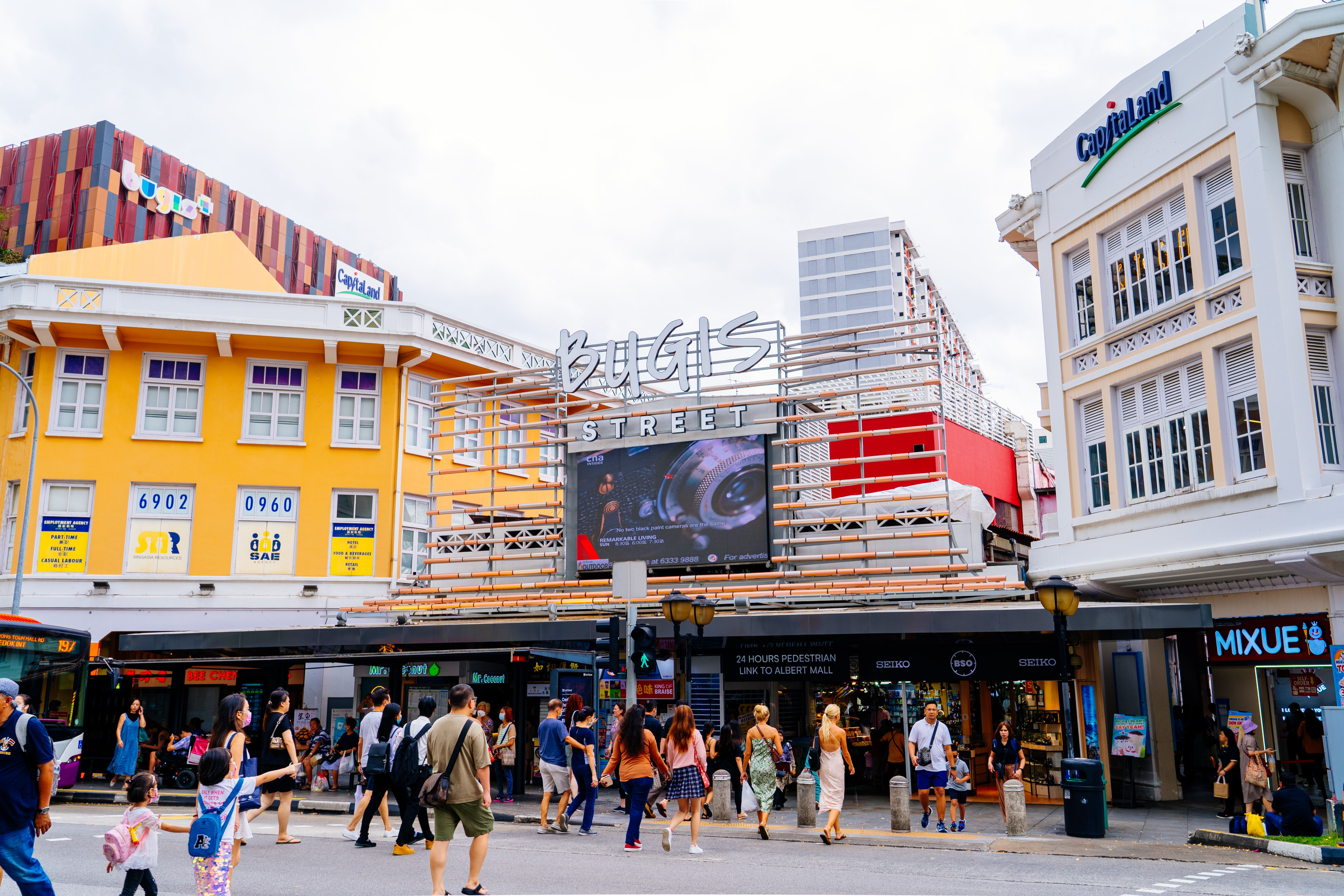
1. BUGIS (SG-DIST-07)
Coordinates: Lat 1.3006°N / Long 103.8561°E
Environmental Characteristics: Urban architecture, cultural arts, commercial activity
Sonic Analysis
The Heavy Sounds Embedded in the City Floor
Buses, MRT trains, and 24-hour air conditioning compressor units create a low, heavy "humming vibration" that blankets the entire district like background music. This deep, rumbling drone forms the acoustic foundation upon which all other sounds layer.
The Blended Sounds Created by People
Countless voices from markets and shopping malls, the clatter of dishes, and the sounds of cooking meld together to produce a "static hiss" reminiscent of television white noise. Individual sounds lose their definition, merging into a thick acoustic texture.
Sounds Reflected and Bounced by Buildings
In narrow alleyways, sound swirls and echoes chaotically. The glass facades of tall buildings like DUO reflect sound like mirrors, making it sharper and colder. The architecture actively shapes and amplifies the acoustic environment.
The Collision of Mismatched Sounds
The soft prayer chants from old temples and the loud pop music from shopping malls are heard simultaneously, creating a characteristic collision of contrasting sonic worlds. Sacred and commercial, traditional and contemporary sounds coexist without blending.
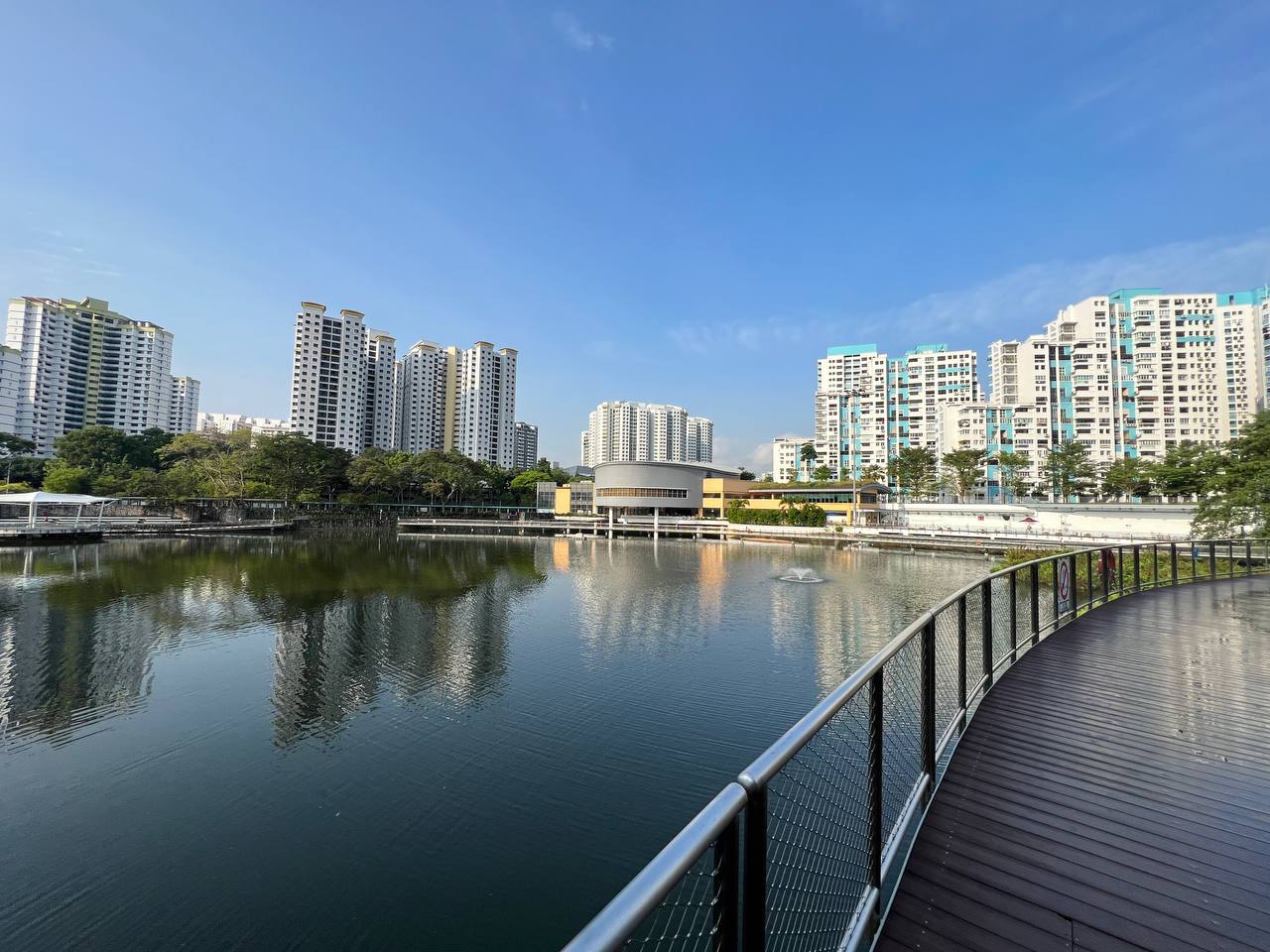
2. BUKIT PANJANG (SG-DIST-23)
Coordinates: Lat 1.3774°N / Long 103.7719°E
Environmental Characteristics: Residential density, LRT system, nature reserve proximity, community living
Sonic Analysis
Sharp Metallic Sound Passing Overhead
When the LRT passes right next to apartment windows and turns on curved tracks, the wheels scraping against rails produce a piercing "screech" of sharp metallic noise. This high-frequency grinding penetrates directly into residential spaces.
Low Humming from Highways Surrounding the Town
Traffic noise from the massive highways (BKE, KJE) surrounding the area blends in the distance, creating a deep "whooom" sound like a giant ventilation fan running continuously. This forms a constant low-frequency white/pink noise background.
High-Pitch Insect Chorus Seeping Through the Concrete Forest
At night or after rain, the chirping of cicadas and insects from the nearby nature reserve fills the entire residential area. Natural sound penetrates the built environment, creating an unexpected acoustic counterpoint to urban noise.
Everyday Echoes Trapped in Enclosed Housing Blocks
Due to the dense apartment structure, children's voices and conversation sounds climb up along the walls and reverberate, making even high floors feel noisy and crowded. The architectural configuration amplifies and traps domestic sounds.
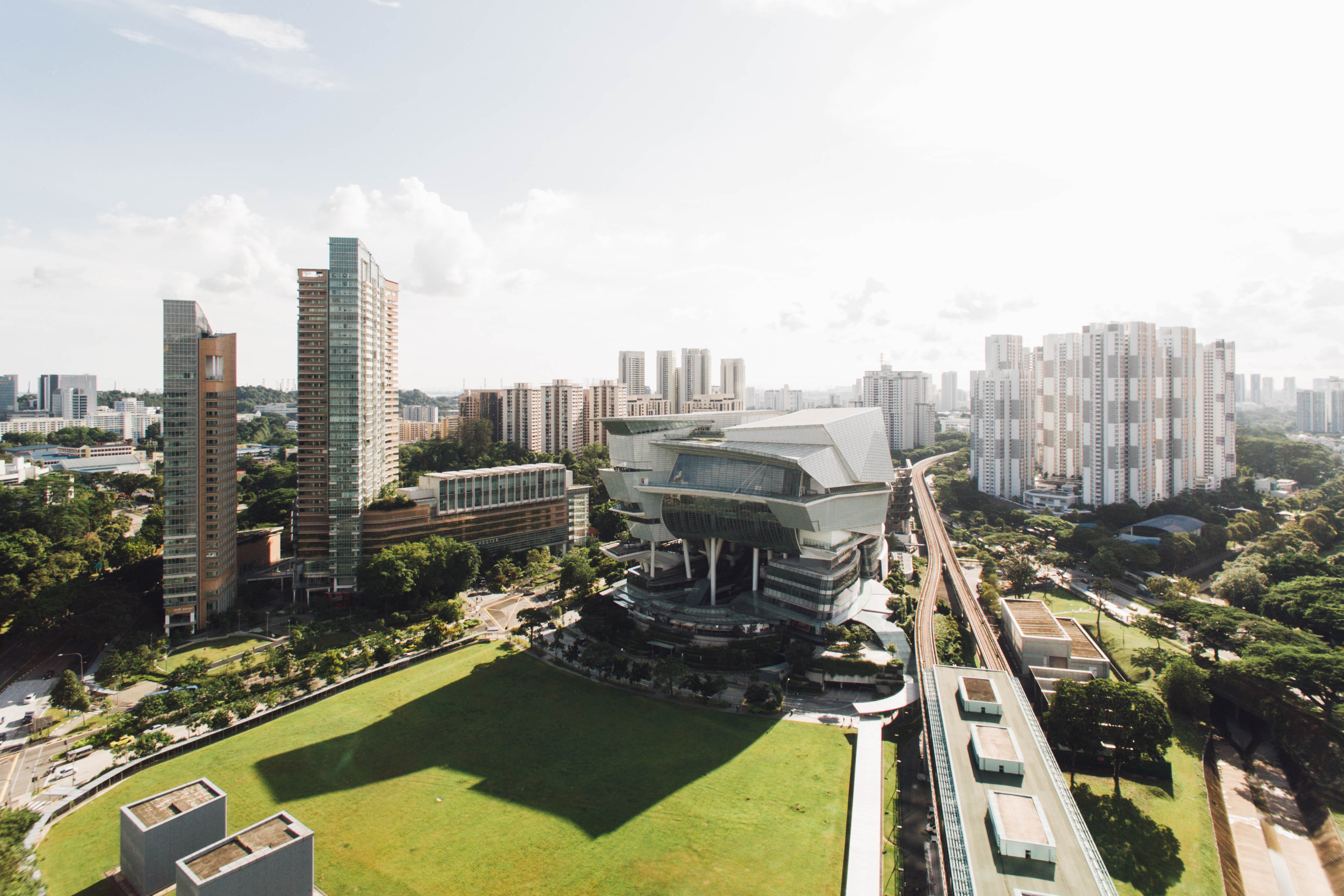
3. BUONA VISTA (SG-DIST-05)
Coordinates: Lat 1.3073°N / Long 103.7900°E
Environmental Characteristics: Futuristic landscape, multi-layered transit, green corridors, pulsing mechanical systems
Sonic Analysis
The Hum of a Giant System Breathing
The server rooms and ventilation systems of the Biopolis research complex operate 24/7, creating a smooth, low electronic "hum" throughout the entire area. This continuous tone suggests a vast technological infrastructure constantly processing information.
The Sound of Wind Passing Through a Cavern
When wind passes through the open structures of Star Vista shopping mall, it makes a "whoosh" sound, and people's voices echo as if inside a cave. The architectural void creates acoustic resonance that transforms natural ventilation into sonic experience.
The Crossing Rhythm of Sky and Underground
The rhythmic "tak-tak-tak" sound of the overhead above-ground MRT and the deep vibration ("kugugung") of the underground subway tunnel cross each other, forming a layered soundscape. Multiple transportation systems create vertical acoustic stratification.
The Silent Break of the Forest
Upon entering the Rail Corridor, urban noise disappears like noise cancellation, leaving only the sound of footsteps on grass and birdsong in an acoustic vacuum. The green corridor creates a dramatic sonic transition from technological hum to natural quiet.
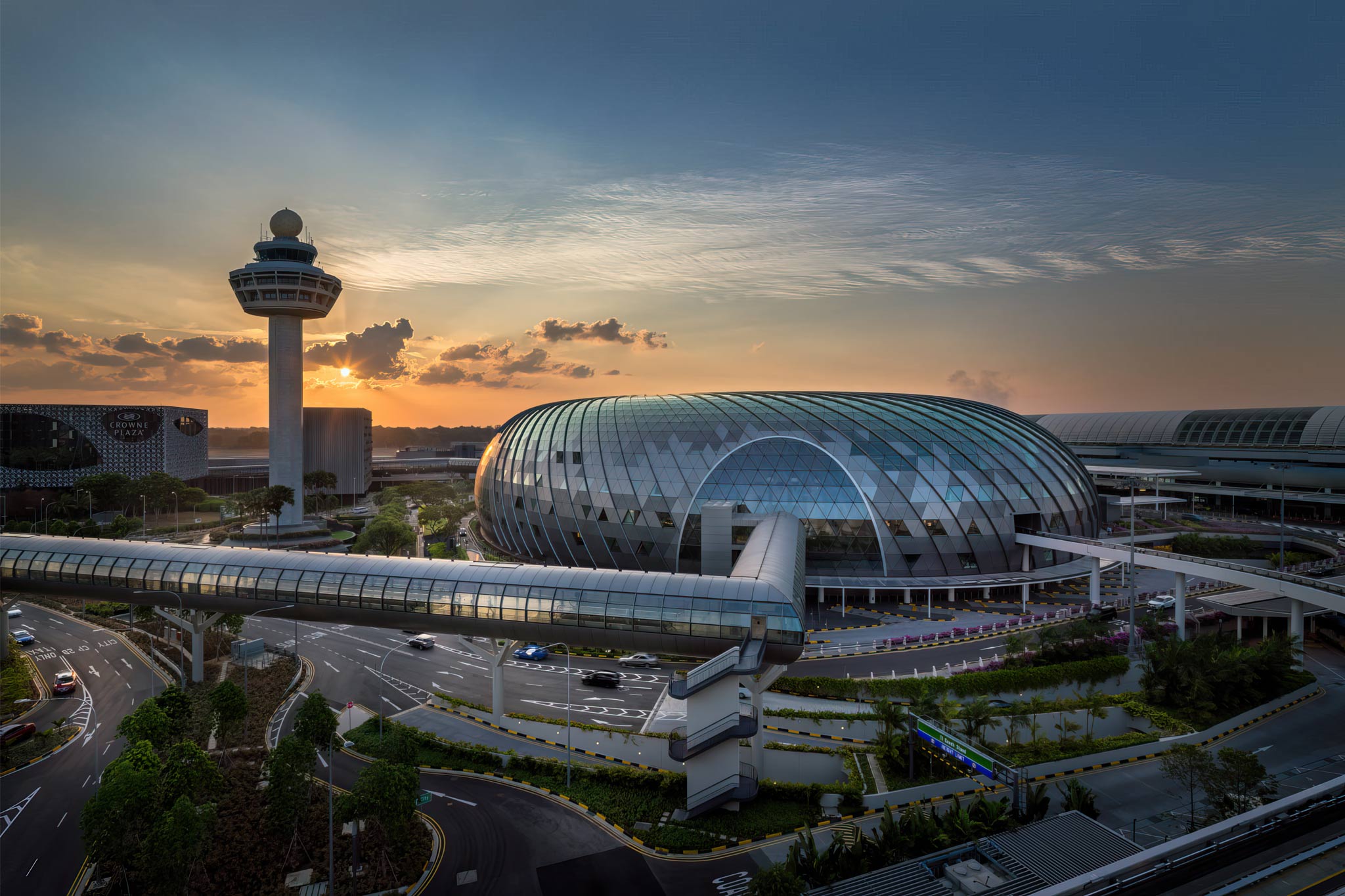
4. CHANGI AIRPORT (SG-DIST-17)
Coordinates: Lat 1.3644°N / Long 103.9915°E
Environmental Characteristics: Designed silence, massive waterfall, biophilic design, muffled jet engines
Sonic Analysis
The Absorbed Sound
Thick carpets absorb noise, filling the massive terminal with surprisingly quiet and soft silence. The acoustic design prioritizes passenger comfort through sound absorption, creating calm despite constant activity.
The White Noise of a Giant Stream
The giant waterfall at Jewel creates a continuous "shoooaaa" white noise that masks surrounding small sounds. This engineered sound creates acoustic privacy and ambient atmosphere simultaneously.
The Torn Roar Behind the Glass
The sharp sound of airplane engines passes through thick soundproof glass, transforming into a deep and grand "boooom" vibration that fills the interior. The sound is felt more than heard, a low-frequency presence that connects interior space to aviation activity outside.
Announcements in the Empty Air
Thanks to the high ceiling, the "ding-dong" of announcements echoes softly like a giant cave and scatters into the air. The vast volume transforms functional communication into ethereal acoustic events.
5. CHINATOWN (SG-DIST-01)
Coordinates: Lat 1.2839°N / Long 103.8443°E
Environmental Characteristics: Narrow street canyons, mixed cultural heritage, outdoor commerce, crowded dining
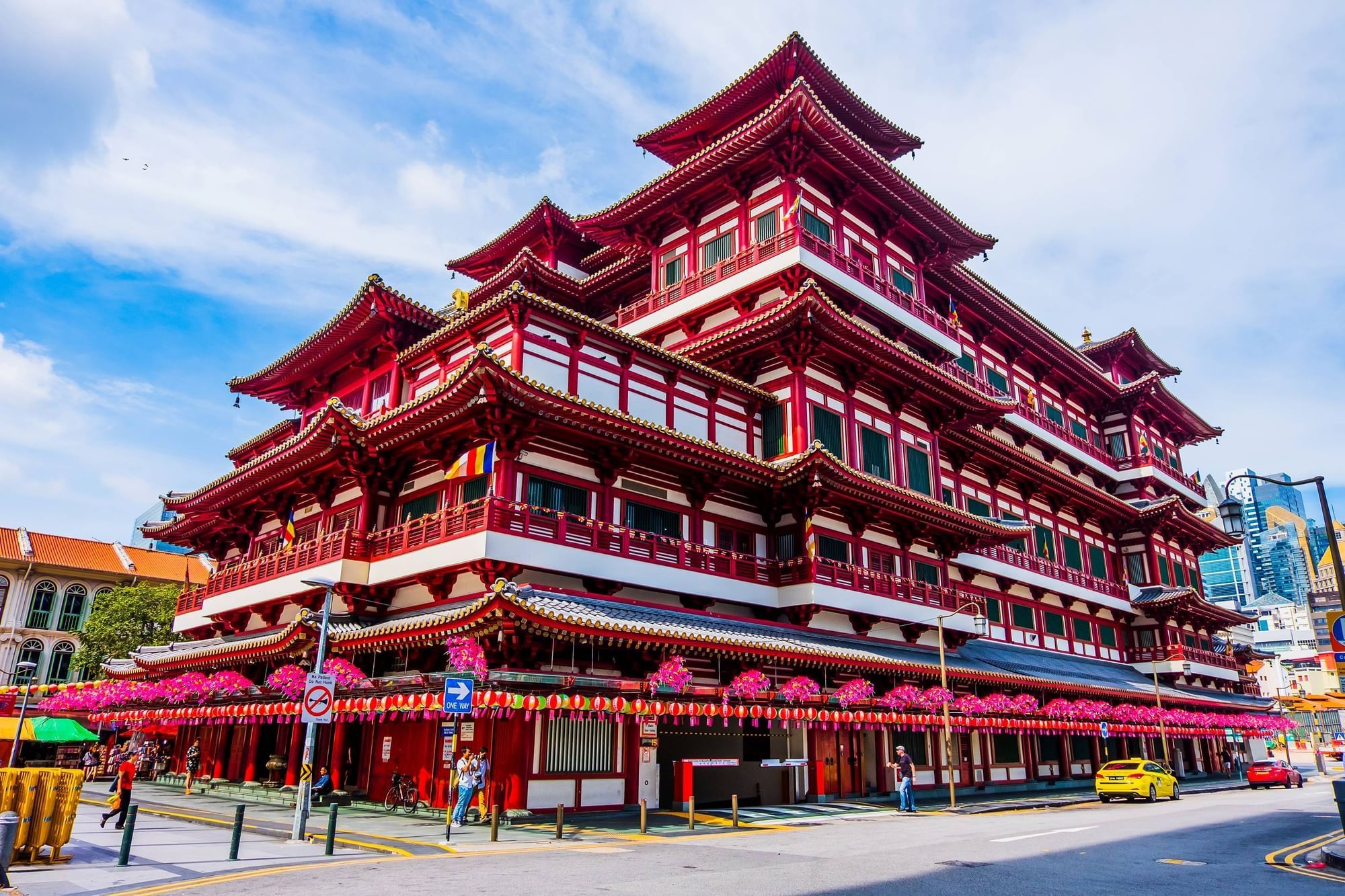
Sonic Analysis
The Sharp Clatter of Bowls and Cutlery
The sound of spoons and wok scraping from countless people eating at food centers mixes to create sharp metallic "clang-clatter" noise. Culinary activity becomes aggressive acoustic texture.
Voices Amplified by Narrow Walls
The voices of tourists and merchants bounce and amplify between narrow buildings, sounding much louder and more chaotic than reality. The architecture functions as acoustic amplifier, intensifying human vocalization.
Repetitive Ritual Percussion
The sounds of flutes, drums, and gongs from temples stand out with heavy and regular beats ("dong dong") amid the chaotic background noise. Religious rhythm punctuates commercial chaos.
Overlapping Music
Traditional Chinese music and modern pop songs played in each shop collide in the air without sound barriers, creating a noisy background where melodies cannot be distinguished. Multiple sonic territories overlap without blending, creating acoustic competition.
6. CITY HALL (SG-DIST-06)
Coordinates: Lat 1.2930°N / Long 103.8517°E
Environmental Characteristics: Stone architecture, high-speed arterial roads, open fields, urban-nature hybrid
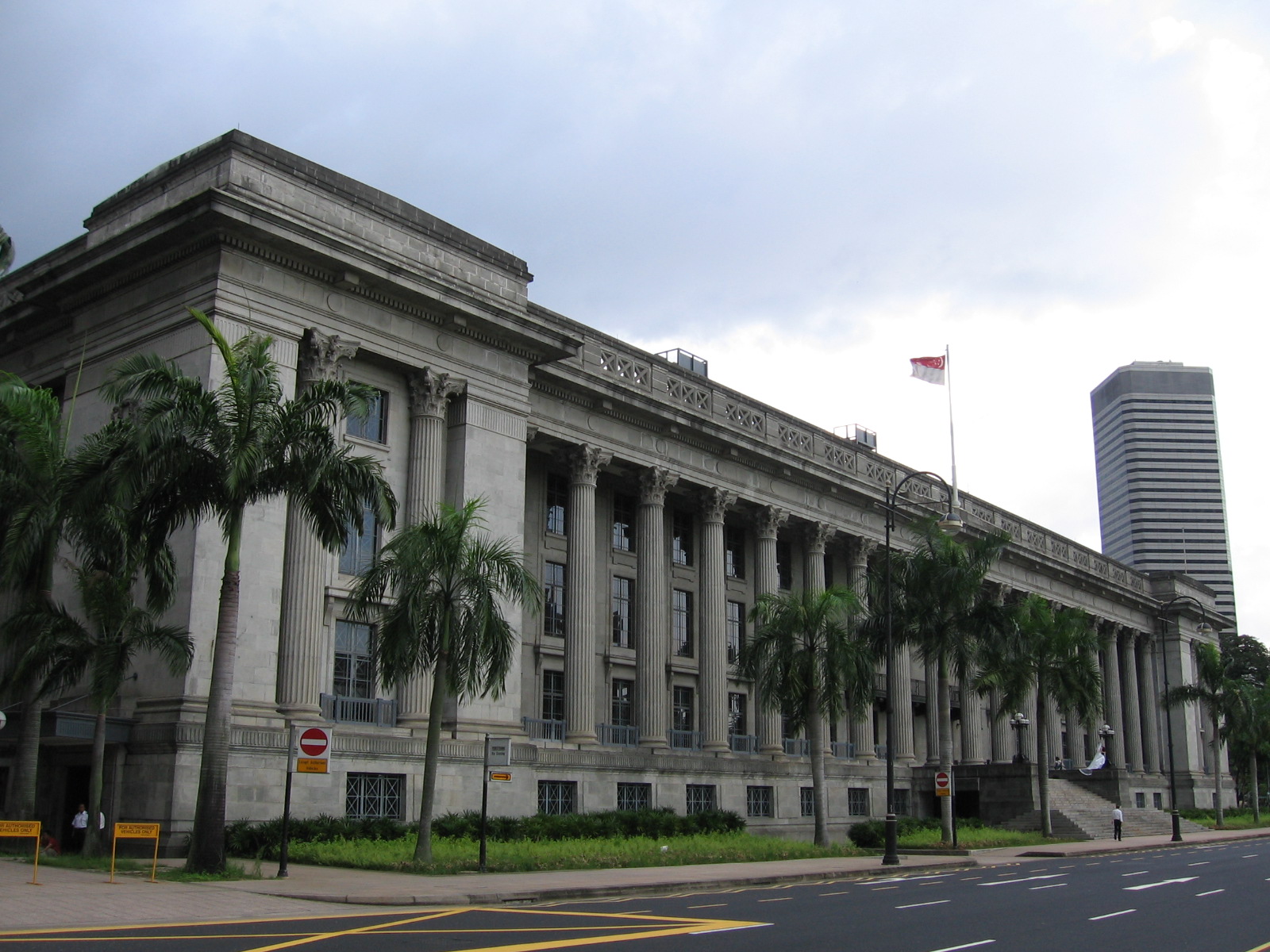
Sonic Analysis
High-Speed Tire Friction
The main sound is the "shwooooo" of tires of fast-moving cars cutting through the air on wide roads. Velocity transforms rolling contact into rushing air displacement.
Sharp Footsteps on Marble Floors
Heel sounds on the hard marble floors of shopping malls and galleries are heard cleanly and distinctly as "tak, tak, tak." Material hardness creates crisp acoustic separation.
Sound That Disappears Into Open Space
In open spaces like the Padang, sound does not reflect but scatters into the sky, creating a strangely quiet and empty feeling despite being downtown. Acoustic openness creates unexpected urban silence.
Rhythmic Beeps and Bells
The audio signals for the visually impaired at wide crosswalks ("beep-beep-beep") and cathedral bells mix to create a regular and mechanical sound environment. Functional sounds create rhythmic temporal structure.
7. HAJI LANE (SG-DIST-07)
Coordinates: Lat 1.3008°N / Long 103.8592°E
Environmental Characteristics: Extreme narrowness, visual overload, mosque resonance, live music presence
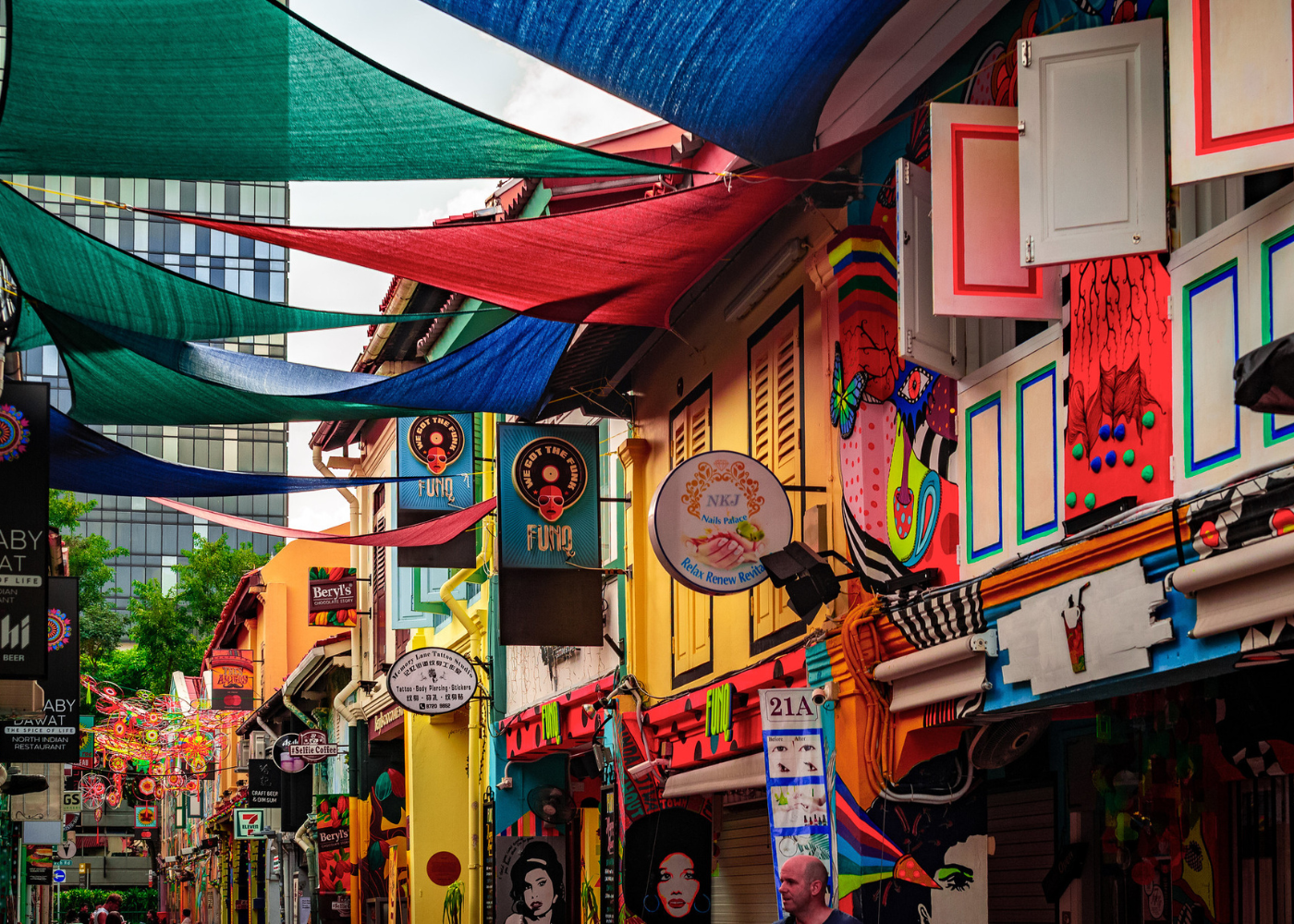
Sonic Analysis
The Heavy Resonance Pouring from Above
The mosque's azan (call to prayer) pours through speakers from above, pressing down heavily with a "woooom" that fills the entire narrow alley. Sacred sound dominates the confined acoustic space.
Sharp Bursts Ricocheting Off the Walls
Between narrow walls, the sound of clinking glasses or laughter is not absorbed but keeps bouncing, becoming a piercing high-frequency burst "ching!" The confined space creates acoustic ricochet.
A Noisy But Hollow Emptiness
Sound escapes upward over the narrow alley, so people's shouts do not mix but become a formless murmur or sound like an empty cave. Vertical escape creates acoustic dilution.
The Discord of Two Overlapping Worlds
The solemn prayer sound and the fast pop music from the bar next door do not mix but collide like oil and water, causing auditory fatigue and tension. Sacred and secular soundscapes compete within meters of each other.
8. JURONG WEST (SG-DIST-22)
Coordinates: Lat 1.3386°N / Long 103.7085°E
Environmental Characteristics: Industrial gateway, dense concrete walls, air base proximity, extensive construction zones
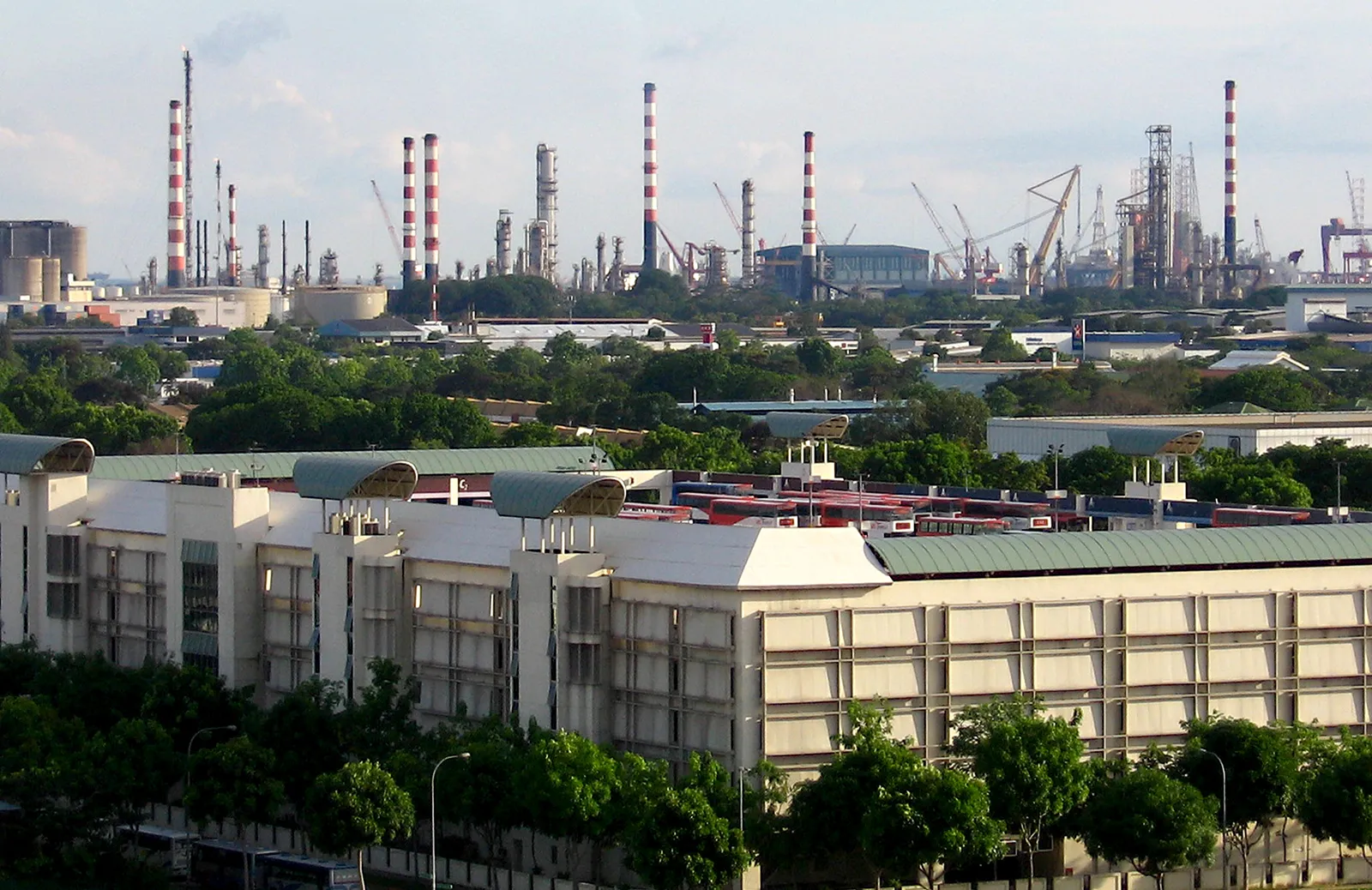
Sonic Analysis
Ground-Shaking Rumble
When large trucks pass, a tremor-like vibration "kurrrrrr" felt in the body is even larger than the engine sound. Industrial transportation creates seismic acoustic events.
Rhythmic Piling Thuds
The "kung... kung..." sound of piling at construction sites spreads throughout the area with physical shockwaves that resonate to the heart. Construction rhythm becomes visceral experience.
Screeching Metal Grind
When cutting rebar with a grinder, a high-frequency metallic sound "kiiiiiek" like scraping a blackboard irritates the nerves. Industrial processes generate acoustic aggression.
Relentless Reversing Alarms
The sharp "beep-beep-beep" reversing alarms of construction vehicles overlap irregularly, causing extreme mental fatigue. Safety signals become sources of acoustic stress through repetition and overlay.
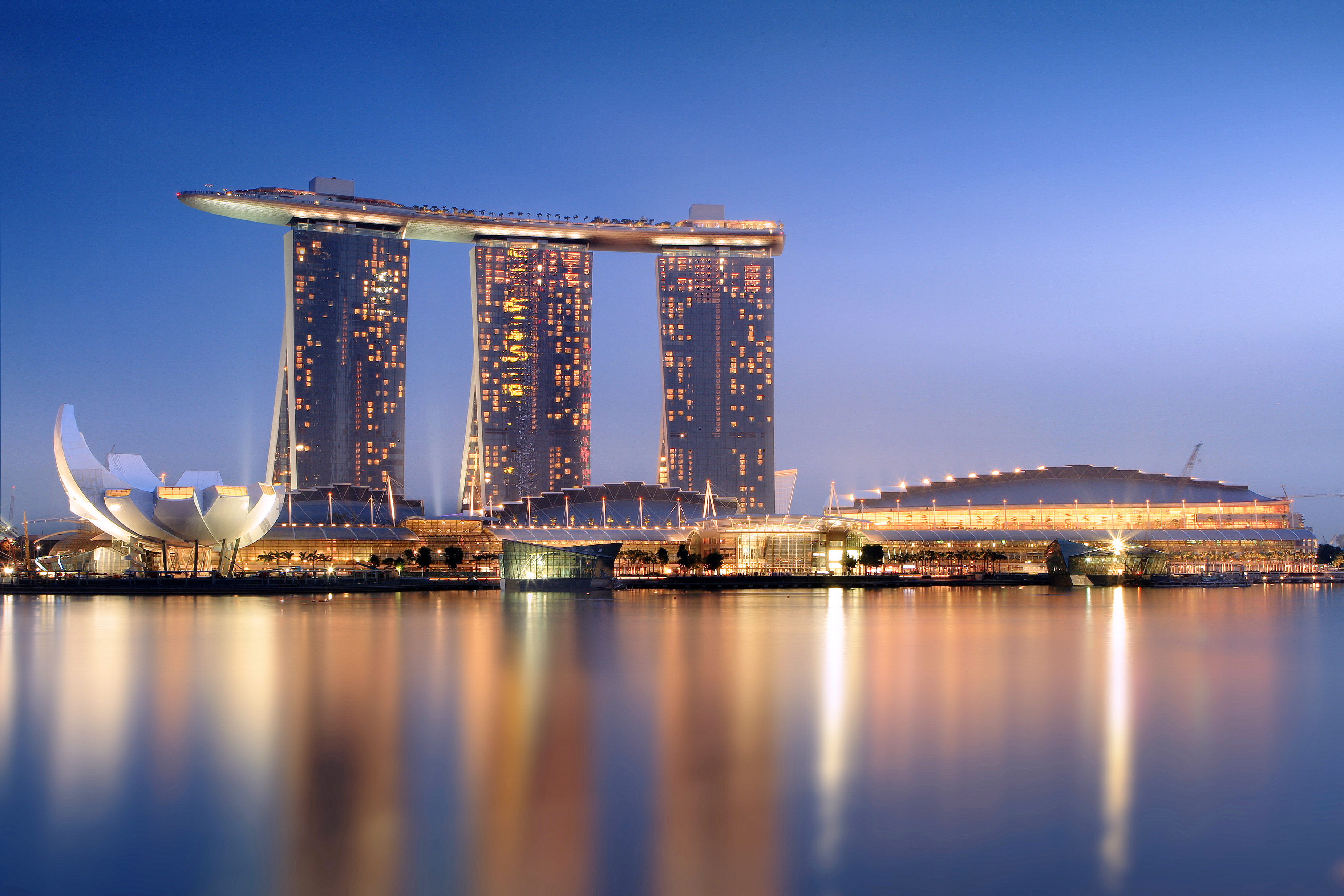
9. MARINA BAY (SG-DIST-01-MB)
Coordinates: Lat 1.2834°N / Long 103.8607°E
Environmental Characteristics: Glass and steel canyon, open water surface, high-rise building winds, massive crowds
Sonic Analysis
Slapping Water Against Concrete
Waves make not a natural sound but a hard sound "splash, thud" hitting the concrete wall, like an artificial water tank. Natural water transformed by engineered boundaries.
Sharp Wind Skimming the High-Rises
Between the building forest, a fast and tearing strong wind sound "shwick-whooo" sweeps through. Architecture channels and accelerates wind into acoustic force.
Electronic Music and Announcements Carrying Over Water
The music from the laser show crosses the water, amplifying the "boom-boom" bass while high tones scatter in the wind, creating a grand and floating atmosphere. Water surface mediates and transforms sound propagation.
Diffused Noise of a Multinational Crowd
Thanks to the huge and open space, the murmur of the crowd does not clump but scatters in the wind in all directions. Openness disperses rather than contains crowd sound.
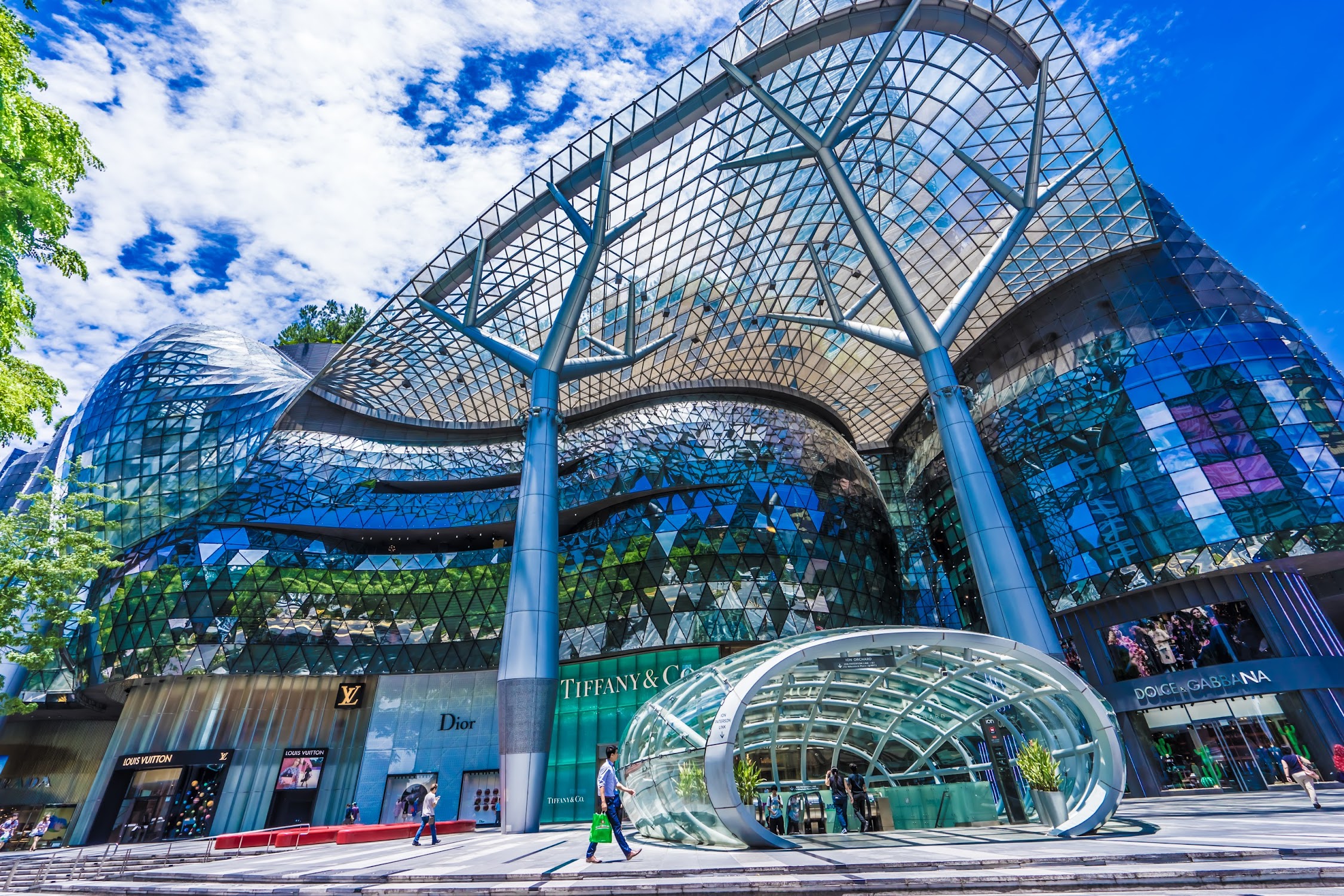
10. ORCHARD (SG-DIST-09)
Coordinates: Lat 1.3048°N / Long 103.8318°E
Environmental Characteristics: Canopy tunnel, underground network, one-way raceway, events and busking
Sonic Analysis
Distorted Amp Crackle Beyond Its Limit
Buskers' amps unreasonably raise the volume to beat the noise, making "crackling and tearing" rough noise. Amplification pushed to distortion in acoustic competition.
Shrill, Repetitive Shouting From Event MCs
The exaggerated high-pitched voices of promotional MCs bounce off building walls and ring without stopping, mentally exhausting. Commercial vocalization becomes acoustic assault through persistence.
Brain-Numbing Loop of Advertising Jingles
Short and intense advertising music ("pa-pam!") repeats infinitely, creating a mechanical rhythm that digs into the subconscious. Sonic branding through repetitive invasion.
Cutting Bell Ring of the Ice Cream Vendors
The sharp "ding-ding!" of the ice cream cart's bell cuts like a knife through the street's low-frequency noise. High-frequency signal pierces through low-frequency blanket.
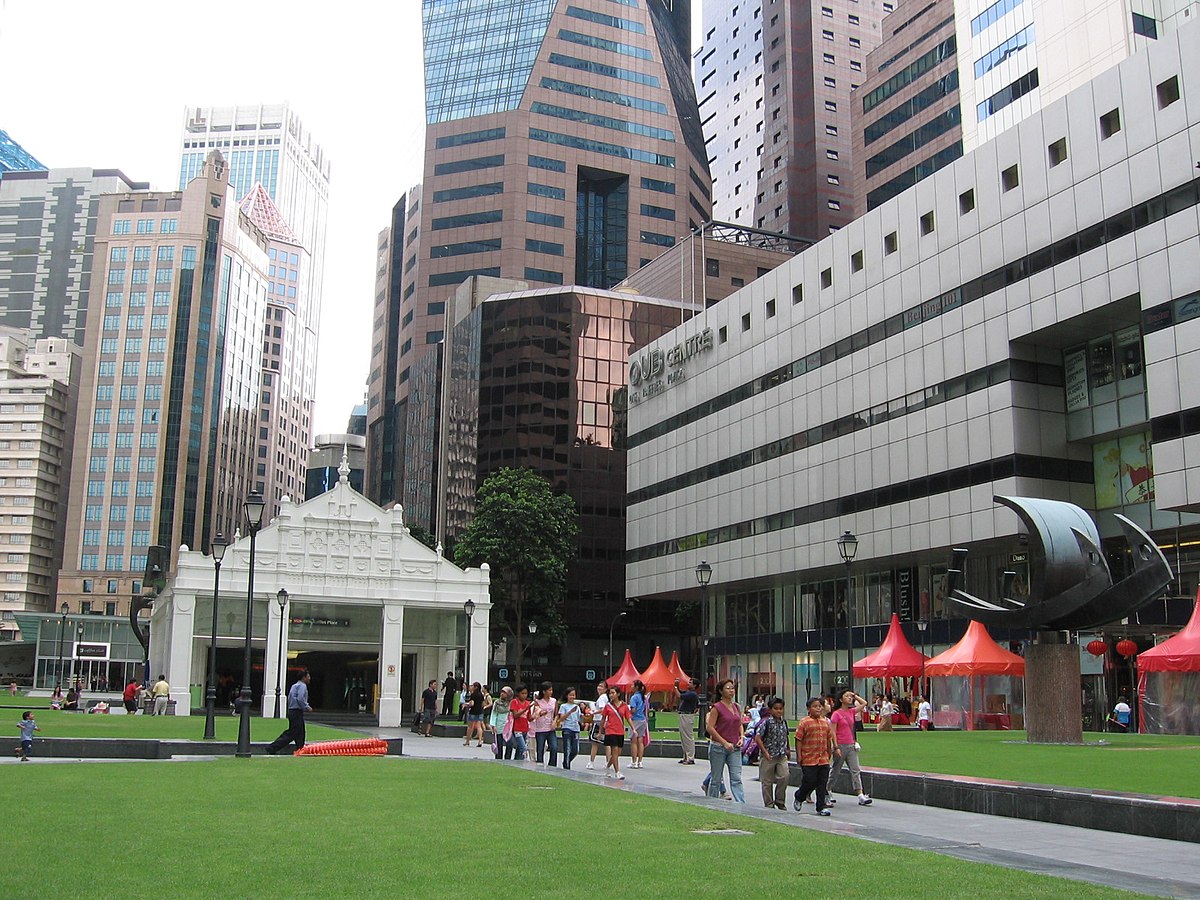
11. RAFFLES PLACE (SG-DIST-01-RP)
Coordinates: Lat 1.2830°N / Long 103.8513°E
Environmental Characteristics: Urban canyon, heat and exhaust, pulse of activity, complex traffic noise
Sonic Analysis
Staccato of Hard Leather Heels
The formal shoes of office workers hitting stone floors make a fast and combative footstep sound "tok-tok, tak! tak!" Business rhythm expressed through aggressive footfall.
Electronic Beep Storm During Rush Hour
The sound of tagging transit cards at the turnstiles during commute time fills the space like an arcade with "beep! beep! dik!" without pause. Electronic transactions create acoustic density.
Heavy HVAC Drone in the Building Forest
The giant air conditioning/ventilation systems of skyscrapers make a low and thick mechanical sound "woooom" laid like white noise. Infrastructure hum forms constant acoustic foundation.
Idling Engine Rumble From Waiting Taxis
The engine idling sound of waiting vehicles spreads to the building entrance with a smooth mechanical tremor "gorrrrr." Automotive standby creates continuous rumble.
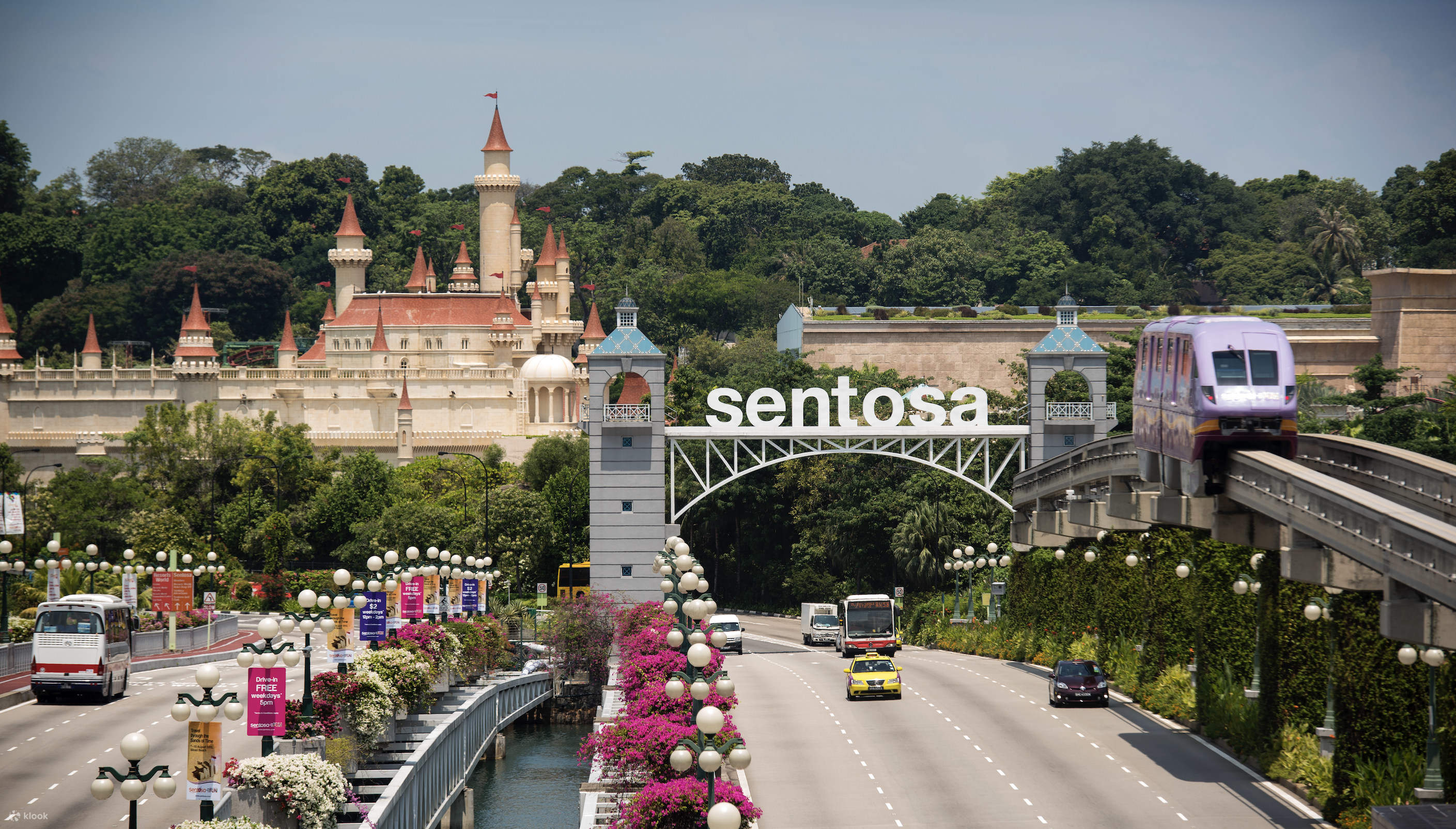
12. SENTOSA (SG-DIST-04-ST)
Coordinates: Lat 1.2541°N / Long 103.8238°E
Environmental Characteristics: Theme park physicality, artificial lagoons, isolated transportation
Sonic Analysis
Coaster Roar & Screams
The sound of roller coaster steel wheels ("kwaaang") and collective screams of people ("kyaaah") are heard periodically. Engineered thrill creates rhythmic acoustic events.
Bass That Vibrates Sand and Body
The melody of beach club EDM music is blown away by the wind, leaving only the heavy bass beat "boom! boom!" that vibrates the sand and body. Low frequencies persist while high frequencies dissipate.
Overhead Whir of the Monorail
The high-pitched "wiiiiing" of monorail rubber wheels rolling on concrete beams and the "tuk! tuk!" of connection points are heard from above. Transportation infrastructure creates overhead acoustic layer.
Sudden Peacock Honk
In the forest path, the wild peacock's loud and bizarre cry "ee-ong!" like a cat's scream is suddenly heard, startling tourists. Natural wildlife interrupts artificial leisure soundscape.
13. TANJONG PAGAR (SG-DIST-02-TP)
Coordinates: Lat 1.2766°N / Long 103.8458°E
Environmental Characteristics: Skyscraper wind tunnel, smoky alleys, old and new collision, afternoon quiet streets
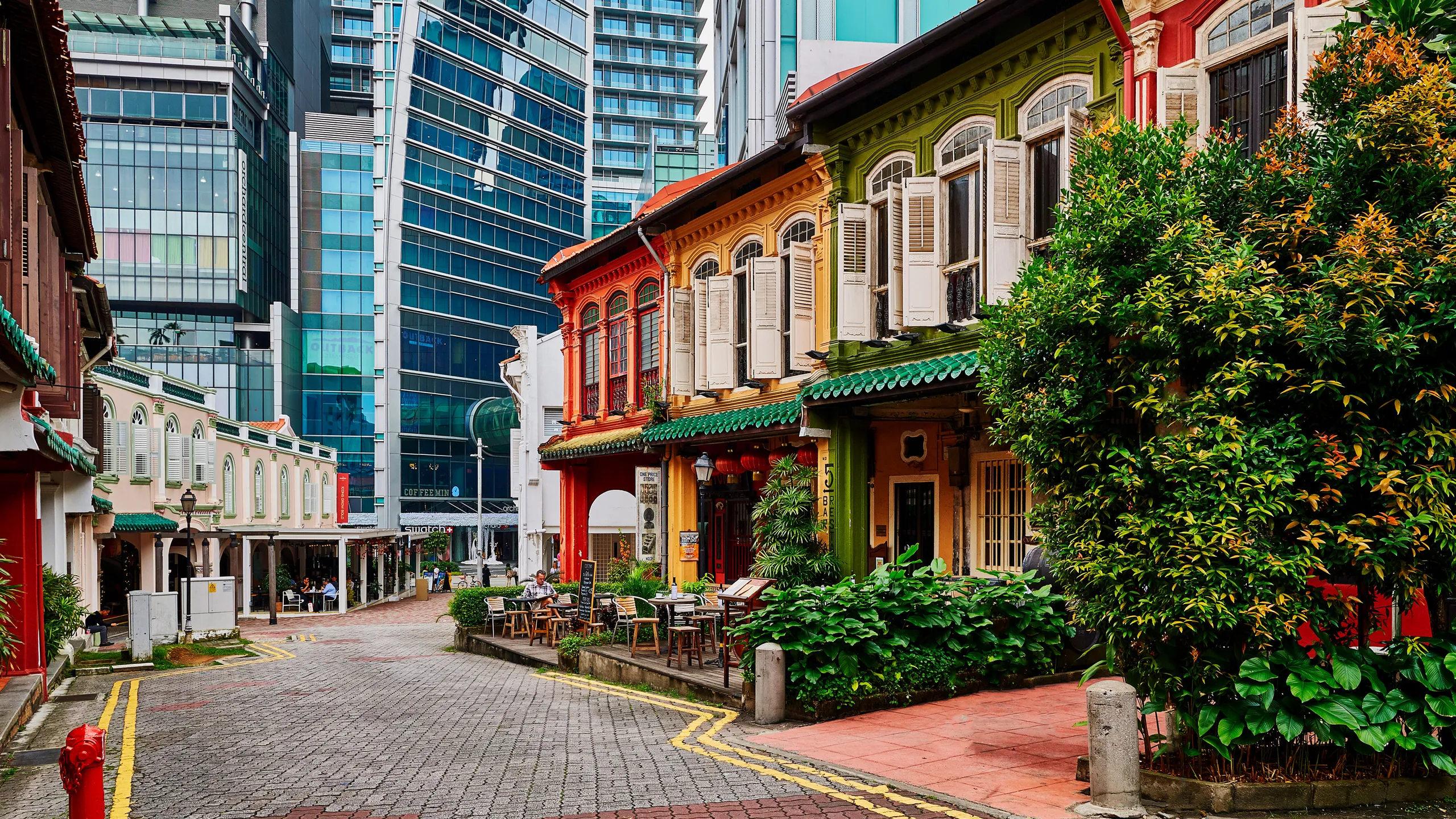
Sonic Analysis
Exhaust Fan Roar
In the evening, the powerful exhaust fans of BBQ restaurants turn "woooom" and cover the entire alley with a sound like an industrial vacuum cleaner. Culinary ventilation dominates acoustic environment.
Sizzling Meat
The oil sound ("chiik!", "tak!") of grilling meat from dozens of tables merges and pours out endlessly like rain. Cooking becomes continuous acoustic texture.
Clinking Glasses
The clear and high-pitched striking sound "chang! ching!" of thick glass cups clinking during toasts bounces over the humming background noise. Celebration creates high-frequency punctuation.
Wind Tunnel Howl Between Buildings
Compressed gusts exiting through the narrow gap between tall buildings make a heavy and powerful wind sound "kuooo." Architecture creates wind acceleration and acoustic intensification.
Synthesis: Singapore's Acoustic Ecology
Collectively, these 13 districts reveal the extraordinary acoustic diversity of Singapore's urban environment. Far from being generic "city noise," each location possesses a distinct sonic signature shaped by its unique combination of architecture, function, materials, and activities.
Recurring Acoustic Patterns
- Architectural Mediation: Building configurations don't just reflect sound, they actively shape it through amplification, absorption, channeling, and reverberation
- Material Resonance: Concrete, glass, marble, carpet, and vegetation each impart characteristic acoustic qualities
- Layered Frequencies: Most environments feature distinct sonic layers: deep infrastructure hum, mid-range human activity, and high-frequency mechanical or environmental sounds
- Temporal Rhythms: Different times of day bring different dominant sounds, from morning commuter electronics to evening dining clatter
- Cultural Collision: Singapore's multicultural nature creates acoustic juxtapositions between sacred and secular, traditional and contemporary, local and global sounds
Phenomenological Qualities
Beyond measurable acoustic properties, the field research revealed how noise feels:
- Physical Impact: Some sounds (construction thuds, bass beats) are felt in the body before they're heard
- Emotional Tone: Environments carry acoustic moods: aggressive (Orchard), contemplative (Changi), chaotic (Chinatown)
- Attention Demand: Certain sounds (alarms, announcements, MCs) actively demand cognitive attention, creating mental fatigue
- Sonic Surprise: Unexpected contrasts (peacock cries, sacred chants amid pop music) create moments of acoustic disruption
Next Steps: From Data to Prototype
With this comprehensive field data now collected, the next phase involves transforming these authentic recordings, photographs, and observations into three distinct prototypes that demonstrate how noise can be curated, presented, and experienced as aesthetic material.
The three prototypes will explore different approaches to noise visualization and presentation:
- Prototype 1: Spatial mapping that visualizes the acoustic geography of Singapore
- Prototype 2: Temporal sequencing that reveals the rhythmic patterns within urban noise
- Prototype 3: Phenomenological translation that captures the experiential qualities of different sonic environments
Unlike the AI-generated experiments of Week 12, these prototypes will be grounded entirely in authentic field data. Every sound, every image, and every observation carries indexical connection to real places and real experiences. The challenge is to curate and present this material in ways that reveal noise's hidden aesthetic dimensions while maintaining documentary integrity.
The semester's final weeks will be dedicated to developing these prototypes into compelling demonstrations that noise, when thoughtfully documented and artfully presented, can challenge its characterization as mere pollution and reveal itself as rich acoustic material worthy of careful attention.